rainer maria rilke – les roses (1926)

Rilke chose as his own epitaph this poem:

Rose, oh reiner Widerspruch, Lust,
Niemandes Schlaf zu sein unter soviel
Lidern.

Rose, o pure contradiction, desire
to be no one’s sleep beneath so many lids.

“The following selections from David Need’s Roses: The Late French Poetry of Rainer Maria Rilke provide an illuminating glimpse into the ways Rilke uses the rose as motif. The poems seek to elucidate how time’s ceaseless transformations do not rectify or allay the contradictions they invoke. The living rose is “fully awake” but discreet, possessing “many pages / of detailed happiness / we will never read.” Rilke is fascinated by these irreducible relationships: the flower’s vitality belies its eventual death; its blooming won’t diminish the impenetrable density of its petals.” —Dan Holmes

Rilke’s posthumously published Roses calls us into a more intimate relationship with things, asking us to consider the material world as sister of our imagination, rather than nameless patient of our ideas.

I
If your blooming sometimes so astonishes us,
happy rose,
it’s that, petal against petal, you rest
within yourself, inside.

Fully awake, your petals, whose surroundings
sleep, though numberless, meet
this silent heart’s tendernesses
which end in these urgent lips.

II
I see you, rose, book half-opened,
having so many pages
of detailed happiness
we will never read. Mage-Book,

which is opened by the wind and can be read,
eyes shut…
from which butterflies scatter, confused
to have had the same ideas.

dsc_1074.jpg

III
Oh Rose, you perfect thing beyond compare,
infinitely restrained
and infinitely lavished, oh, head
of a body with far too much wandering sweetness,

nothing is equal to you, oh you supreme essence
of this inconstant hour,
your perfume wanders all about
this space of love we have scarcely entered.

VI
A single rose, it’s every rose
and this one—the irreplaceable one,
the perfect one—a supple spoken word
framed by the text of things.

How could we ever speak without her
of what our hopes were,
and of the tender moments
in the continual departure.

XVIII
All that we feel, you share,
yet we ignore what happens to you.
There would have to be a hundred butterflies
to read all your pages.

There are ones among you like dictionaries;
those who gather these
are tempted to bind all the pages.
Me? I like the roses which are letters.

XXIII
Rose, come so late, when the bitter nights stop
in their too sidereal brilliance,
Rose, do you divine the facile, perfect pleasures
of your summer sisters?

Day after day, I watch you who hesitate
in your sheath, clasped too tight.
Rose who, when born, imitates in reverse
the slow ways of the dead.

Does your indescribable state make you understand
in a mingling in which all is silenced
that ineffable harmony of nothingness and being
that we ignore?

XXVI
Infinitely reassured
despite so many dangers
with no change ever
in her habits
is the Rose which opens, prelude
to her immeasurable duration.

Do we know how she lives?
One of her days, without doubt,
is all the earth, all
the infinity of this moment.

XXVII
Rose, was it necessary to leave you outdoors,
exquisite dear?
What is a rose doing there, where fate
exhausts itself on us?

Point of turning back. It’s you
who share
with us, desperately, this life, this life
which is not your time.

(Translated from the French by David Need. To read the original, click HERE.)

RosesRainer Maria Rilke.Translation by David Need. Illustrations by Clare Johnson.Horse & Buggy Press, 2014.

ica 3rd space symposium at uct

image

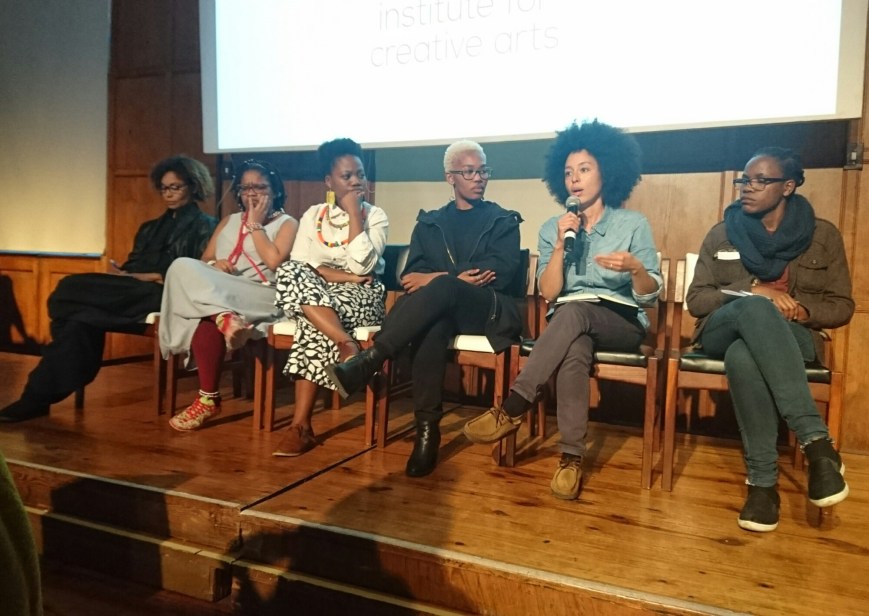
L-R: jackï job, Dee Moholo, Koleka Putuma, Khanyi Mbongwa (Vasiki), Ilze Wolff, Lois Anguria

The most decolonised academic space I have yet had the joy of experiencing. The conference continues today. If you’re in Cape Town, come. It’s free!
HERE is the programme. 🌸

louise gluck – parousia

Love of my life, you
Are lost and I am
Young again.

A few years pass.
The air fills
With girlish music;
In the front yard
The apple tree is
Studded with blossoms…

How lush the world is,
How full of things that don’t belong to me-

I watch the blossoms shatter,
No longer pink,
But old, old, a yellowish white-
The petals seem
To float on the bright grass,
Fluttering slightly.

What a nothing you were,
To be changed so quickly
Into an image, an odor-
You are everywhere, source
Of wisdom and anguish.

anne carson – every exit is an entrance (2005)

anne carsonI want to make a praise of sleep. Not as a practitioner—I admit I have never been what is called “a good sleeper” and perhaps we can return later to that curious concept—but as a reader. There is so much sleep to read, there are so many ways to read it. In Aristotle’s view, sleep requires a “daimonic but not a divine” kind of reading. Kant refers to sleep’s content as “involuntary poetry in a healthy state.”

Keats wrote a “Sonnet to Sleep,” invoking its powers against the analytic of the day:

O soft embalmer of the still midnight!
. . . Then save me, or the passed day will shine
Upon my pillow, breeding many woes;
Save me from curious conscience, that still lords
Its strength for darkness, burrowing like a mole;
Turn the key deftly in the oiled wards,
And seal the hushed casket of my soul.

My intention in this essay is to burrow like a mole in different ways of reading sleep, different kinds of readers of sleep, both those who are saved, healthy, daimonic, good sleepers and those who are not. Keats ascribes to sleep an embalming action. This means two things: that sleep does soothe and perfume our nights; that sleep can belie the stench of death inborn in us. Both actions are salvific in Keats’ view. Both deserve (I think) to be praised.

My earliest memory is of a dream. It was in the house where we lived when I was three or four years of age. I dreamed I was asleep in the house in an upper room.

That I awoke and came downstairs and stood in the living room. The lights were on in the living room, although it was hushed and empty. The usual dark green sofa and chairs stood along the usual pale green walls. It was the same old living room as ever, I knew it well, nothing was out of place. And yet it was utterly, certainly, different. Inside its usual appearance the living room was as changed as if it had gone mad.

Later in life, when I was learning to reckon with my father, who was afflicted with and eventually died of dementia, this dream recovered itself to me, I think because it seemed to bespeak the situation of looking at a well-known face, whose appearance is exactly as it should be in every feature and detail, except that it is also, somehow, deeply and glowingly, strange.

The dream of the green living room was my first experience of such strangeness and I find it as uncanny today as I did when I was three. But there was no concept of madness or dementia available to me at that time. So, as far as I can recall, I explained the dream to myself by saying that I had caught the living room sleeping. I had entered it from the sleep side.And it took me years to recognize, or even to frame a question about, why I found this entrance into strangeness so
supremely consoling. For despite the spookiness, inexplicability and later tragic reference of the green living room, it was and remains for me a consolation to think of it lying there, sunk in its greenness, breathing its own order, answerable to no one, apparently penetrable everywhere and yet so perfectly disguised in all the propaganda of its own waking life as to become in a true sense something incognito at the heart of our sleeping house.

It is in these terms that I wish to praise sleep, as a glimpse of something incognito. Both words are important. Incognito means “unrecognized, hidden, unknown.”

Something means not nothing. What is incognito hides from us because it has something worth hiding, or so we judge. As an example of this judgment I shall cite for you two stanzas of Elizabeth Bishop’s poem “The Man-Moth.” The Man- Moth, she says, is a creature who lives most of the time underground but pays occasional visits to the surface of the earth, where he attempts to scale the faces of the buildings and reach the moon, for he understands the moon to be a hole at the top of the sky through which he may escape. Failing to attain the moon each time he falls back and returns to the pale subways of his underground existence.

Here is the poem’s third stanza:

Up the façades,
his shadow dragging like a photographer’s cloth behind him,
he climbs fearfully, thinking that this time he will manage
to push his small head through that round clean opening
and be forced through, as from a tube, in black scrolls on the light.
(Man, standing below him, has no such illusions).
But what the Man-Moth fears most he must do, although
he fails, of course, and falls back scared but quite unhurt.

The Man-Moth is not sleeping, nor is he a dream, but he may represent sleep itself—an action of sleep, sliding up the facades of the world at night on his weird quest. He harbours a secret content, valuable content, which is difficult to extract even if you catch him.

Here is the poem’s final stanza:

If you catch him,
hold up a flashlight to his eye. It’s all dark pupil,
an entire night itself, whose haired horizon tightens
as he stares back, and closes up the eye. Then from the lids
one tear, his only possession, like the bee’s sting, slips.
Slyly he palms it, and if you’re not paying attention
he’ll swallow it. However, if you watch, he’ll hand it over,
cool as from underground springs and pure enough to drink.

To drink the tear of sleep, to detach the prefix “un-” from its canniness and from its underground purposes, has been the project of many technologies and therapies—from the ancient temple of Asklepios at Epidauros, where sick people slept the night in order to dream their own cure, to the psychoanalytic algebras of Jacques Lacan, who understands sleep as a space from which the sleeper can travel in two directions, both of them a kind of waking.

If I were to praise either of these methods of healing I would do so on grounds of their hopefulness. Both Asklepiadic priests and Lacanian analysts posit a continuity between the realms of waking and sleeping, whereby a bit of something incognito may cross over from night to day and change the life of the sleeper. Here is an ancient account of one of the sleep cures at Epidauros:

There came as a suppliant to the god Asklepios a man who was so one eyed that on the left he had only lids, there was nothing, just emptiness. People in the temple laughed at him for thinking he would see with an eye that was not there. But in a vision that appeared to him as he slept, the god seemed to boil some medicine and, drawing apart the lids, poured it in. When day came the man went out, seeing with both eyes.

What could be more hopeful than this story of an empty eye filled with seeing as it sleeps? An analyst of the Lacanian sort might say that the one-eyed man has chosen to travel all the way in the direction of his dream and so awakes to a reality more real than the waking world. He dove into the nothingness of his eye and is awakened by too much light. Lacan would praise sleep as a blindness, which nonetheless looks back at us.

What does sleep see when it looks back at us? This is a question entertained by Virginia Woolf in To the Lighthouse, a novel that falls asleep for twenty-five pages in the middle. The story has three
parts. Parts I and III concern the planning and execution of a trip to the lighthouse by the Ramsay family.

Part II is told entirely from the sleep side. It is called “Time Passes.” It begins as a night that grows into many nights then turns into seasons and years. During this time, changes flow over the house of the story and penetrate the lives of the characters while they sleep. These changes are glimpsed
as if from underneath; Virginia Woolf ’s main narrative is a catalogue of silent bedrooms, motionless chests of drawers, apples left on the dining room table, the wind prying at a window blind, moonlight gliding on floorboards. Down across these phenomena come facts from the waking world, like swimmers stroking by on a night lake. The facts are brief, drastic and enclosed in square brackets.

For example:

[Mr. Ramsay, stumbling along a passage one dark morning, stretched his arms out, but Mrs. Ramsay having died rather suddenly the night before, his arms, though stretched out, remained empty.]
or:
[A shell exploded. Twenty or thirty young men were blown up in France, among them Andrew Ramsay, whose death, mercifully, was instantaneous.]
or:
[Mr. Carmichael brought out a volume of poems that spring, which had an unexpected success. The war, people said, had revived their interest in poetry.]

These square brackets convey surprising information about the Ramsays and their friends, yet they float past the narrative like the muffled shock of a sound heard while sleeping. No one wakes up. Night plunges on, absorbed in its own events. There is no exchange between night and its captives, no tampering with eyelids, no drinking the tear of sleep. Viewed from the sleep side, an empty eye socket is just a fact about a person, not a wish to be fulfilled, not a therapeutic challenge. Virginia Woolf offers us, through sleep, a glimpse of a kind of emptiness that interests her. It is the emptiness of things before we make use of them, a glimpse of reality prior to its efficacy.

Some of her characters also search for this glimpse while they are awake. Lily Briscoe, who is a painter in To the Lighthouse, stands before her canvas and ponders how “to get hold of that very jar on the nerves, the thing itself before it has been made anything.”

In a famous passage of her diaries, Virginia Woolf agrees with the aspiration:

If I could catch the feeling I would: the feeling of the singing of the real world, as one is driven by loneliness and silence from the habitable world.

What would the singing of the real world sound like? What would the thing itself look like? Such questions are entertained by her character Bernard, at the end of The Waves:

“So now, taking upon me the mystery of things, I could go like a spy without leaving this place, without stirring from my chair. . . . The birds sing in chorus; the house is whitened; the sleeper stretches; gradually all is astir. Light floods the room and drives shadow beyond shadow to where they hang in folds inscrutable. What does this central shadow hold? Something? Nothing? I do not know. . . .”

Throughout her fiction Virginia Woolf likes to finger the border between nothing and something. Sleepers are ideal agents of this work.

Read the rest of this brilliant essay: Every Exit is an Entrance from Anne Carson’s Decreation (2005).
andre breton – nadja (1928)

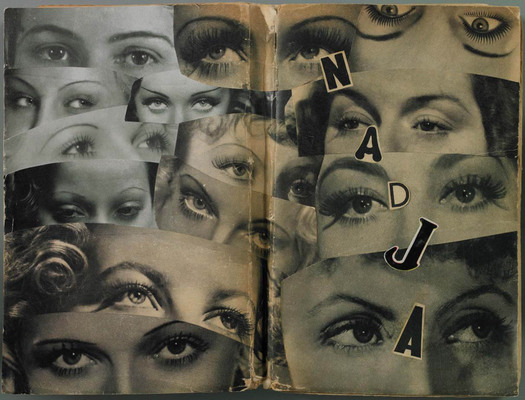
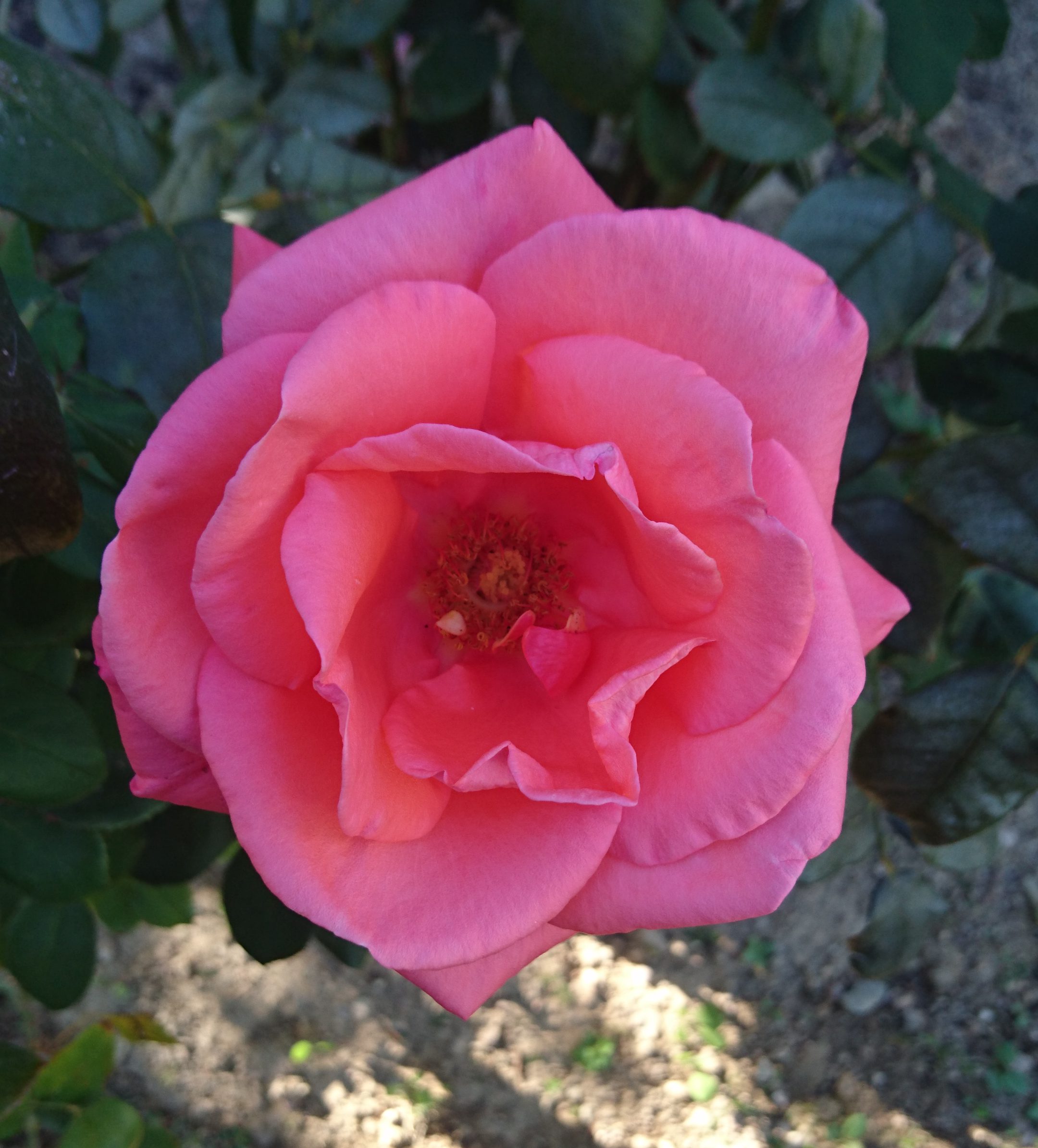
Cover of the 1928 Gallimard edition of Nadja, collaged over by Marcel Mariën, 1938.

Cover of the 1928 Gallimard edition of Nadja, collaged over by Marcel Mariën, 1938.

The narrator, named André, ruminates on a number of Surrealist principles, before ultimately commencing (around a third of the way through the novel) on a narrative account, generally linear, of his brief ten day affair with the titular character Nadja. She is so named “because in Russian it’s the beginning of the word hope, and because it’s only the beginning,” but her name might also evoke the Spanish “Nadie,” which means “No one.” The narrator becomes obsessed with this woman with whom he, upon a chance encounter while walking through the street, strikes up conversation immediately. He becomes reliant on daily rendezvous, occasionally culminating in romance (a kiss here and there).

His true fascination with Nadja, however, is her vision of the world, which is often provoked through a discussion of the work of a number of Surrealist artists, including himself. While her understanding of existence subverts the rigidly authoritarian quotidian, it is later discovered that she is mad and belongs in a sanitarium. After Nadja reveals too many details of her past life, she in a sense becomes demystified, and the narrator realises that he cannot continue their relationship.

In the remaining quarter of the text, André distances himself from her corporeal form and descends into a meandering rumination on her absence, so much so that one wonders if her absence offers him greater inspiration than does her presence. It is, after all, the reification and materialisation of Nadja as an ordinary person that André ultimately despises and cannot tolerate to the point of inducing tears.

There is something about the closeness once felt between the narrator and Nadja that indicated a depth beyond the limits of conscious rationality, waking logic, and sane operations of the everyday. There is something essentially “mysterious, improbable, unique, bewildering” about her; this reinforces the notion that their propinquity serves only to remind André of Nadja’s impenetrability.

Her eventual recession into absence is the fundamental concern of this text, an absence that permits Nadja to live freely in André’s conscious and unconscious, seemingly unbridled, maintaining her paradoxical role as both present and absent. With Nadja’s past fixed within his own memory and consciousness, the narrator is awakened to the impenetrability of reality and perceives a particularly ghostly residue peeking from under its thin veil. Thus, he might better put into practice his theory of Surrealism, predicated on the dreaminess of the experience of reality within reality itself.

Read the book here: Andre Breton – Nadja.

walter benjamin – surrealism: the last snapshot of the european intelligentsia (1929)

012_max_ernst_theredlist

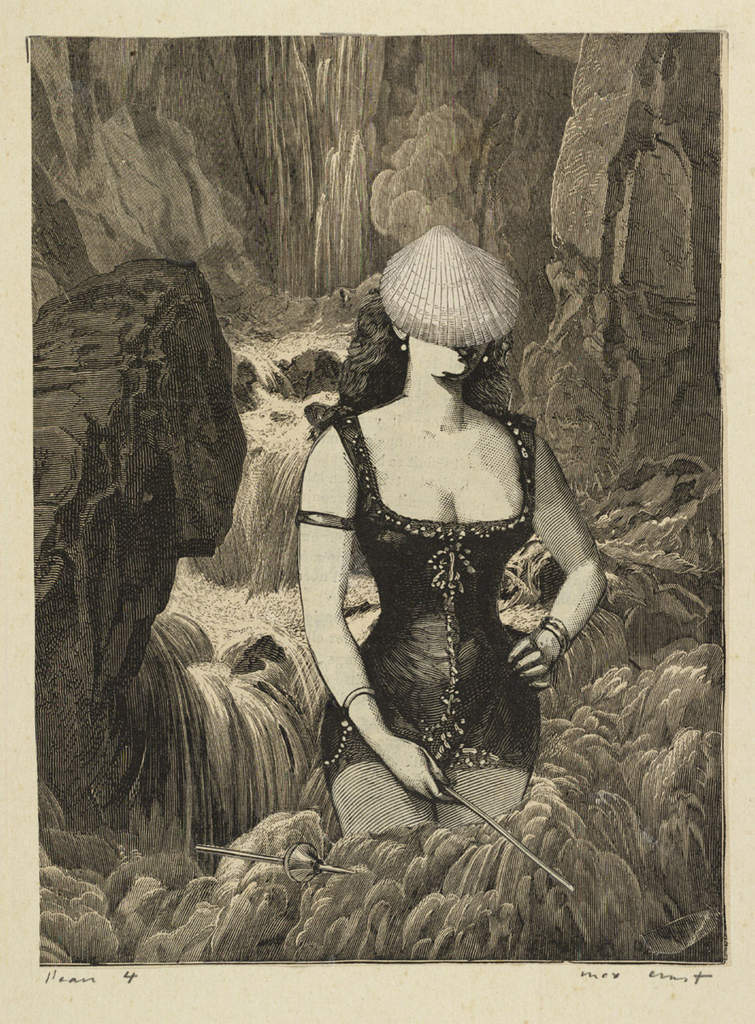
Max Ernst – collage from The Hundred Headless Woman (1929).

… There is always, in such movements, a moment when the original tension of the secret society must either explode in a matter-of-fact, profane struggle for power and domination, or decay as a public demonstration and be transformed. Surrealism is in this phase of transformation at present. But at the time when it broke over its founders as an inspiring dream wave, it seemed the most integral, conclusive, absolute of movements. Everything with which it came into contact was integrated. Life only seemed worth living where the threshold between waking and sleeping was worn away in everyone as by the steps of multitudinous images flooding back and forth, language only seemed itself where, sound and image, image and sound interpenetrated with automatic precision and such felicity that no chink was left for the penny-in-the-slot called ‘meaning’.

Image and language take precedence. Saint-Pol Roux, retiring to bed about daybreak, fixes a notice on his door: ‘Poet at work.’ Breton notes: ‘Quietly. I want to pass where no one yet has passed, quietly! After you, dearest language.’ Language takes precedence. Not only before meaning. Also before the self. In the world’s structure dream loosens individuality like a bad tooth. This loosening of the self by intoxication is, at the same time, precisely the fruitful, living experience that allowed these people to step outside the domain of intoxication.

This is not the place to give an exact definition of Surrealist experience. But anyone who has perceived that the writings of this circle are not literature but something else – demonstrations, watchwords, documents, bluffs, forgeries if you will, but at any rate not literature – will also know, for the same reason, that the writings are concerned literally with experiences, not with theories and still less with phantasms. And these experiences are by no means limited to dreams, hours of hashish eating, or opium smoking. It is a cardinal error to believe that, of ‘Surrealist experiences’, we know only the religious ecstasies or the ecstasies of drugs. The opium of the people, Lenin called religion, and brought the two things closer together than the Surrealists could have liked.

I shall refer later to the bitter, passionate revolt against Catholicism in which Rimbaud, Lautreamont, and Apollinaire brought Surrealism into the world. But the true creative overcoming of religious illumination certainly does not lie in narcotics. It resides in a profane illumination, ‘a materialistic, anthropological inspiration, to which hashish, opium, or whatever else can give an introductory lesson. (But a dangerous one; and the religious lesson is stricter.)

This profane illumination did not always find the Surrealists equal to it, or to themselves, and the very writings that proclaim it most powerfully, Aragon’s incomparable Paysan de Paris and Breton’s Nadja, show very disturbing symptoms of deficiency. For example, there is in Nadja an excellent passage on the ‘delightful days spent looting Paris under the sign of Sacco and Vanzetti’; Breton adds the assurance that in those days Boulevard Bonne-Nouvelle fulfilled the strategic promise of revolt ‘that had always been implicit in its name. But Madame Sacco also appears, not the wife of Fuller’s victim but avoyante, a fortune-teller who lives at 3 rue des Usines and tells Paul Eluard that he can expect no good from Nadja.

Now I concede that the breakneck career of Surrealism over rooftops, lightning conductors, gutters, verandas, weathercocks, stucco work – all ornaments are grist to the cat burglar’s mill-  may have taken it also into the humid backroom of spiritualism. But I am not pleased to hear it cautiously tapping on the window-panes to inquire about its future. Who would not wish to see these adoptive children of revolution most rigorously severed from all the goings-on in the conventicles of down-at-heel dowagers, retired majors, and emigre profiteers?

In other respects Breton’s book illustrates well a number of the basic characteristics of this ‘profane illumination’. He calls Nadja ‘a book with a banging door’. (In Moscow I lived in a hotel in which almost all the rooms were occupied by Tibetan lamas who had come to Moscow for a congress of Buddhist churches. I was struck by the number of doors in the corridors that were always left ajar. What had at first seemed accidental began to be disturbing. I found out that in these rooms lived members of a sect who had sworn never to occupy closed rooms. The shock I had then must be felt by the reader of Nadja.)

To live in a glass house is a revolutionary virtue par excellence. It is also an intoxication, a moral exhibitionism, that we badly need. Discretion concerning one’s own existence, once an aristocratic virtue, has become more and more an affair of petty-bourgeois parvenus. Nadja has achieved the true, creative synthesis between the art novel and the roman-a-clef.

Moreover, one need only take love seriously to recognize in it, too – as Nadja also indicates – a ‘profane illumination’. ‘At just that time’ (i.e., when he knew Nadja), the author tells us, ‘I took a great interest in the epoch of Louis VII, because it was the time of the ‘courts of love’, and I tried to picture with great intensity how people saw life then.’ We have from a recent author quite exact information on Provencal love poetry, which comes surprisingly close to the Surrealist conception of love. ‘All the poets of the ‘new style’,’ Erich Auerback points out in his excellent Dante: Poet of the Secular World, ‘possess a mystical beloved, they all have approximately the same very curious experience of love; to them all Amor bestows or withholds gifts that resemble an illumination more than sensual pleasure; all arc subject to a kind of secret bond that determines their inner and perhaps also their outer-lives’. The dialectics of intoxication are indeed curious. Is not perhaps all ecstasy in one world humiliating sobriety in that complementary to it? What is it that courtly Minne seeks, and it, not love, binds Breton to the telepathic girl, if not to make chastity, too, a transport? Into a world that borders not only on tombs of the Sacred Heart or altars to the Virgin, but also on the morning before a battle or after a victory.

Max Ernst - Une semaine de bonté [A Week of Kindness]. La clé des chants 1 [The Key of Songs 1] 1933

Max Ernst – Une semaine de bonté [A Week of Kindness]. La clé des chants 1 [The Key of Songs 1] 1933

The lady, in esoteric love, matters least. So, too, for Breton. He is closer to the things that Nadja is close to than to her. What are these things? Nothing could reveal more about Surrealism than their canon.Where shall I begin? He can boast an extraordinary discovery. He was the first to perceive the revolutionary energies that appear in the ‘outmoded’, in the first iron constructions, the first factory buildings, the earliest photos, the objects that have begun to be extinct, grand pianos, the dresses of five years ago, fashionable restaurants when the vogue has begun to ebb from them. The relation of these things to revolution, no one can have a more exact concept of it than these authors. No one before these visionaries and augurs perceived how destitution – not only social but architectonic, the poverty of interiors/enslaved and enslaving objects – can be suddenly transformed into revolutionary nihilism. Leaving aside Aragon’s Passage de I’Opera, Breton and Nadja are the lovers who convert everything that we have experienced on mournful railway journeys (railways are beginning to age), on Godforsaken Sunday afternoons in the proletarian quarters of the great cities, in the first glance through the rain-blurred window of a new apartment, into revolutionary experience, if not action. They bring the immense forces of ‘atmosphere’ concealed in these things to the point of explosion. What form do you suppose a life would take that was determined at a decisive moment precisely by the street song last on everyone’s lips?

Continue reading

paul celan – edgar jené and the dream about the dream (1948)

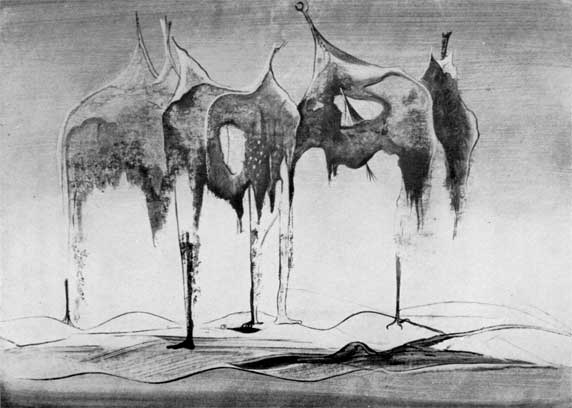
Edgar Jené. The Sea of Blood Covers the Land.

Edgar Jené. The Sea of Blood Covers the Land.

I am supposed to tell you some of the words I heard deep down in the sea where there is so much silence and so much happens. I cut my way through the objects and objections of reality and stood before the sea’s mirror surface. I had to wait until it burst open and allowed me to enter the huge crystal of the inner world. With the large lower star of disconsolate explorers shining above me, I followed Edgar Jené beneath his paintings.

Though I had known the journey would be strenuous, I worried when I had to enter one of the roads alone, without a guide. One of the roads! There were innumerable, all inviting, all offering me different new eyes to look at the beautiful wilderness on the other, deeper side of existence. No wonder that, in this moment when I still had my own stubborn old eyes, I tried to make comparisons in order to be able to choose. My mouth, however, placed higher than my eyes and bolder for having often spoken in my sleep, had moved ahead and mocked me: ‘Well, old identity­ monger, what did you see and recognize, you brave doctor of tautology? What could you recognize, tell me, along this unfamiliar road? An also­-tree or almost-tree, right? And now you are mustering your Latin for a letter to old Linnaeus? You had better haul up a pair of eyes from the bottom of your soul and put them on your chest: then you’ll find out what is happening here.’

Now I am a person who likes simple words. It is true, I had realised long before this journey that there was much evil and injustice in the world I had now left, but I had believed I could shake the foundations if I called things by their proper names. I knew such an enterprise meant returning to absolute naïveté. This naïveté I considered as a primal vision purified of the slag of centuries of hoary lies about the world. I remember a conversation with a friend about Kleist’s Marionette Theatre. How could one regain that original grace, which would become the heading of the last and, I suppose, loftiest chapter in the history of mankind?

It was, my friend held, by letting reason purify our unconscious inner life that we could recapture the immediacy of the beginning – which would in the end give meaning to our life and make it worth living. In this view, beginning and end were one, and a note of mourning for original sin was struck. The wall which separates today from tomorrow must be torn down so that tomorrow could again be yesterday. But what must we actually do now, in our own time, to reach timelessness, eternity, the marriage of tomorrow-and-yesterday? Reason, he said, must prevail. A bath in the aqua regia of intelligence must give their true (primitive) meaning back to words, hence to things, beings, occurrences. A tree must again be a tree, and its branch, on which the rebels of a hundred wars have been hanged, must again flower in spring.

Here my first objection came up. It was simply this: I knew that anything that happened was more than an addition to the given, more than an attribute, more or less difficult to remove from the essence, that it changed the essence in its very being and thus cleared the way for ceaseless transformation.

My friend was stubborn. He claimed that even in the stream of human evolution he could distinguish the constants of the soul, know the limits of the unconscious. All we needed was for reason to go down into the deep and haul the water of the dark well up to the surface. This well, like any other, had a bottom one could reach, and if only the surface were ready to receive the water from the deep, the sun of justice shining, the job would be done. But how can we ever succeed, he said, if you and people like you never come out of the deep, never stop communing with the dark springs?

I saw that this reproach was aimed at my professing that, since we know the world and its institutions are a prison for man and his spirit, we must do all we can to tear down its walls. At the same time, I saw which course this knowledge prescribed. I realised that man was not only languishing in the chains of external life, but was also gagged and unable to speak – and by speaking I mean the entire sphere of human expression – because his words (gestures, movements) groaned under an age-old load of false and distorted sincerity. What could be more dishonest than to claim that words had somehow, at bottom, remained the same! I could not help seeing that the ashes of burned-out meanings (and not only of those) had covered what had, since time immemorial, been striving for expression in man’s inner­ most soul.

How could something new and pure issue from this? It may be from the remotest regions of the spirit that words and figures will come, images and gestures, veiled and unveiled as in a dream. When they meet in their heady course, and the spark of the wonderful is born from the marriage of strange and most strange, then I will know I am facing the new radiance. It will give me a dubious look because, even though I have conjured it up, it exists beyond the concepts of my wakeful thinking; its light is not daylight; it is inhabited by figures which I do not recognise, but know at first sight. Its weight has a different heaviness, its colour speaks to the new eyes which my closed lids have given one another; my hearing has wandered into my fingertips and learns to see; my heart, now that it lives behind my forehead, tastes the laws of a new, unceasing, free motion. I follow my wandering senses into this new world of the spirit and come to know freedom. Here, where I am free, I can see what nasty lies the other side told me. Continue reading

fyodor tyutchev – silentium

Fedor_Tutchev

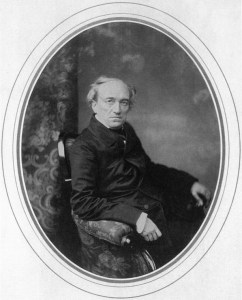
Fyodor Tyutchev, 1856.

Silentium! is an archetypal poem by Tyutchev. Written in 1830, it is remarkable for its rhythm crafted so as to make reading in silence easier than aloud. Like so many of his poems, its images are anthropomorphic and pulsing with pantheism. As one Russian critic put it, “the temporal epochs of human life, its past and its present fluctuate and vacillate in equal measure: the unstoppable current of time erodes the outline of the present.” *

Speak not, lie hidden, and conceal
the way you dream, the things you feel.
Deep in your spirit let them rise
akin to stars in crystal skies
that set before the night is blurred:
delight in them and speak no word.
How can a heart expression find?
How should another know your mind?
Will he discern what quickens you?
A thought, once uttered, is untrue.
Dimmed is the fountainhead when stirred:
drink at the source and speak no word.
Live in your inner self alone
within your soul a world has grown,
the magic of veiled thoughts that might
be blinded by the outer light,
drowned in the noise of day, unheard…
take in their song and speak no word.

(translated by Vladimir Nabokov)

on words and power

Anonymous Situationist Poster from 1968 Student Strike in Paris

Anonymous Situationist poster from 1968 student strike in Paris

The problem of language is at the heart of all the struggles between the forces striving to abolish the present alienation and those striving to maintain it. It is inseparable from the very terrain of those struggles.

We live within language as within polluted air. Despite what humorists think, words do not play. Nor do they make love, as Breton thought, except in dreams. Words work — on behalf of the dominant organization of life. Yet they are not completely automated: unfortunately for the theoreticians of information, words are not in themselves “informationist”; they contain forces that can upset the most careful calculations.

Words coexist with power in a relation analogous to that which proletarians (in the modern as well as the classic sense of the term) have with power. Employed by it almost full time, exploited for every sense and nonsense that can be squeezed out of them, they still remain in some sense fundamentally alien to it.

~ From “All the King’s Men”, which originally appeared in Internationale Situationniste #8 (Paris, January 1963). This translation by Ken Knabb is from the Situationist International Anthology (Revised and Expanded Edition, 2006). No copyright.

Read the rest of this statement HERE.

for the “treasonous”, the belville 6 – by ameera conrad

image

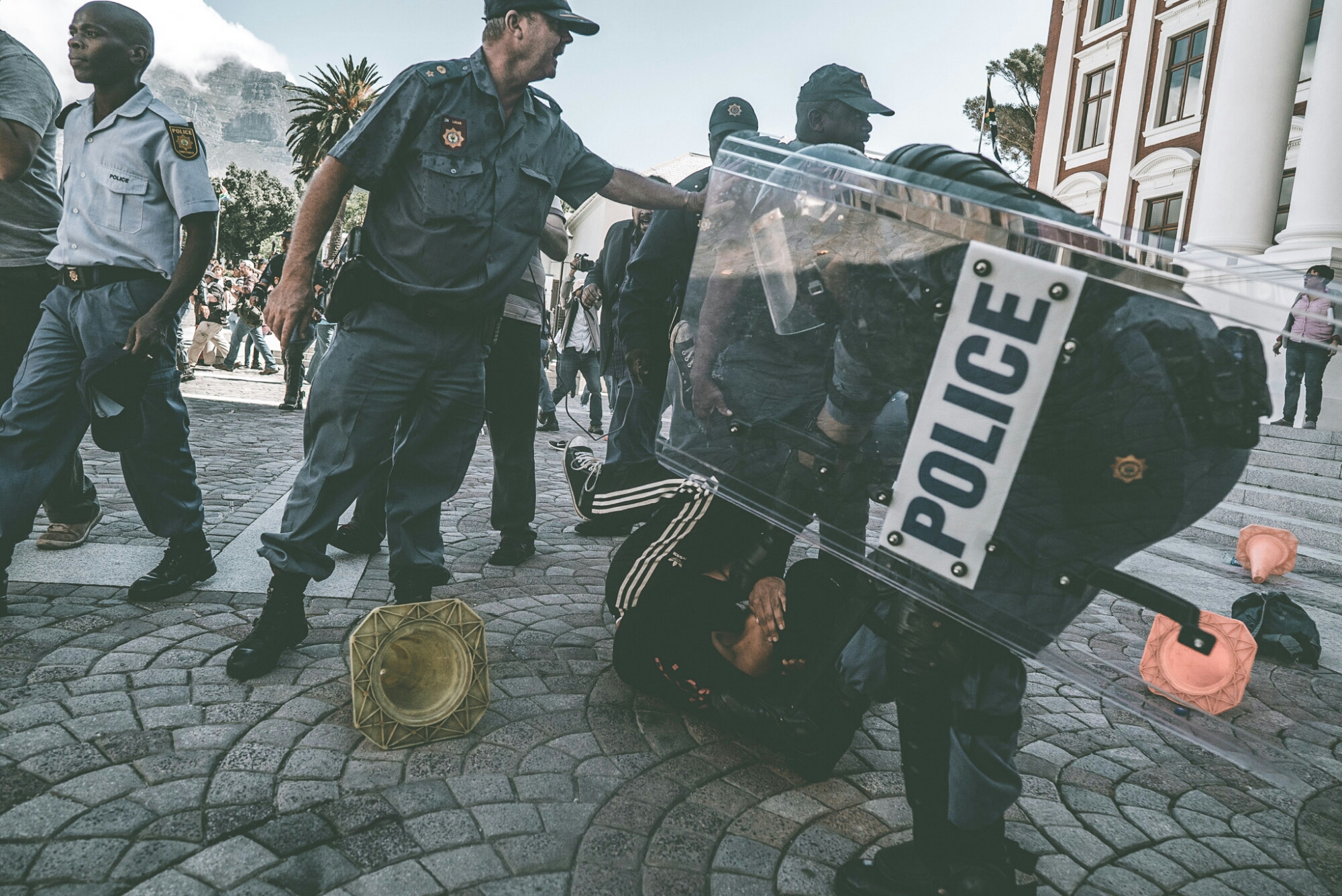
Outside Parliament, 21 October, 2015. Photo: Imraan Christian

He stood in front of us
held his palms up
be calm comrades
sit down comrades
do not do anything to antagonise them
Comrades.
They knew his face, though we could not see him between the arms of a chokehold.

He sat on the floor among us
legs crossed under him
Senzeni na?
Senzeni na?
They stunned us, clicked tazers.
White-police-coward-not-man
pulled him out and away.
Another chokehold.

He fell to the floor
when the first grenade cracked
through the crowd.
Pulled up and bashed against shields
holding his burned face
dragged across the gravel.
Senzeni na?

He sat on the steps
quietly
consoling comrades
away from the crowd
They ripped him to his feet
he showed his empty palms
into the back of a van.
No fists.
Empty palms.

He held his hands over his head.
He held his empty hands over his head.
He held his open palms over his head.
He held his head.

warsan shire – home

warsanno one leaves home unless
home is the mouth of a shark
you only run for the border
when you see the whole city running as well

your neighbours running faster than you
breath bloody in their throats
the boy you went to school with
who kissed you dizzy behind the old tin factory
is holding a gun bigger than his body
you only leave home
when home won’t let you stay.

no one leaves home unless home chases you
fire under feet
hot blood in your belly
it’s not something you ever thought of doing
until the blade burnt threats into
your neck
and even then you carried the anthem under
your breath
only tearing up your passport in an airport toilets
sobbing as each mouthful of paper
made it clear that you wouldn’t be going back.

you have to understand,
that no one puts their children in a boat
unless the water is safer than the land
no one burns their palms
under trains
beneath carriages
no one spends days and nights in the stomach of a truck
feeding on newspaper unless the miles travelled
means something more than journey.
no one crawls under fences
no one wants to be beaten
pitied

no one chooses refugee camps
or strip searches where your
body is left aching
or prison,
because prison is safer
than a city of fire
and one prison guard
in the night
is better than a truckload
of men who look like your father
no one could take it
no one could stomach it
no one skin would be tough enough

the
go home blacks
refugees
dirty immigrants
asylum seekers
sucking our country dry
niggers with their hands out
they smell strange
savage
messed up their country and now they want
to mess ours up
how do the words
the dirty looks
roll off your backs
maybe because the blow is softer
than a limb torn off

or the words are more tender
than fourteen men between
your legs
or the insults are easier
to swallow
than rubble
than bone
than your child body
in pieces.
i want to go home,
but home is the mouth of a shark
home is the barrel of the gun
and no one would leave home
unless home chased you to the shore
unless home told you
to quicken your legs
leave your clothes behind
crawl through the desert
wade through the oceans
drown
save
be hunger
beg
forget pride
your survival is more important

no one leaves home until home is a sweaty voice in your ear
saying-
leave,
run away from me now
i dont know what i’ve become
but i know that anywhere
is safer than here

Warsan Shire is a Kenyan-born Somali poet, writer and educator based in London. Born in 1988, Warsan has read her work extensively all over Britain and internationally – including recent readings in South Africa, Italy, Germany, Canada, North America and Kenya – and her début book, TEACHING MY MOTHER HOW TO GIVE BIRTH (flipped eye), was published in 2011. Her poems have been published in Wasafiri, Magma and Poetry Review and in the anthology The Salt Book of Younger Poets (Salt, 2011). She is the current poetry editor at SPOOK magazine. In 2012 she represented Somalia at the Poetry Parnassus, the festival of the world poets at the Southbank, London. Warsan is also the unanimous winner of the 2013 Inaugural Brunel University African Poetry Prize.

rilke – from the first duino elegy

rilkeIsn’t it time that we lovingly freed ourselves from the beloved and,
quivering, endured: as the arrow endures the bowstring’s tension,
so that gathered in the snap of release it can be more than itself?
For there is no place where we can remain.

Voices. Voices. Listen, my heart, as only saints have listened:
until the gigantic call lifted them off the ground;
yet they kept on, impossibly, kneeling and didn’t notice at all: so complete was their listening.
Not that you could endure God’s voice – far from it.
But listen to the voice of the wind and the ceaseless message that forms itself out of silence…

Of course, it is strange to inhabit the earth no longer,
to give up customs one barely had time to learn,
not to see roses and other promising Things in terms of a human future;
no longer to be what one was in infinitely anxious hands;
to leave even one’s own first name behind,
forgetting it as easily as a child abandons a broken toy.
Strange to no longer desire one’s desires.
Strange to see meanings that clung together once, floating away in every direction.
And being dead is hard work and full of retrieval before one can gradually feel a trace of eternity.
Though the living are wrong to believe in the too-sharp distinctions which
they themselves have created.
Angels (they say) don’t know whether it is the living they are moving among, or the dead.
The eternal torrent whirls all ages along in it, through both realms forever,
and their voices are drowned out in its thunderous roar.

lucy valerie graham – boland bluebeard

fallen-rose-petalsThey were unruffled,
The artist and his mistress, when I arrived in a battered kombi
To save the wife.

But she had already disappeared.

Only pink water in a bucket and a bloodstain
That smelled of detergent and would not wash out
On the floor near the fridge.

It is happening to me now.
As I try to hide behind the rose bushes,
He says: “Did you really think you could escape?”

louise gluck – celestial music

I have a friend who still believes in heaven.
Not a stupid person, yet with all she knows, she literally talks to God.
She thinks someone listens in heaven.
On earth she’s unusually competent.
Brave too, able to face unpleasantness.

We found a caterpillar dying in the dirt, greedy ants crawling over it.
I’m always moved by disaster, always eager to oppose vitality
But timid also, quick to shut my eyes.
Whereas my friend was able to watch, to let events play out
According to nature. For my sake she intervened
Brushing a few ants off the torn thing, and set it down
Across the road.

My friend says I shut my eyes to God, that nothing else explains
My aversion to reality. She says I’m like the child who
Buries her head in the pillow
So as not to see, the child who tells herself
That light causes sadness-
My friend is like the mother. Patient, urging me
To wake up an adult like herself, a courageous person-

In my dreams, my friend reproaches me. We’re walking
On the same road, except it’s winter now;
She’s telling me that when you love the world you hear celestial music:
Look up, she says. When I look up, nothing.
Only clouds, snow, a white business in the trees
Like brides leaping to a great height-
Then I’m afraid for her; I see her
Caught in a net deliberately cast over the earth-

In reality, we sit by the side of the road, watching the sun set;
From time to time, the silence pierced by a birdcall.
It’s this moment we’re trying to explain, the fact
That we’re at ease with death, with solitude.
My friend draws a circle in the dirt; inside, the caterpillar doesn’t move.
She’s always trying to make something whole, something beautiful, an image
Capable of life apart from her.
We’re very quiet. It’s peaceful sitting here, not speaking, the composition
Fixed, the road turning suddenly dark, the air
Going cool, here and there the rocks shining and glittering-
It’s this stillness we both love.
The love of form is a love of endings.

louise glück on the unsaid

louise-gluckI am attracted to ellipsis, to the unsaid, to suggestion, to eloquent, deliberate silence. The unsaid, for me, exerts great power: often I wish an entire poem could be made in this vocabulary. It is analogous to the unseen for example, to the power of ruins, to works of art either damaged or incomplete. Such works inevitably allude to larger contexts; they haunt because they are not whole, though wholeness is implied: another time, a world in which they were whole, or were to have been whole, is implied. There is no moment in which their first home is felt to be the museum. …

… It seems to me that what is wanted, in art, is to harness the power of the unfinished. All earthly experience is partial. Not simply because it is subjective, but because that which we do not know, of the universe, of mortality, is so much more vast than that which we do know. What is unfinished or has been destroyed participates in these mysteries. The problem is to make a whole that does not forfeit this power.

— From Louise Glück, “Disruption, Hesitation, Silence” in Proofs & Theories: Essays on Poetry (New York: Ecco, 1994) 74-75.