From Thirteen Tales of Love and Revenge (Lizard King Records, 2007). The Pierces are two sisters, Allison and Catherine Pierce, based in New York.
From Thirteen Tales of Love and Revenge (Lizard King Records, 2007). The Pierces are two sisters, Allison and Catherine Pierce, based in New York.
Album: Jeanne Moreau chante 12 chansons de Cyrus Bassiak (1963). With footage from Tony Richardson’s Mademoiselle (1966).
Je suis indolente, mes yeux sont vagues, vagues, vagues
Et je balance mes hanches vaguement
Mes lèvres remuent, fardées de mots si vagues, vagues
Les passants hésitent en me croisant
Le temps maudit toujours les presse
Le vent si lent pour celle qui attend
Le temps me berce de paresse
Alors je chante sans fin ce vague chant
{Refrain:}
Les jeux de l’amour sont comme les jeux du hasard
Qui rêve de cœur souvent est servi de pique noir
Qui cherche un regard reçoit des rires moqueurs
Les hommes nonchalants me font des signes vagues, vagues
Et me frôlent de l’épaule vaguement
Une étreinte vague entre deux êtres vagues, vagues
C’est un peu renier le néant
Le temps maudit toujours nous presse
Le temps pourtant qui va si lentement
Le temps efface mes caresses
Alors je chante sans fin ce vague chant
{au Refrain}
Et je suis si triste quand les hommes vagues, vagues, vagues
Se reposent dans mes bras vaguement
Vaguement divaguent dans leur sommeil si vague, vague
Quand ils dorment, ils ressemblent aux enfants
Le temps maudit toujours m’oppresse
Le temps qui va son lent balancement
Le temps emporte ma tendresse
Alors je chante sans fin ce vague chant
After the jump, here’s a vaguely crappy semi-automatic translation of the lyrics. It’s a hard song to translate because of the pun on the French word “vague” – wave (the motion), wave (the gesture), vague (indeterminate)…
Continue reading
The final track on the Pierce sisters’ album, You and I (Polydor, 2011).
WARNING: This may be considered very NSFW if you live in the same society that got Petra Collins’ Instagram account deleted.
MissAsssnatch goes naa-na-na naa-na. Hairy Ass Girlpits (2007) by MissAsssnatch – Music credits: “Pistolet Joe” performed by Anna Karina.
Misanthropic Girlpit Petting (2010) by MissAsssnatch – Music credits: “Sleep Alone” performed by Rowland S Howard.
This song is the warmest hug I know. If you need one, here you go…
Sandy Denny on a twelve-string guitar, recorded at home, Byfield Northants, June 1976.
A solo performance by Thelonius Monk of four Ellington tunes: “Satin Doll,” “Sophisticated Lady,” “Caravan” and “Solitude”. Then he plays his own composition “Crepuscule With Nellie,” before joining the Joe Turner Trio in a performance of “Blues for Duke.” These performances are available on the DVD Monk Plays Ellington: Solo Piano in Berlin ’69.
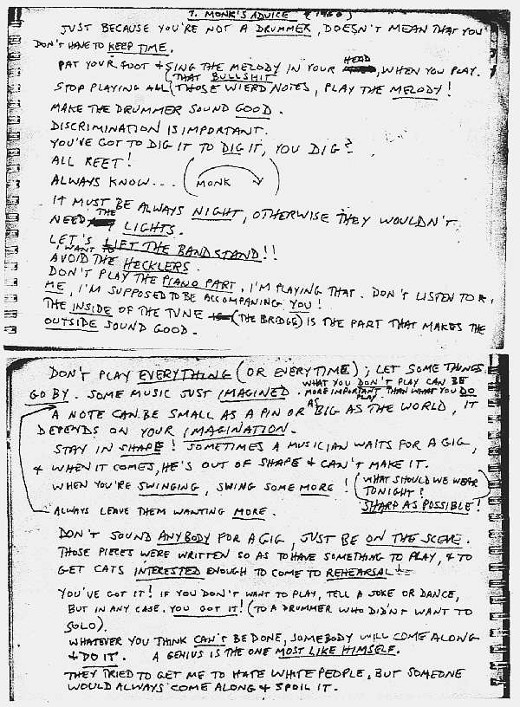
“Don’t play everything (or every time); let some things go by. Some music just imagined. What you don’t play can be more important than what you do.”
Found HERE.
Transcript after the jump. Continue reading
1988. Enigma Records. Essential.
00:00 Teen Age Riot
06:58 Silver Rocket
10:46 The Sprawl
18:29 ‘Cross the Breeze
25:29 Eric’s Trip
29:18 Total Trash
36:52 Hey Joni
41:14 Providence
43:56 Candle
48:55 Rain King
53:35 Kissability
56:44 Trilogy: a)The Wonder b)Hyperstation c)Eliminator Jr.
A collaboration between Stereolab and UI, covering Brian Eno’s song in 1998.
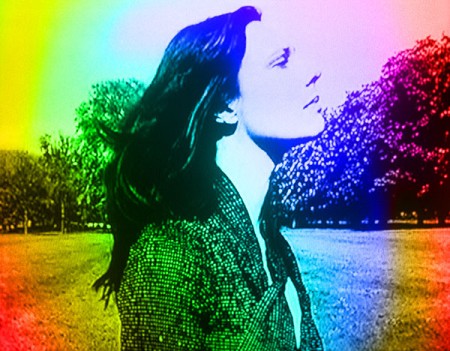
Laetitia Sadier of Stereolab
![[Juliette Gréco]](https://fleurmach.com/wp-content/uploads/2013/10/juliette-grc3a9co.jpg)
Juliette Gréco
― Nick Hornby, High Fidelity
Excerpted from an article by Martha Kempner, published at RH Reality Check, October 9, 2013 – 12:43 pm
A new study finds that almost one in ten teens and young adults admit to forcing someone into some form of sexual activity. Even more surprising: 50 percent of perpetrators blame the victim for the incident. According to the study, “links between perpetration and violent sexual media are apparent.”

(RobinThickeVevo / YouTube)
A new study funded by the Centers for Disease Control and Prevention and published online in the Journal of the American Medical Association found that one in ten teens said they had coerced another person into some form of sexual activity. In an online survey in 2010 and 2011, researchers asked 1,058 young people ages 14 to 21 whether they had ever “kissed, touched, or done anything sexual with another person when that person did not want you to?” The results surprised even the lead researcher, Michele Ybarra, who told NPR, “I don’t get creeped out very often, but this was wow.”
This intense reaction stems from the fact that 9 percent of teens said they had coerced another person. Specifically, 8 percent said they had kissed or touched someone when they knew that person did not want to, 3 percent said they “got someone to give in to unwilling sex,” 3 percent said they attempted rape, and 2 percent said they actually raped someone. (This adds to more than 9 percent because young people could admit to more than one behavior.)…
… The authors also note that 50 percent of all perpetrators said that the victim was responsible for the sexual violence. Moreover, most perpetrators said no one ever found out about their actions. The authors conclude, “Because victim blaming appears to be common while perpetrators experiencing consequences is not, there is urgent need for high school (and middle school) programs aimed at supporting bystander intervention.”…
… The survey was conducted as part of an ongoing study called Growing Up With Media. In addition to asking about sexual coercion, respondents were asked about the media they watched. The study found that perpetrators tended to report more frequent exposure to media that depicted sexual and violent situations than those who had not coerced another person, but the results were not always statistically significant. Still, the authors conclude:
[L]inks between perpetration and violent sexual media are apparent, suggesting a need to monitor adolescents’ consumption of this material, particularly given today’s media saturation among the adolescent population.
Elizabeth Schroeder, the executive director of Answer, an organization that educates young people about sexuality and trains teachers, agrees that media consumption is part of the problem. She told RH Reality Check, “This study is extremely distressing, but unfortunately, not a surprise. Sexuality education rarely starts before high school, and by then young people have already received very distorted messages about sex, relationships, and boundaries from other sources such as the media, their peers, adults in their lives, and so on.” Schroeder added, “Age-appropriate lessons about relationships need to start in early childhood and continue throughout high school.”
Read the full article HERE.
One of the most overtly disturbing of Phil Spector’s “wall of sound” productions, released in 1962 on Philles Records.
Dave Thompson writes of the single on AllMusic:
“He Hit Me (And It Felt Like A Kiss)” was written by Gerry Goffin and Carole King, after their live-in babysitter Eva Boyd (19-year-old singer Little Eva) returned from a weekend away with her boyfriend, covered in bruises. The boyfriend seemed to have spent the entire weekend hitting the girl but, when questioned about it, the girl didn’t bat an eyelid. He hit her because he loved her. And, in the song, because she deserved it.
It was a brutal song, as any attempt to justify such violence must be, and Spector’s arrangement only amplified its savagery, framing Barbara Alston’s lone vocal amid a sea of caustic strings and funereal drums, while the backing vocals almost trilled their own belief that the boy had done nothing wrong. In more ironic hands (and a more understanding age), “He Hit Me” might have passed at least as satire. But Spector showed no sign of appreciating that, nor did he feel any need to.

Filthy Phil Spector in the dock, on trial for murdering his girlfriend Lana Clarkson (via Warrick Sony). Just have to share some of the hil-hair-ious comments under the post on Facebook:
Kevin Breed – Wall of hair
Lizza Littlewort – Hairy Antoinette.
Merle Payne – Good Vrou.
Gary Herselman – Is that Phil wigging out again?
Warrick Sony – Phuckwit Phil at his murder of girlfriend trial
Charlie Hamilton – And inside there somewhere is the brain that started the ‘wall of sound’
Andrew Freedman – You are looking good sir ! All those cosmic sounds are taking effect ! Haribol
SJ Ryan – Things took a turn for the worse when he attacked the prosecutor with an afro comb
David Forbes – the evidence was hair-raising.
Merle Payne – Bad hair day.
Warrick Sony – Hair today gone tomorrow
Rosemary Lombard – Full Spectre
Lesley Perkes – hair lair there
Warrick Sony – wait for it… … Hair Traffic Controller
Warrick Sony – oh and the Eno song: “Burning Hairlines Give You so much more”
“Windows all open, chaos in my hair…” from Smile (Creation Records, 1990).
Yeah… hypnotic immersion. BRING IT. Off their new album, From Tomorrow.
HITD 020 – Vinyl LP
Co-Release: Hands In The Dark / All Time Low
Release date: 30th September 2013
Off Dummy (Go! Discs, 1994).
I fell into Sarah Jaffe down one of those magic late night Youtube rabbit holes a month or so ago… Such a lovely accident. This is off her 2010 album, Suburban Nature (on Kirtland Records).
The original version was off the 1990 album, Lovey.
From the 2011 album Don’t Explain with Joe Bonamassa. Originally written and sung by Bobby Bland, “I’ll take care of you” has been performed by artists as diverse as Etta James and Mark Lanegan.
From Lyte as a Rock (1988, First Priority Music/Atlantic Records).
dark phrases of womanhood
of never havin been a girl
half-notes scattered
without rhythm/no tune
distraught laughter fallin
over a black girl’s shoulder
it’s funny/it’s hysterical
the melody-less-ness of her dance
don’t tell nobody don’t tell a soul
she’s dancin on beer cans & shingles
this must be the spook house
another song with no singers
lyrics/no voices
& interrupted solos
unseen performances
are we ghouls?
children of horror?
the joke?
don’t tell nobody don’t tell a soul
are we animals? have we gone crazy?
i can’t hear anythin
but maddening screams
& the soft strains of death
& you promised me
you promised me…
somebody/anybody
sing a black girl’s song
bring her out
to know herself
to know you
but sing her rhythms
carin/struggle/hard times
sing her song of life
she’s been dead so long
closed in silence so long
she doesn’t know the sound
of her own voice
her infinite beauty
she’s half-notes scattered
without rhythm/no tune
sing her sighs
sing the song of her possibilities
sing a righteous gospel
let her be born
let her be born
& handled warmly.
— from For Colored Girls Who Have Considered Suicide When the Rainbow is Enuf. Macmillan Publishing, 1977. Shange was born Paulette L. Williams in Trenton, New Jersey. She later changed her name to isiXhosa/isiZulu – read more HERE.
Harlem Cultural Festival, 1969.
Thulani Davis writes of Nina Simone:
What Simone did for African American women was more liberating than the sweet elegance of her take on “I Love You, Porgy” (delivered without the fake dialect of all its predecessors), the thought-provoking militancy she added to spirituals like “Sinnerman,” or the wicked humor of “Old Jim Crow” and “Go Limp,” or the wonderfully ironic cover of Screamin’ Jay Hawkins’s kitsch hit, “I Put a Spell on You.”
First of all, her songs, whether covers or original compositions, always privileged the black woman’s point of view; they spoke for the dispossessed Sister Sadie who cleaned floors or raised children who would never in their lives again treat black women with respect.
Yes, you lied to me all these years/told me to wash and clean my ears/and talk real fine, just like a lady/and you’d stop calling me Sister Sadie.
“See Line Woman” viewed its exotic black female as an object of desire and admiration in a way unknown outside of the black poetry that was its source, or those raunchy blues songs that polite Negroes did not play, which nonetheless lauded the virtues of a full body and brown skin.
My skin is black/My arms are long/My hair is wooly/My back is strong/Strong enough to take the pain/Inflicted again and again/What do they call me?/My name is Aunt Sara. — “Four Women”
It was “Four Women,” an instantly accessible analysis of the damning legacy of slavery, that made iconographic the real women we knew and would become. For African American women it became an anthem affirming our existence, our sanity, and our struggle to survive a culture which regards us as anti-feminine. It acknowledged the loss of childhoods among African American women, our invisibility, exploitation, defiance, and even subtly reminded that in slavery and patriarchy, your name is what they call you. Simone’s final defiant scream of the name Peaches was our invitation to get over color and class difference and step with the sister who said:
My skin is brown/My manner is tough/I’ll kill the first mother I see/ My life has been rough/I’m awfully bitter these days/Because my parents were slaves.
For African American women artists of my generation, “Four Women” became the core of works to come, notably Julie Dash’s film of the same name, and it should be regarded a direct ancestor of Ntozake Shange’s For Colored Girls Who Have Considered Suicide When the Rainbow Is Enuf. This Simone song was a call heard by Alice Walker, Toni Cade Bambara, Gayl Jones, and countless artists who come to mind as women who gave us a whole generation of the stories of Aunt Sara, Safronia, Sweet Thing, and Peaches.
May the High Priestess’s cult widen to take in the unwise who made her as outrageous as she was.
Read the rest of this article over at The Village Voice.
Cover of the Ronnie Earl/Mighty Sam McClain blues/soul classic – this is a tremendous bootleg recorded on 24 October 2006 at Rio Theatre, Santa Cruz.
“The character of Lucia has become an icon in opera and beyond, an archetype of the constrained woman asserting herself in society. She reappears as a touchstone for such diverse later characters as Flaubert’s adulterous Madame Bovary and the repressed Englishwomen in the novels of E.M. Forster. The insanity that overtakes and destroys Lucia, depicted in opera’s most celebrated mad scene, has especially captured the public imagination. Donizetti’s handling of this fragile woman’s state of mind remains seductively beautiful, thoroughly compelling, and deeply disturbing. Madness as explored in this opera is not merely something that happens as a plot function: it is at once a personal tragedy, a political statement, and a healing ritual.” (Commentary from HERE)
Maria Callas performs “Il dolce suono mi colpì di sua voce”, the “Mad Scene” from the opera Lucia di Lammermoor by Gaetano Donizetti, recorded live in Florence in February 1953. Tullio Serafin conducted Callas, Giuseppe di Stefano, Tito Gobbi, Raffaele Arie, Valliano Natali, Maria Canali, Maggio Musical Fiorentino Orchestra & Maggio Musicale Fiorentino Chorus.
The discussion in the comments underneath the video is quite entertaining, especially if read in light of the Anne Carson essay I posted earlier. Continue reading
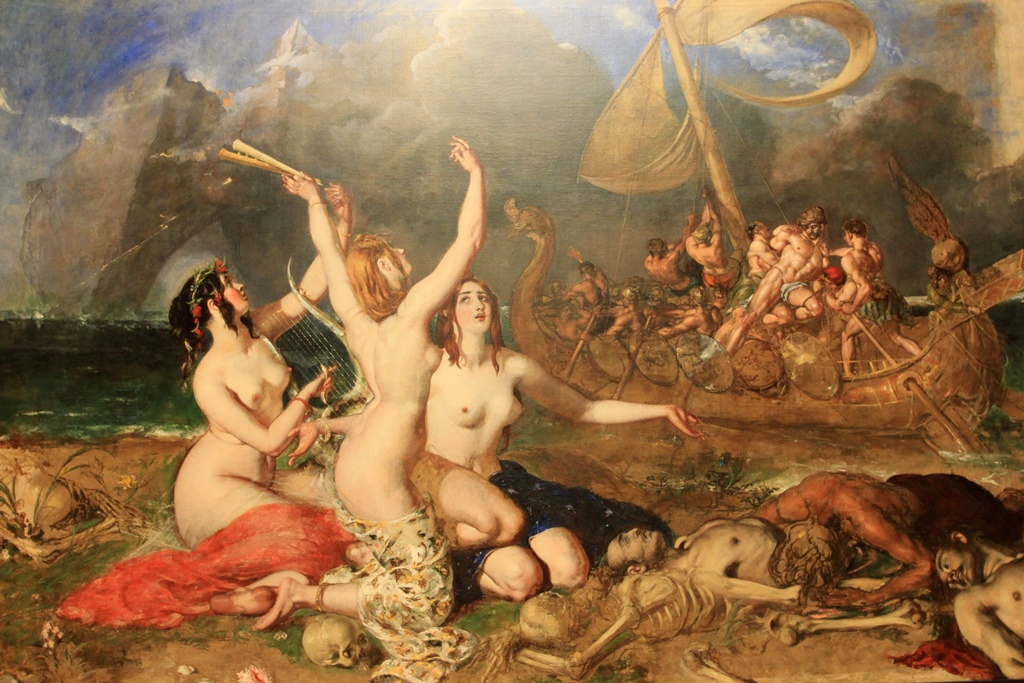
William Etty – “The Siren and Ulysses”, 1837.
Madness and witchery as well as bestiality are conditions commonly associated with the use of the female voice in public, in ancient as well as modern contexts. Consider how many female celebrities of classical mythology, literature and cult make themselves objectionable by the way they use their voice.
For example, there is the heart-chilling groan of the Gorgon, whose name is derived from a Sanskrit word, *garg meaning “a guttural animal howl that issues as a great wind from the back of the throat through a hugely distended mouth”. There are the Furies whose high-pitched and horrendous voices are compared by Aiskhylos to howling dogs or sounds of people being tortured in hell (Eumenides). There is the deadly voice of the Sirens and the dangerous ventriloquism of Helen (Odyssey) and the incredible babbling of Kassandra (Aiskhylos, Agamemnon) and the fearsome hullabaloo of Artemis as she charges through the woods (Homeric Hymn to Aphrodite). There is the seductive discourse of Aphrodite which is so concrete an aspect of her power that she can wear it on her belt as a physical object or lend it to other women (Iliad). There is the old woman of Eleusinian legend Iambe who shrieks obscenities and throws her skirt up over her head to expose her genitalia. There is the haunting garrulity of the nymph Echo (daughter of Iambe in Athenian legend) who is described by Sophokles as “the girl with no door on her mouth” (Philoktetes).
Putting a door on the female mouth has been an important project of patriarchal culture from antiquity to the present day. Its chief tactic is an ideological association of female sound with monstrosity, disorder and death.
— From “The Gender of Sound”, in Glass, Irony and God. New Directions, 1995: pp 120-121
The brilliant Anne Carson presents a history of the gendered voice, from Sophocles to Gertrude Stein. She outlines what is at stake in our assumptions around sound, questioning whether the concept of ‘self-control’ is a barrier to acknowledging other forms of human order, feeding into wider debates on social order, both past and present.
Read the whole essay HERE.
From Lovers Rock (Epic, 2000).
One of my favourites off Pornography (Fiction Records, 1982).
My head falls back
And the walls crash down
And the sky
And the impossible
Explode
Held for one moment, I remember a song
An impression of sound
Then everything is gone
Forever
From her second solo album, 13.13, released on Ruby Records (a subsidiary of Slash Records) in 1982.
The plastic crumbles and the walls fall in
The sidewalk’s melting, I begin to spin
You know where I’m going and
You know where I’ve been
My mind’s exploding like it’s never been
The sidewalk’s melting, I begin to spin
I can’t look down, I might fall in
From Broken English (Island Records, 1979) – penned by Shel Silverstein.
“If you feel you’re standing on solid ground, you’re DEAD.”
— David Bowie, on the creative process

 fleurmach