getting near nothing
asymptotes, bru
how the aching distance echoes right up close
Category Archives: embodiment
inflamed
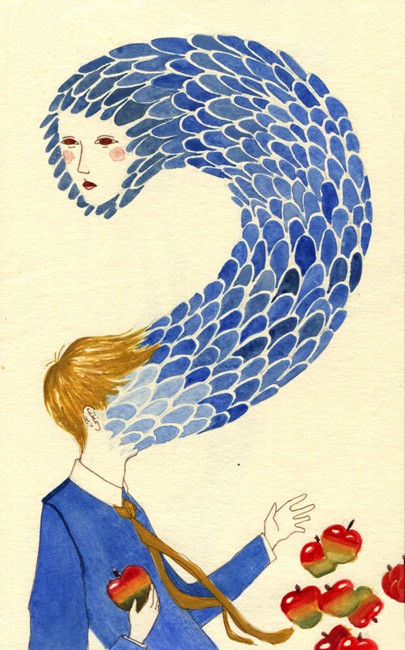
Exit-deer: “He left himself with frightening pace”
“Almost every day I can feel myself suffering mainly in the head, I can explain the pain to myself but knowing it comes from an inflammation of my imagination doesn’t prevent it being reality itself. What’s more I’d be crazy not to go crazy. We don’t know what an illness is. On awful hurts we plaster little old words, as if we could think hell with a paper bandage.”
― Hélène Cixous, Hyperdream
angel olsen – safe in the womb (live)
“Out of this labyrinth that makes our world
How do we ever know the light inside ourselves?
To know that the skin we wear is raw
That we can be anything if we know anything at all”
Live at Bush Hall, London, in August 2013.
in every dream home a headache
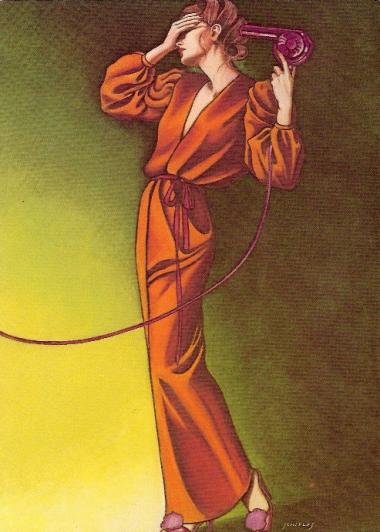
Old card I found in a mattress shop in Cape Town (artist unknown)
why monsanto is evil (it’s not science-fiction)

HERE is an article discussing some of the non-“woo” (pseudo-scientific hippie freak-out) reasons why companies like Monsanto pushing genetically modified products are doing evil: the corporate imperatives and corruption surrounding the development of GMOs, how their use disempowers farmers (especially small farmers in non-first world contexts, although this article only talks about the USA) and what we can do about this deception being perpetrated against the world.
Apart from being economically unsustainable, there are also other compelling health-related reasons why GMOs are a bad idea, which don’t involve a non-specific, irrational fear of genetic mutations being dangerous to consume per se. For example, the seeds are engineered to be resistant to pesticides so that crops can be sprayed and only the weeds growing among the GM plants die. Studies have shown that GM food (or the meat of animals that ate GM food) can be contaminated by traces of the pesticides used during the plants’ growth, pesticides that are teratogenic (causing birth defects) and carcinogenic (causing cancer) to humans. These modifications also lead to resistance in plants and insect pests – “superweeds” and “superbugs” that make sustainable farming more difficult.
If you are South African, please GO HERE to sign a petition as part of the formal public participation process against an application by multinational agricultural company Dow AgroSciences, a wholly owned subsidiary of the Dow Chemical Company, to import GM cottonseed products to South Africa, for use as food, animal feed and in processing.
brian eno: imaginary landscapes (1989)
“I thought: I want to make a kind of music that had the long Now and the big Here in it, and for me that meant this idea of expanding the music out to the horizons. In terms of space, you were not aware of the edges of the music. I wanted to make a music where you just wouldn’t know what was music and what wasn’t… a music that included rather than excluded; a music that didn’t have a beginning and an end… This is the sense of making the Now longer.”
A 1989 documentary on Brian Eno’s work in ambient sound.
guard your hearts
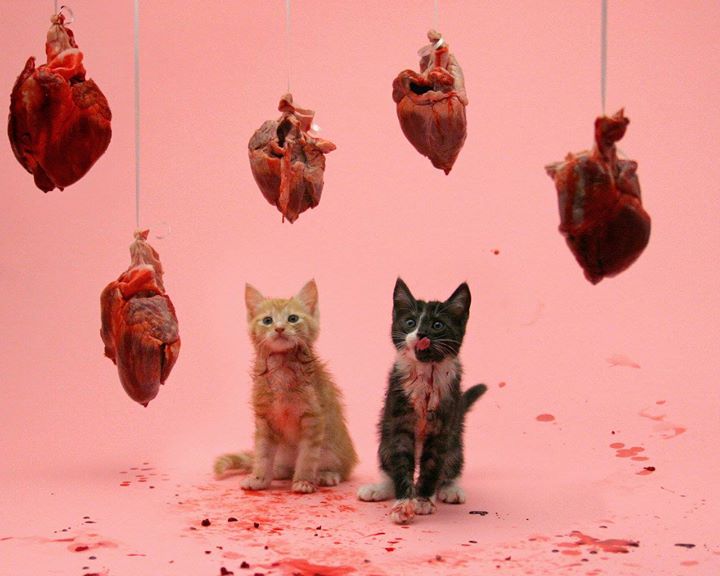
non, rien de rien

éléonore pourriat – oppressed majority (majorité opprimée)
What does a day in the life of a woman look like? Maybe it’s easier to see if the woman is a man. Oppressed Majority (2010) is a French short by Éléonore Pourriat which uses role reversals to shine a new light on the micro-aggressions and macro-aggressions that are an all-too-common part of the female experience. Via wifey.tv.
megan mitchell – gash
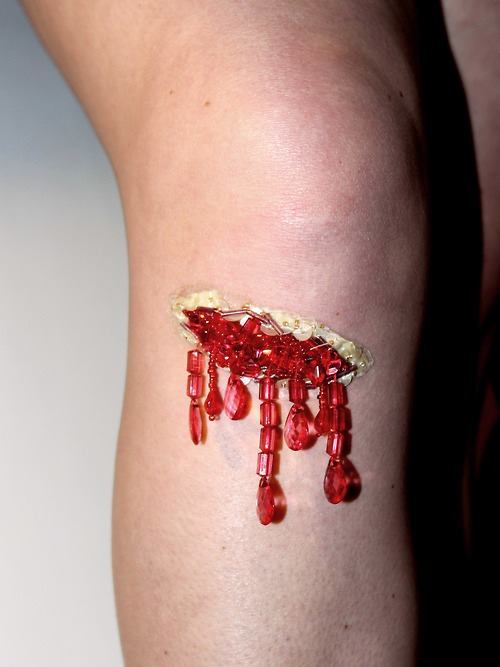
Megan Mitchell – “Gash” (2012)
Check out more of her work related to wounds and healing HERE.
rachel baran – self portrait
 Check out more of this young photographer’s work HERE.
antonio mora – dream portraits
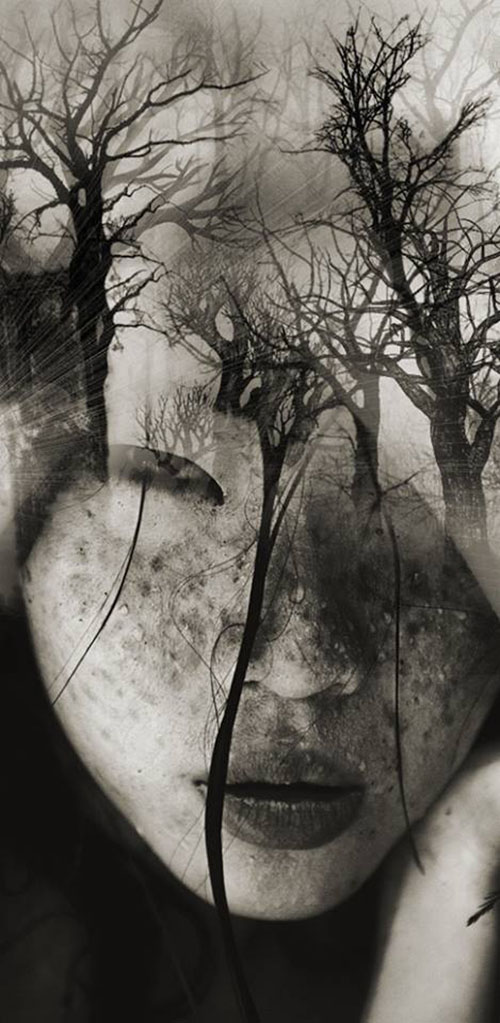
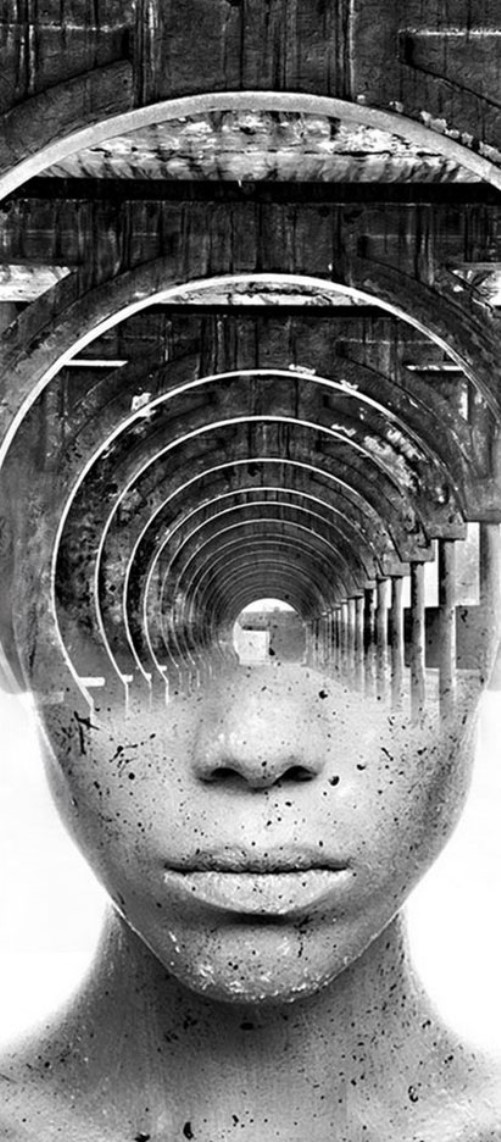
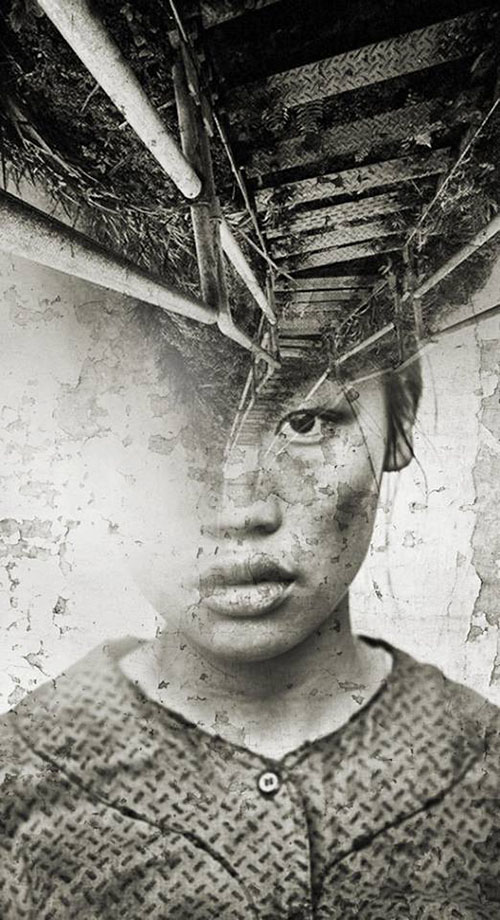
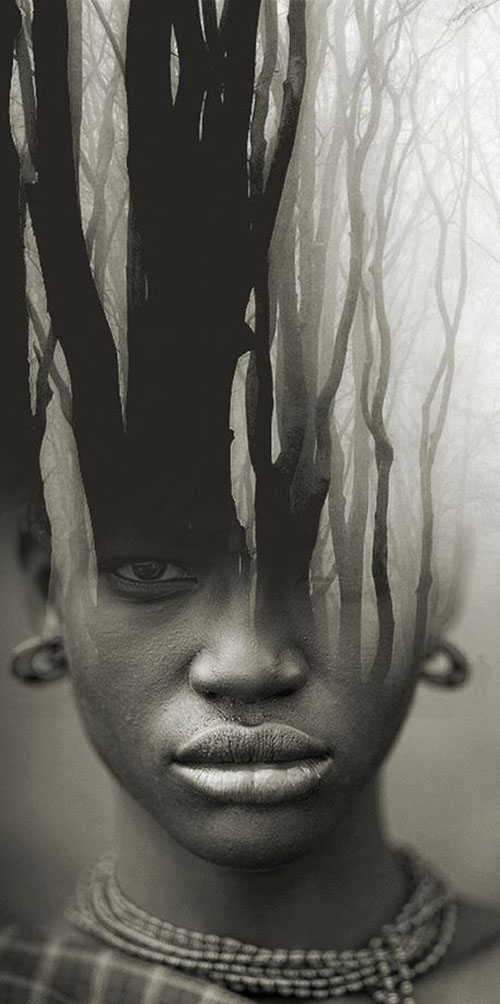 Spanish artist Antonio Mora is a creative photographer who transforms simple portraits into dreamscapes filled with intriguing emotion. In the series entitled Dream Portraits, the artist blends two elements together to form an elegantly abstract fusion where distinct lines and shapes are no longer evident. The images feature hauntingly beautiful faces that emerge from misty black and white forms like tree branches, rivers, bridges and cloudy skies.

roald dahl – the sound machine (1949)
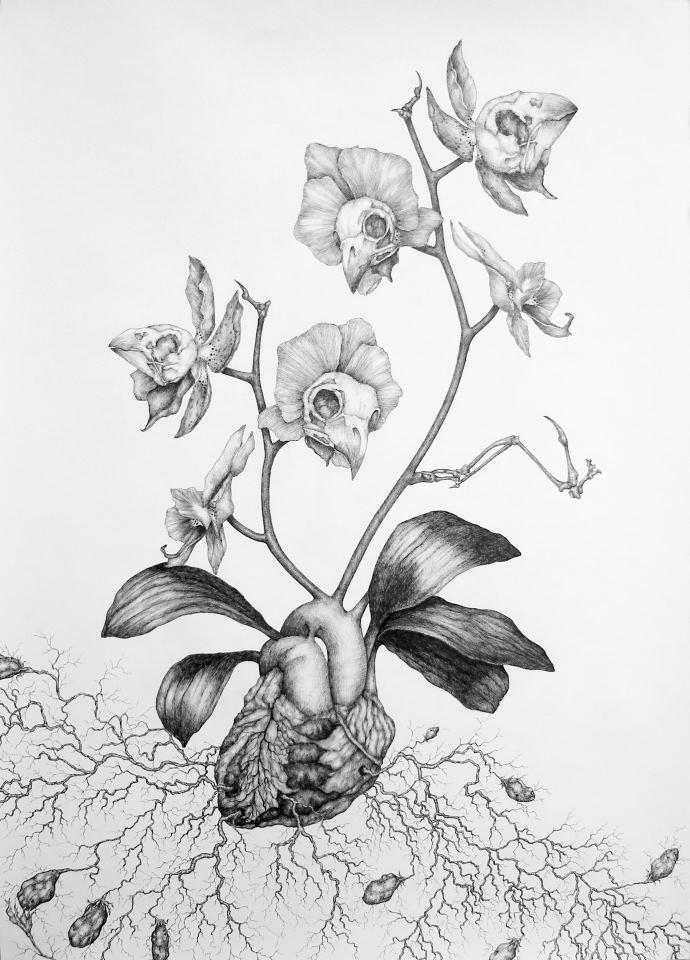
Kate Street – Orchis Nodulosa
For a while longer, Klausner fussed about with the wires in the black box; then he straightened up and in a soft excited whisper said, “Now we’ll try again… We’ll take it out into the garden this time… and then perhaps, perhaps… the reception will be better. Lift it up now… carefully… Oh, my God, it’s heavy!”
He carried the box to the door, found that he couldn’t open the door without putting it down, carried it back, put it on the bench, opened the door, and then carried it with some difficulty into the garden. He placed the box carefully on a small wooden table that stood on the lawn. He returned to the shed and fetched a pair of earphones. He plugged the wire connections from the earphones into the machine and put the earphones over his ears. The movements of his hands were quick and precise. He was excited, and breathed loudly and quickly through his mouth. He kept on talking to himself with little words of comfort and encouragement, as though he were afraid–afraid that the machine might not work and afraid also of what might happen if it did. He stood there in the garden beside the wooden table, so pale, small and thin that he looked like an ancient, consumptive, bespectacled child.
The sun had gone down. There was no wind, no sound at all. From where he stood, he could see over a low fence into the next garden, and there was a woman walking down the garden with a flower-basket on her arm. He watched her for a while without thinking about her at all. Then he turned to the box on the table and pressed a switch on its front. He put his left hand on the volume control and his right hand on the knob that moved a needle across a large central dial, like the wavelength dial of a radio. The dial was marked with many numbers, in a series of bands, starting at 15,000 and going on up to 1,000,000. And now he was bending forward over the machine. His head was cocked to one side in a tense, listening attitude. His right hand was beginning to turn the knob.
The needle was travelling slowly across the dial, so slowly he could hardly see it move, and in the earphones he could hear a faint, spasmodic crackling. Behind this crackling sound he could hear a distant humming tone which was the noise of the machine itself, but that was all. As he listened, he became conscious of a curious sensation, a feeling that his ears were stretching out away from his head, that each ear was connected to his head by a thin stiff wire, like a tentacle, and that the wires were lengthening, that the ears were going up and up towards a secret and forbidden territory, a dangerous ultrasonic region where ears had never been before and had no right to be. The little needle crept slowly across the dial, and suddenly he heard a shriek, a frightful piercing shriek, and he jumped and dropped his hands, catching hold of the edge of the table.
He stared around him as if expecting to see the person who had shrieked. There was no one in sight except the woman in the garden next door, and it was certainly not she. She was bending down, cutting yellow roses and putting them in her basket. Again it came–a throatless, inhuman shriek, sharp and short, very clear and cold. The note itself possessed a minor, metallic quality that he had never heard before.
Klausner looked around him, searching instinctively for the source of the noise. The woman next door was the only living thing in sight. He saw her reach down; take a rose stem in the fingers of one hand and snip the stem with a pair of scissors. Again he heard the scream. It came at the exact moment when the rose stem was cut. At this point, the woman straightened up, put the scissors in the basket with the roses and turned to walk away.
“Mrs Saunders!” Klausner shouted, his voice shrill with excitement. “Oh, Mrs Saunders!” And looking round, the woman saw her neighbour standing on his lawn–a fantastic, arm-waving little person with a pair of earphones on his head–calling to her in a voice so high and loud that she became alarmed. “Cut another one! Please cut another one quickly!”
She stood still, staring at him. “Why, Mr Klausner,” she said, “What’s the matter?”
“Please do as I ask,” he said. “Cut just one more rose!”
Mrs Saunders had always believed her neighbour to be a rather peculiar person; now it seemed that he had gone completely crazy. She wondered whether she should run into the house and fetch her husband. No, she thought. No, he’s harmless. I’ll just humour him.
“Certainly, Mr Klausner, if you like,” she said.
She took her scissors from the basket, bent down and snipped another rose. Again Klausner heard that frightful, throatless shriek in the earphones; again it came at the exact moment the rose stem was cut. He took off the earphones and ran to the fence that separated the two gardens. “All right,” he said. “That’s enough. No more. Please, no more.”
The woman stood there, a yellow rose in one hand, clippers in the other, looking at him.”I’m going to tell you something, Mrs Saunders,” he said, “something that you won’t believe.” He put his hands on top of the fence and peered at her intently through his thick spectacles. “You have, this evening, cut a basketful of roses. You have, with a sharp pair of scissors, cut through the stems of living things, and each rose that you cut screamed in the most terrible way. Did you know that, Mrs Saunders?”
“No,” she said. “I certainly didn’t know that.”
“It happens to be true,” he said. He was breathing rather rapidly, but he was trying to control his excitement. “I heard them shrieking. Each time you cut one, I heard the cry of pain. A very high-pitched sound, approximately one hundred and thirty-two thousand vibrations a second. You couldn’t possibly have heard it yourself. But I heard it.”
“Did you really, Mr Klausner?” She decided she would make a dash for the house in about five seconds.
“You might say,” he went on, “that a rose bush has no nervous system to feel with, no throat to cry with. You’d be right. It hasn’t. Not like ours, anyway. But how do you know, Mrs Saunders”–and here he leaned far over the fence and spoke in a fierce whisper, “how do you know that a rose bush doesn’t feel as much pain when someone cuts its stem in two as you would feel if someone cut your wrist off with a garden shears? How do you know that? It’s alive, isn’t it?”
“Yes, Mr Klausner. Oh, yes and good night.”
Quickly she turned and ran up the garden to her house. Klausner went back to the table. He put on the earphones and stood for a while listening. He could still hear the faint crackling sound and the humming noise of the machine, but nothing more. He bent down and took hold of a small white daisy growing on the lawn. He took it between thumb and forefinger and slowly pulled it upward and sideways until the stem broke. From the moment that he started pulling to the moment when the stem broke, he heard–he distinctly heard in the earphones–a faint high-pitched cry, curiously inanimate.
He took another daisy and did it again. Once more he heard the cry, but he wasn’t sure now that it expressed pain. No, it wasn’t pain; it was surprise. Or was it? It didn’t really express any of the feelings or emotions known to a human being. It was just a cry, a neutral, stony cry–a single, emotionless note, expressing nothing. It had been the same with the roses. He had been wrong in calling it a cry of pain. A flower probably didn’t feel pain. It felt something else which we didn’t know about–something called tom or spun or plinuckment, or anything you like.
He stood up and removed the earphones. It was getting dark and he could see pricks of light shining in the windows of the houses all around him. Carefully he picked up the black box from the table, carried it into the shed and put it on the workbench. Then he went out, locked the door behind him and walked up to the house.
The next morning Klausner was up as soon as it was light. He dressed and went straight to the shed. He picked up the machine and carried it outside,clasping it to his chest with both hands, walking unsteadily under its weight. He went past the house, out through the front gate, and across the road to the park.There he paused and looked around him; then he went on until he came to a large tree, a beech tree, and he placed the machine on the ground close to the trunk of the tree.
Quickly he went back to the house and got an axe from the coal cellar and carried it across the road into the park. He put the axe on the ground beside the tree. Then he looked around him again, peering nervously through his thick glasses in every direction. There was no one about. It was six in the morning.He put the earphones on his head and switched on the machine. He listened for a moment to the faint familiar humming sound; then he picked up the axe, took a stance with his legs wide apart and swung the axe as hard as he could at the base of the tree trunk.
The blade cut deep into the wood and stuck there, and at the instant of impact he heard a most extraordinary noise in the earphones. It was a new noise, unlike any he had heard before–a harsh, noteless, enormous noise, a growling, low pitched, screaming sound, not quick and short like the noise of the roses, but drawn out like a sob lasting for fully a minute, loudest at the moment when the axe struck, fading gradually fainter and fainter until it was gone.
—
Excerpted from Roald Dahl’s short story, “The Sound Machine”, first published in The New Yorker on September 17, 1949. Read the full story HERE.
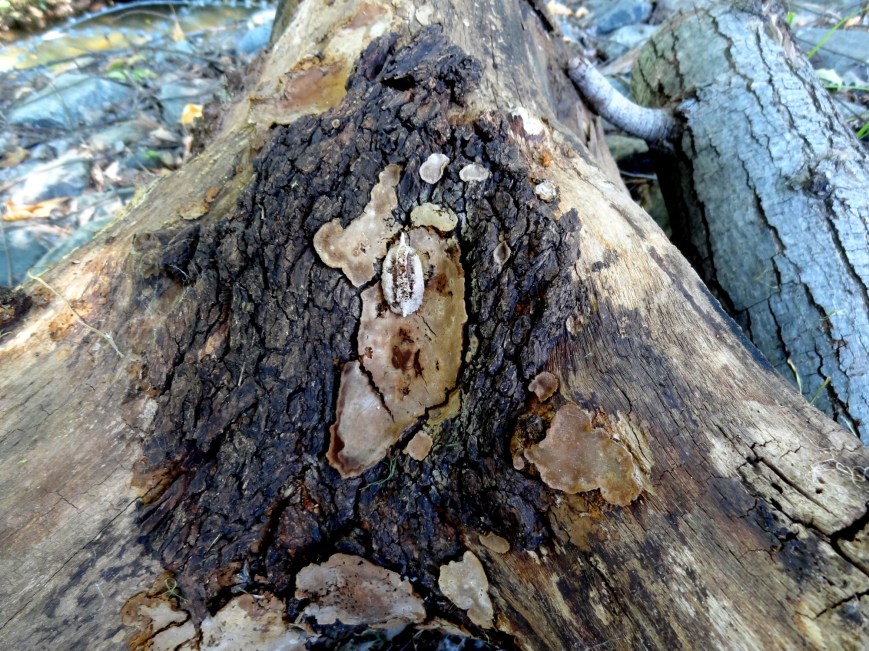
treeporn
feminist makeup tutorial
suzanne heintz – life once removed
“A personal photography experience for public consumption.”
Suzanne Heintz calls herself “the modern day patron saint of single women”. She has the following to say about her ongoing photography project, the wondrously uncanny “Life Once Removed”:
What would drive you to pack a family of mannequins into your station wagon, and take them on a road trip? Enough pressure to conform will send anyone packing. That’s how I came to this personal project about what is essentially…Spinsterhood, and the American Way.
Well-meaning strangers, along with friends and family, would raise an eyebrow when the topic of my unmarried and childless status arose. Indicating with a small facial twitch, not only my audacious freakishness, but that I was a little old for such foolish thinking. I mean, come on, eggs don’t last forever!
But really, what was I supposed to do? You can’t just go out and buy a family. Or can you? I did. They are mannequins. The candy coated shell with nothing inside. We do all those family things, all the while capturing those Kodak Moments. Because it’s not really about the journey, or a genuine human connection, when your kids are screaming, “are we there yet?”, is it? It’s about the picture in front of the sign. “Get back in the car, we got the picture. Now, let’s go eat.”
We love and obey the formatted image of a well-lived life. So deeply ingrained is that strange auto-grin we put on when a camera is present. Do we live our lives with a keen awareness of how it feels, or just how it looks?
If I pass through life without checking off the boxes for a wedding ring and a baby carriage, I will be missing the photo album, but not not the point. When I take my photos, others stop and stare, then they ask, “why are you doing this?” They, at that moment, are starting to get the point too.

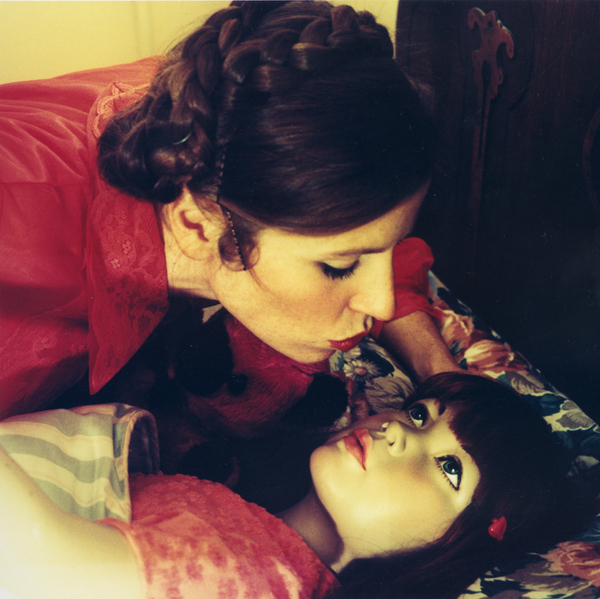

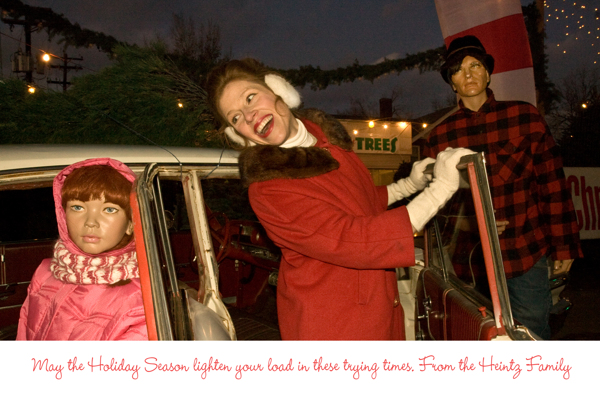
Check out more of Suzanne’s fantastical images HERE.
kitty – R.R.E.A.M.
From D.A.I.S.Y. Rage, an EP self-released by this 19-year-old from Florida, also known as Kathryn Beckwith, on 31 January this year. Get it HERE.
the situation is clinical
somewhere in 2008 i sent friends and family a short account of a visit to hillbrows’ HIV testing site. to cut it short it was a nightmare, surreal. the counsellor sat me down, asked my age, the number of sexual partners blah blah. he then broke down HIV for me, this is what it is, blah. to tie a bow on it, dude then asked where my family was and if i had any younger siblings who would take care of me when i get too sick to do so. he hadn’t even drawn blood then. what followed was a small confrontation, he shut me up by stating, ‘i wouldn’t be so cocky before my ‘positive’ comes back.’
i took the test and walked down to the johannesburg art gallery. kay hassan eased my anger, his fathers’ music room reminded me of home, the people there who would have to take care of me if the clairvoyant counsellor had had a clearer crystal ball. i’d seen other counsellors before mr doom and gloom, they had been informative and quick to ease my nerves. he was a bad apple, i filed a complaint.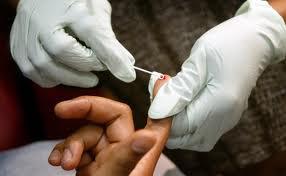
today i tried my local clinic on for size. with ‘kick start’ clinics closed i’ve struggled to find a testing site that’s free and near and last year i missed my december first test. woodstock community health centre sits just on the other side of mountain road. when electricians arrived too early for my husband to open for them, i ran home to open up and leave them with a short ‘to do’ before zipping back up the road to join the freebie queue. after my folder was called i waited a short 45 minutes (govt health care people, catch up) before i was asked to see a counsellor. as i stepped in another gentleman was called.
‘no, we’re not together,’ i offered.
‘yes, that’s fine. just both of you come in.’
‘oh, ok’
i’m in this weird room with a counsellor, a dude i met on the bench outside and i’m about to disclose my sexual history. i’m about to know how many people mr bench has been with. this is all too heady. i sit and giggle awkwardly. i’m thinking of my one night stands, i realize i don’t know as much about any of them as i’m about to find out about this stranger. i giggle some more then ask, ‘but how?’ at which i burst out laughing. the counsellor raises an eye brow, i cross and uncross my legs then clench my butt cheeks, got to stop laffing.
‘how old are you?’
the counsellor is barking at mr bench, who looks at me and i shrug my shoulders. a quiet knock introduces mr bench’s friend, his translator. the man is french. there’s four of us in the room and the translator is hot and about to find out i’m pretty easy and live around the corner. i need a smart phone. for ten minutes i sit listening as questions bounce from the counsellor to the translator and then finally to mr bench. it’s amusing, it’s someone else’s nightmare.
‘have you ever had anal sex?’
‘i’m sorry, i’m going to have to wait outside.’
my shoulders are shaking, my chest is tight. i am clenching an unclenching my fists. i’m biting at my lower lip and i want to punch the daylights out of our counsellor. my knees buckle a bit as i sit at the bench outside the office. i didn’t get mr bench’s name but i know a few things about him that should remain in the safety of ‘doctor patient privilege.’ i sat through it, i laughed about it. yes, i shouldn’t have been put in that position but it’s one thing to need a translator to buy milk and bread and quite another to have a second person know your status before you do. mr bench is just one dude, a home affairs glitch. shame. i’m just a sweet little asshole, who should have used better judgement. when they leave i can’t look either one in the eye, i’m ashamed and can’t wait to half die.
my turn comes and i ask the counsellor why they asked us both to come in.
‘it’s a faster turn around.’
if they prick us, do we not bleed?
Where has all the pubic hair gone?
Do you subscribe to the simulackunt?
how could you go ahead of me? (1586)
Excavating an ancient tomb in South Korea, archaeologists found the 4-centuries-old mummy of Eung-Tae Lee, who had died at the age of 30. Lying on his chest was this letter, written by his pregnant widow and addressed to the father of their unborn child:
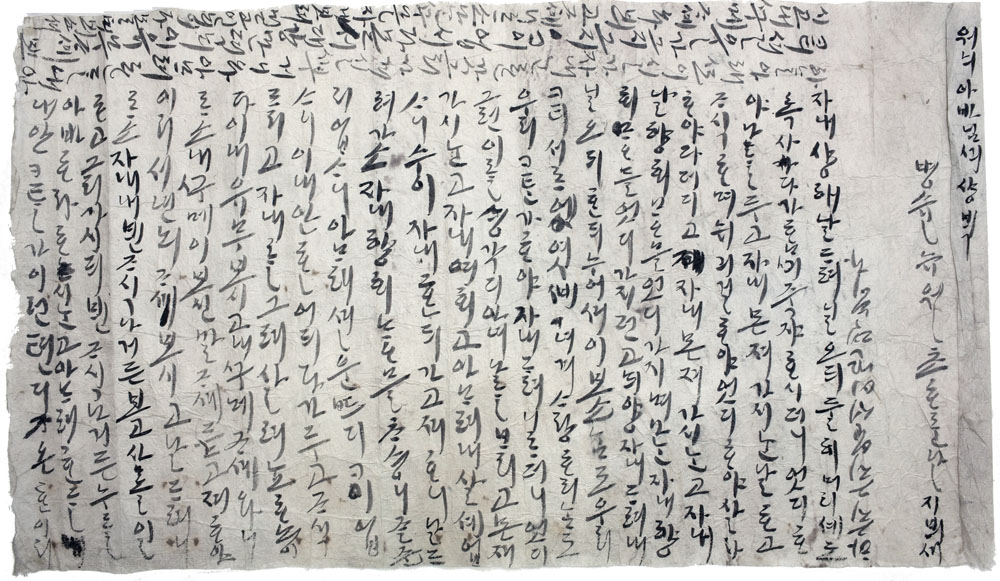
Source: Letters of Note
Transcript
To Won’s Father
June 1, 1586You always said, “Dear, let’s live together until our hair turns grey and die on the same day.” How could you pass away without me? Who should I and our little boy listen to and how should we live? How could you go ahead of me?
How did you bring your heart to me and how did I bring my heart to you? Whenever we lay down together you always told me, “Dear, do other people cherish and love each other like we do? Are they really like us?” How could you leave all that behind and go ahead of me?
I just cannot live without you. I just want to go to you. Please take me to where you are. My feelings toward you I cannot forget in this world and my sorrow knows no limit. Where would I put my heart in now and how can I live with the child missing you?
Please look at this letter and tell me in detail in my dreams. Because I want to listen to your saying in detail in my dreams I write this letter and put it in. Look closely and talk to me.
When I give birth to the child in me, who should it call father? Can anyone fathom how I feel? There is no tragedy like this under the sky.
You are just in another place, and not in such a deep grief as I am. There is no limit and end to my sorrows that I write roughly. Please look closely at this letter and come to me in my dreams and show yourself in detail and tell me. I believe I can see you in my dreams. Come to me secretly and show yourself. There is no limit to what I want to say and I stop here.
Source: Letters of Note
agnes obel – dorian
Agnes Obel performs the new single “Dorian” from her 2013 album Aventine, live at Heimathafen Neukölln, Berlin. Order the album HERE.
scatter
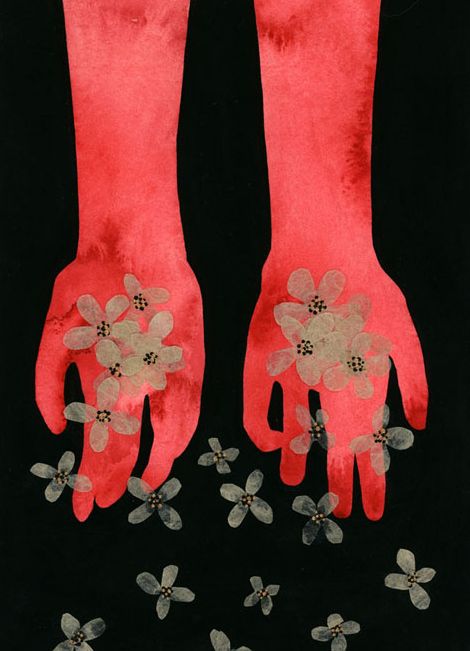
Dan-Ah Kim – Scatter (2013)
Check out more of Dan-Ah Kim’s surreal work HERE.
how to tease your hair
WARNING: This may be considered very NSFW if you live in the same society that got Petra Collins’ Instagram account deleted.
MissAsssnatch goes naa-na-na naa-na. Hairy Ass Girlpits (2007) by MissAsssnatch – Music credits: “Pistolet Joe” performed by Anna Karina.
Misanthropic Girlpit Petting (2010) by MissAsssnatch – Music credits: “Sleep Alone” performed by Rowland S Howard.
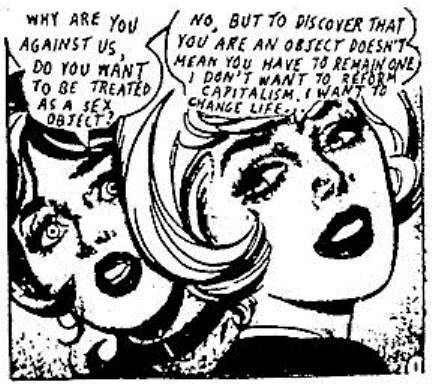
to change life

russian tampon commercial
Straight to the bloody point!
a new and alarming study on teens and sexual coercion
Excerpted from an article by Martha Kempner, published at RH Reality Check, October 9, 2013 – 12:43 pm
A new study finds that almost one in ten teens and young adults admit to forcing someone into some form of sexual activity. Even more surprising: 50 percent of perpetrators blame the victim for the incident. According to the study, “links between perpetration and violent sexual media are apparent.”

(RobinThickeVevo / YouTube)
A new study funded by the Centers for Disease Control and Prevention and published online in the Journal of the American Medical Association found that one in ten teens said they had coerced another person into some form of sexual activity. In an online survey in 2010 and 2011, researchers asked 1,058 young people ages 14 to 21 whether they had ever “kissed, touched, or done anything sexual with another person when that person did not want you to?” The results surprised even the lead researcher, Michele Ybarra, who told NPR, “I don’t get creeped out very often, but this was wow.”
This intense reaction stems from the fact that 9 percent of teens said they had coerced another person. Specifically, 8 percent said they had kissed or touched someone when they knew that person did not want to, 3 percent said they “got someone to give in to unwilling sex,” 3 percent said they attempted rape, and 2 percent said they actually raped someone. (This adds to more than 9 percent because young people could admit to more than one behavior.)…
… The authors also note that 50 percent of all perpetrators said that the victim was responsible for the sexual violence. Moreover, most perpetrators said no one ever found out about their actions. The authors conclude, “Because victim blaming appears to be common while perpetrators experiencing consequences is not, there is urgent need for high school (and middle school) programs aimed at supporting bystander intervention.”…
… The survey was conducted as part of an ongoing study called Growing Up With Media. In addition to asking about sexual coercion, respondents were asked about the media they watched. The study found that perpetrators tended to report more frequent exposure to media that depicted sexual and violent situations than those who had not coerced another person, but the results were not always statistically significant. Still, the authors conclude:
[L]inks between perpetration and violent sexual media are apparent, suggesting a need to monitor adolescents’ consumption of this material, particularly given today’s media saturation among the adolescent population.
Elizabeth Schroeder, the executive director of Answer, an organization that educates young people about sexuality and trains teachers, agrees that media consumption is part of the problem. She told RH Reality Check, “This study is extremely distressing, but unfortunately, not a surprise. Sexuality education rarely starts before high school, and by then young people have already received very distorted messages about sex, relationships, and boundaries from other sources such as the media, their peers, adults in their lives, and so on.” Schroeder added, “Age-appropriate lessons about relationships need to start in early childhood and continue throughout high school.”
Read the full article HERE.
ride – drive blind
“Windows all open, chaos in my hair…” from Smile (Creation Records, 1990).
not demure enough, audrey!

Audrey Hepburn. Artist responsible for this detournement is Ray Dario unknown to me.
still not asking for it
![[Rosea Posey]](https://fleurmach.com/wp-content/uploads/2013/10/rosea-posey.jpg)
nina simone – four women
Harlem Cultural Festival, 1969.
Thulani Davis writes of Nina Simone:
What Simone did for African American women was more liberating than the sweet elegance of her take on “I Love You, Porgy” (delivered without the fake dialect of all its predecessors), the thought-provoking militancy she added to spirituals like “Sinnerman,” or the wicked humor of “Old Jim Crow” and “Go Limp,” or the wonderfully ironic cover of Screamin’ Jay Hawkins’s kitsch hit, “I Put a Spell on You.”
First of all, her songs, whether covers or original compositions, always privileged the black woman’s point of view; they spoke for the dispossessed Sister Sadie who cleaned floors or raised children who would never in their lives again treat black women with respect.
Yes, you lied to me all these years/told me to wash and clean my ears/and talk real fine, just like a lady/and you’d stop calling me Sister Sadie.
“See Line Woman” viewed its exotic black female as an object of desire and admiration in a way unknown outside of the black poetry that was its source, or those raunchy blues songs that polite Negroes did not play, which nonetheless lauded the virtues of a full body and brown skin.
My skin is black/My arms are long/My hair is wooly/My back is strong/Strong enough to take the pain/Inflicted again and again/What do they call me?/My name is Aunt Sara. — “Four Women”
It was “Four Women,” an instantly accessible analysis of the damning legacy of slavery, that made iconographic the real women we knew and would become. For African American women it became an anthem affirming our existence, our sanity, and our struggle to survive a culture which regards us as anti-feminine. It acknowledged the loss of childhoods among African American women, our invisibility, exploitation, defiance, and even subtly reminded that in slavery and patriarchy, your name is what they call you. Simone’s final defiant scream of the name Peaches was our invitation to get over color and class difference and step with the sister who said:
My skin is brown/My manner is tough/I’ll kill the first mother I see/ My life has been rough/I’m awfully bitter these days/Because my parents were slaves.
For African American women artists of my generation, “Four Women” became the core of works to come, notably Julie Dash’s film of the same name, and it should be regarded a direct ancestor of Ntozake Shange’s For Colored Girls Who Have Considered Suicide When the Rainbow Is Enuf. This Simone song was a call heard by Alice Walker, Toni Cade Bambara, Gayl Jones, and countless artists who come to mind as women who gave us a whole generation of the stories of Aunt Sara, Safronia, Sweet Thing, and Peaches.
May the High Priestess’s cult widen to take in the unwise who made her as outrageous as she was.
Read the rest of this article over at The Village Voice.
 fleurmach