fela kuti & egypt 80 – beasts of no nation

This post goes out to FIFA president Sepp Blatter and all the people aligning themselves with various national football teams in the bizarre competitive spectacle that is the FIFA World Cup.

Happening this time round in Brazil, FIFA bleeds yet another host country’s economy dry, with the willing help of its own government – systematic violence, neo-colonial parasitism. Last time it was South Africa’s turn, and the effects are still being felt here.

BeastsOfNoNation

angel olsen – stars

This is one of those songs I have tried to write myself… and then I hear somebody else already has it nailed so articulately. Sucks. In the best way possible.

http://youtu.be/QA9TuQE1jbM

I think you’d like to see me lose my mind
You treat me like a child; I’m angry, blind
I feel so much at once that I could scream

I wish I had the voice of everything

To scream the animals, to scream the earth
To scream the stars out of our universe
To scream it all back into nothingness
To scream the feeling ’til there’s nothing left

I’ll close my eyes
I’ll close my eyes and try to leave the world
Well you could change my mind with just a smile
And just before I turn to leave I think
I could use the thoughts you’ve given me
Oh I could use the thoughts you’ve given me

To sing the animals, to sing the earth
To sing the stars into a universe
To sing it all back into something new
To sing for life, or myself and maybe you

Wish I had the voice of everything, sometimes
Wish I had the voice of everything

joan didion, interviewed by linda kuehl in 1977

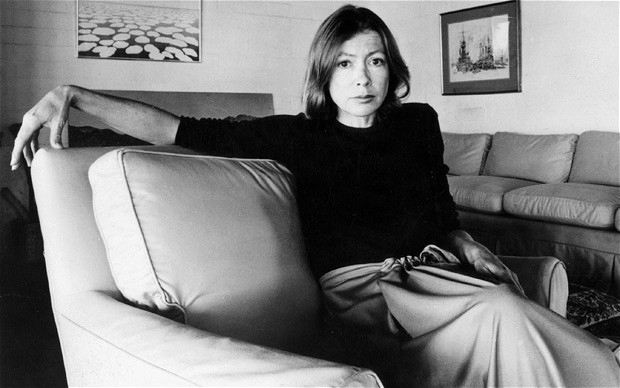
Here are some excerpts from an interview with Joan Didion that appeared in The Paris Review No. 74, Fall-Winter 1978. She talks about the performative violence of writing, and of the sometimes paralysing self-consciousness that attends it.

Reading her responses, I identified so personally that at points it felt like she could have been writing my own thoughts, down to the constrictions of that harsh Protestant ethic. But I’m not as strong as Joan. The nausea tends to silence me… except when it’s overwhelming: then, I vomit it out, sometimes all over unsuspecting passersby!

I especially liked what she says about how growing up in a dangerous landscape can affect one’s engagement with the world. I have often wondered whether I would be at all like I am if I hadn’t grown up in the turmoil of ’80s and ’90s South Africa. It wasn’t just about the weather, here.

Joan Didion, 1977. Photo: REX FEATURES

Joan Didion, 1977. Photo: REX FEATURES

INTERVIEWER

You have said that writing is a hostile act; I have always wanted to ask you why.

JOAN DIDION

It’s hostile in that you’re trying to make somebody see something the way you see it, trying to impose your idea, your picture. It’s hostile to try to wrench around someone else’s mind that way. Quite often you want to tell somebody your dream, your nightmare. Well, nobody wants to hear about someone else’s dream, good or bad; nobody wants to walk around with it. The writer is always tricking the reader into listening to the dream.

INTERVIEWER

Are you conscious of the reader as you write? Do you write listening to the reader listening to you?

DIDION

Obviously I listen to a reader, but the only reader I hear is me. I am always writing to myself. So very possibly I’m committing an aggressive and hostile act toward myself.

INTERVIEWER

So when you ask, as you do in many nonfiction pieces, “Do you get the point?” you are really asking if you yourself get the point.

DIDION

Yes. Once in a while, when I first started to write pieces, I would try to write to a reader other than myself. I always failed. I would freeze up.

INTERVIEWER

You say you treasure privacy, that “being left alone and leaving others alone is regarded by members of my family as the highest form of human endeavor.” How does this mesh with writing personal essays, particularly the first column you did for Life where you felt it imperative to inform the reader that you were at the Royal Hawaiian Hotel in lieu of getting a divorce?

DIDION

I don’t know. I could say that I was writing to myself, and of course I was, but it’s a little more complicated than that. I mean the fact that eleven million people were going to see that page didn’t exactly escape my attention. There’s a lot of mystery to me about writing and performing and showing off in general. I know a singer who throws up every time she has to go onstage. But she still goes on.

INTERVIEWER

Did any writer influence you more than others?

DIDION

I always say Hemingway, because he taught me how sentences worked. When I was fifteen or sixteen I would type out his stories to learn how the sentences worked. I taught myself to type at the same time. A few years ago when I was teaching a course at Berkeley I reread A Farewell to Arms and fell right back into those sentences. I mean they’re perfect sentences. Very direct sentences, smooth rivers, clear water over granite, no sinkholes.

INTERVIEWER

You’ve called Henry James an influence.

DIDION

He wrote perfect sentences, too, but very indirect, very complicated. Sentences with sinkholes. You could drown in them. I wouldn’t dare to write one. I’m not even sure I’d dare to read James again. I loved those novels so much that I was paralyzed by them for a long time. All those possibilities. All that perfectly reconciled style. It made me afraid to put words down.

INTERVIEWER

I wonder if some of your nonfiction pieces aren’t shaped as a single Jamesian sentence.

DIDION

That would be the ideal, wouldn’t it. An entire piece—eight, ten, twenty pages—strung on a single sentence. Actually, the sentences in my nonfiction are far more complicated than the sentences in my fiction. More clauses. More semicolons. I don’t seem to hear that many clauses when I’m writing a novel.

INTERVIEWER

You have said that once you have your first sentence you’ve got your piece. That’s what Hemingway said. All he needed was his first sentence and he had his short story.

DIDION

What’s so hard about that first sentence is that you’re stuck with it. Everything else is going to flow out of that sentence. And by the time you’ve laid down the first two sentences, your options are all gone.

INTERVIEWER

The first is the gesture, the second is the commitment.

DIDION

Yes, and the last sentence in a piece is another adventure. It should open the piece up. It should make you go back and start reading from page one. That’s how it should be, but it doesn’t always work. I think of writing anything at all as a kind of high-wire act. The minute you start putting words on paper you’re eliminating possibilities. Unless you’re Henry James.

INTERVIEWER

I wonder if your ethic—what you call your “harsh Protestant ethic”—doesn’t close things up for you, doesn’t hinder your struggle to keep all the possibilities open.

DIDION

I suppose that’s part of the dynamic. I start a book and I want to make it perfect, want it to turn every color, want it to be the world. Ten pages in, I’ve already blown it, limited it, made it less, marred it. That’s very discouraging. I hate the book at that point. After a while I arrive at an accommodation: Well, it’s not the ideal, it’s not the perfect object I wanted to make, but maybe—if I go ahead and finish it anyway—I can get it right next time. Maybe I can have another chance.

INTERVIEWER

Have any women writers been strong influences?

DIDION

I think only in the sense of being models for a life, not for a style. I think that the Brontës probably encouraged my own delusions of theatricality. Something about George Eliot attracted me a great deal. I think I was not temperamentally attuned to either Jane Austen or Virginia Woolf.

INTERVIEWER

What are the disadvantages, if any, of being a woman writer?

DIDION

When I was starting to write—in the late fifties, early sixties—there was a kind of social tradition in which male novelists could operate. Hard drinkers, bad livers. Wives, wars, big fish, Africa, Paris, no second acts. A man who wrote novels had a role in the world, and he could play that role and do whatever he wanted behind it. A woman who wrote novels had no particular role. Women who wrote novels were quite often perceived as invalids. Carson McCullers, Jane Bowles. Flannery O’Connor, of course. Novels by women tended to be described, even by their publishers, as sensitive. I’m not sure this is so true anymore, but it certainly was at the time, and I didn’t much like it. I dealt with it the same way I deal with everything. I just tended my own garden, didn’t pay much attention, behaved—I suppose—deviously. I mean I didn’t actually let too many people know what I was doing.

INTERVIEWER

Advantages?

DIDION

The advantages would probably be precisely the same as the disadvantages. A certain amount of resistance is good for anybody. It keeps you awake.

INTERVIEWER

What misapprehensions, illusions and so forth have you had to struggle against in your life? In a commencement address you once said there were many.

DIDION

All kinds. I was one of those children who tended to perceive the world in terms of things read about it. I began with a literary idea of experience, and I still don’t know where all the lies are. For example, it may not be true that people who try to fly always burst into flames and fall. That may not be true at all. In fact people do fly, and land safely. But I don’t really believe that. I still see Icarus. I don’t seem to have a set of physical facts at my disposal, don’t seem to understand how things really work. I just have an idea of how they work, which is always trouble. As Henry James told us.

INTERVIEWER

You seem to live your life on the edge, or, at least, on the literary idea of the edge.

DIDION

Again, it’s a literary idea, and it derives from what engaged me imaginatively as a child. I can recall disapproving of the golden mean, always thinking there was more to be learned from the dark journey. The dark journey engaged me more. I once had in mind a very light novel, all surface, all conversations and memories and recollections of some people in Honolulu who were getting along fine, one or two misapprehensions about the past notwithstanding. Well, I’m working on that book now, but it’s not running that way at all. Not at all.

INTERVIEWER

It always turns into danger and apocalypse.

DIDION

Well, I grew up in a dangerous landscape. I think people are more affected than they know by landscapes and weather. Sacramento was a very extreme place. It was very flat, flatter than most people can imagine, and I still favor flat horizons. The weather in Sacramento was as extreme as the landscape. There were two rivers, and these rivers would flood in the winter and run dry in the summer. Winter was cold rain and tulle fog. Summer was 100 degrees, 105 degrees, 110 degrees. Those extremes affect the way you deal with the world. It so happens that if you’re a writer the extremes show up. They don’t if you sell insurance.

Reading the complete interview here: Joan Didion, The Art of Fiction No. 71.

toast coetzer – weather balloon

when you release a weather balloon
off the back of the ship
with the small box of the radiosonde
dangling precariously below its
oversized white grape of a shape
on a simple string
which unfurls as you let it go
to become ten metres, or longer
so the radiosonde can feel
the atmosphere around it
in its full, naked glory
it is eleven o’clock, or midnight
somewhere in the world
it might as well be here
where we are in our pajamas
and the balloon is about this size
and filled with helium
and seconds after you’ve let it go
it is sucked up into the wild
black sky, and the noisy, battling sea
seems to urge it on with an out of
control applause from below
and it is gone, so suddenly, so for surely,
and you’re left standing there, disappointed
blinking into the inky cold, with your head hanging
back onto your neck and your mouth open
in your sticky gumboots
and the salty diesel smell in your beard
and it only gets exciting again when
you hunch over a computer screen inside
with the meteorologists to look – like
alchemists – at the boiling pot of
leaping numbers as the weather balloon
and its transmitting radiosonde races through
the layers of emptiness, a thousand metres, two thousand metres
and sends lurches and spurts of data back to
where we’re bobbing in the Atlantic
as it shoots upwards
with squiggles and digits and facts
through what seems like nothing
but is in actual fact the invisible sinews that
keep the clouds tied to the mountains, moss to the trunk
the raindrops to the snakes, fish to pebbles
goats’ hooves to cliff faces, tomato green to finger tips
the sea to the murmuring, cracking movement of the continents
and the spongy, lung-like coral fans to the conversation
filtering plankton and pain and matter of fact
in the queue at the ATM about the weather and tax
and death and babies and the future
and five thousand metres, seven thousand, nine thousand
to where commercial airliners fly in straight lines
through clouds and stars and shavings of moon
which cannot be seen because the shutters are down
and the movies are being shown
and by now the weather balloon has grown in size
due to the air pressure to the size of this room
and the radiosonde is reaching the edge of
its usefulness to our understanding and prediction
of weather systems and unfurling cold fronts
winds and even the sprinkling of godsmall protons
and atomic nuclei which have been travelling towards us
from very far away – from the herb gardens of supernovas –
to confirm what we’ve been suspecting
for a while already: we are born fragile, and dogs are
our eternal friends.

albatrossFor more of Toast’s wonder-filled words, check out the gig happening this Thursday night in Cape Town at Joule City, entitled “Albatross: a journey through spoken and unspoken word”. You can buy tickets on QUICKET or at the door.

According to the blurb for the event on Facebook:

This collaboration combines movement with poetry to create a unique audio – visual performance. For this show, the band will consist of Toast Coetzer, Righard Kapp, Jon Savage and Jane Breetzke (the latter two also collaborators in Toast’s other band, Simply Dead). Darkroom Contemporary will accompany the band with an exploration of the music through movement.

Cape Town artist Katherine Bull will create/ draw during the performance and her artwork will be projected for the audience to see.

The material performed in the Albatross show will take the shape of a 45-minute journey. Toast went on a sea voyage to Tristan da Cunha in 2013 and the show will trace themes he wrote about while on the journey and on the island, which is the most isolated permanently populated island in the world (it’s almost 3 000 km from Cape Town).

Hence the ocean, sea voyages, sea birds (and principally the albatross and its marathon gliding exploits to feeding grounds, and then back to a speck in the ocean where a mate awaits on a nest), oceanography, metereology and geography will become the background for love, long-distance relationships, people’s adversity against the odds and other human frailties to be explored against.

3600 a day – asanda kaka & valentina argirò

It is estimated that over 50% of South African women will be raped in their lifetime and that only 1 in 9 rapes are reported. It is also estimated that only 14% of perpetrators of reported rape are convicted in South Africa.

asanda kaka - 3600 per day2

The installation “3600 A Day” at Infecting The City – Cape Town, 2014. Photo: Asanda Kaka

This past week, I experienced a powerfully evocative art installation by Asanda Kaka and Valentina Argirò addressing (no pun intended!) the silent magnitude of this scourge during Cape Town’s annual public arts festival, Infecting The City.

On approaching the rows of dresses hung on crosses, one’s face materialises in mirrors positioned in the “head” space above the dresses, making it impossible to distance one’s own body from the figures represented.

Venue: Cape Town Station
Date: 14 & 15 MARCH 2014

asanda kaka - 3600 per day

The installation “3600 A Day” at Infecting The City – Cape Town, March 2014. Photo: Asanda Kaka

ARTISTS’ STATEMENT

According to a report issued by UNISA, at least one rape case is reported every four minutes in South Africa – this translates into approximately 360 cases per day. 3600 A Day is an installation of women’s’ clothes, donated by women in support of the project. The exaggerated number of 3600 serves to highlight the magnitude of the problem and the number of unreported cases of violence against women and children. In a visual shock of magnitude, the installation warns against the normalisation of such violence.

Installed on crosses, the dresses represent the individual, yet also communal impact that abuse has on all women and children in this country. Reflected in the mirrors on top of the crosses are the faces of those who approach – possible victims, perpetrators or bystanders.

light from a dead star

“All these dead suns, these posthumous rays which take millions of light-years to reach us, asteroids, fragments of dead worlds, shattered and exploded, old moons, flawed and cankered, crusts, sores, blotches, cold lupus, devouring leprosy, sanies, and that last drop of pearl-like light, the purest of all, sweating at the highest point of the firmament and about to fall… is not a tear nor a dewdrop, but a drop of pus. The universe is in the process of decomposing and, like a cemetery, it swarms with becoming and smells good. The stars are unguent-bearing and throb feverishly; each ray carries seeds sown in the brain of man, and they are the seeds of destruction. Grey matter contains sunspots that eat into the whole circumference of the brain. It is an index of disintegration. Thought is a pestilence.”

— Blaise Cendrars, from Sky, the 1992 English translation of Le Lotissement du Ciel (1949).

Illustration: Fernand Léger, 1919

Illustration: Fernand Léger, 1919

Sky, the last of Cendrar’s four autobiographical volumes, is a collage of prose poetry, travel writing, reportage, detective story, and personal memoir.

“He recounts his adventures in Russia during the revolution of 1905, in the trenches of World War I (where he lost his right arm), in Brazil in the 1920s, and behind the lines during World War II. The two wars run throughout as a unifying thread. As the title announces, this is a memoir of the sky – of Cendrars’s love of birds, levitation, and aviation. The opening of the book finds Cendrars, the great adventurer and traveler, sailing back from Brazil to Paris with 250 multi-colored birds, hoping to bring at least one of them alive to a child he loves.

The second part moves back and forth between the author’s recollections of life as a war correspondent in 1940 and an encyclopedic discourse on levitation he wrote in search of a patron saint of aviation (perhaps as compensation for the death of his young son, Remy, who was a pilot during the war). With unmatched exuberance, Cendrars writes on poetry, myths, existentialism, his life in Paris between the wars with the painter Delaunay and the Dadaists, and his exotic adventuresin Brazil. His anecdotes of Russia, where he was a jeweller’s assistant, are compelling and funny. His fiercely imaginative stories, such as one about a Brazilian coffee plantation owner who, obsessed with his love for Sarah Bernhardt, retreats into the wilderness, are magical.”

(I found this review HERE.)

la fin du monde

Illustration: Fernand Léger

stepan razin’s dream (Казачья Притча)

Oy, to ne vecher” (Ой, то не вечер) is the incipit of a Russian folk song, also known as “The Cossack’s Parable” (Казачья Притча) or as “Stepan Razin’s Dream” (Сон Степана Разина). It was first published by composer Alexandra Zheleznova-Armfelt (1870–1933) in her collection Songs of the Ural Cossacks after her fieldwork in the Ural District during 1896–1897.

The original lyrics were in seven verses, with verse six making explicit that the dreamer is 17th century cossack rebel Stepan Razin. Razin has a dream, and his captain (esaul) interprets it as an omen of their defeat.

The song has been performed in several variants, sometimes expanded to up to eleven verses, but in the most common variant as sung by modern interpreters, it is reduced to four verses, removing the mention of Razin, and reducing the three omens in the dream to a single one.These lyrics may be translated thus:

Ah, it is not yet evening but I have taken a little nap, and a dream came to me. In the dream that came to me, it was as if my raven-black horse was playing about, dancing about, frisky beneath me.  Ah, and evil winds came flying out of the east, and they ripped the black cap from that wild head of mine.

And the esaul* was a clever one, he was able to interpret my dream: “Ah, it will surely come off”, he said, “that wild head of yours”.

Source of information: Wikipedia.

*Esaul: a post and rank in prerevolutionary Russia in the cossack hosts after 1576.

chris marker - staring back

Photo: Chris Marker, “Staring Back”

why monsanto is evil (it’s not science-fiction)

agent orange

HERE is an article discussing some of the non-“woo” (pseudo-scientific hippie freak-out) reasons why companies like Monsanto pushing genetically modified products are doing evil: the corporate imperatives and corruption surrounding the development of GMOs, how their use disempowers farmers (especially small farmers in non-first world contexts, although this article only talks about the USA) and what we can do about this deception being perpetrated against the world.

Apart from being economically unsustainable, there are also other compelling health-related reasons why GMOs are a bad idea, which don’t involve a non-specific, irrational fear of genetic mutations being dangerous to consume per se. For example, the seeds are engineered to be resistant to pesticides so that crops can be sprayed and only the weeds growing among the GM plants die. Studies have shown that GM food (or the meat of animals that ate GM food) can be contaminated by traces of the pesticides used during the plants’ growth, pesticides that are teratogenic (causing birth defects) and carcinogenic (causing cancer)  to humans. These modifications also lead to resistance in plants and insect pests – “superweeds” and “superbugs” that make sustainable farming more difficult.

If you are South African, please GO HERE to sign a petition as part of the formal public participation process against an application by multinational agricultural company Dow AgroSciences, a wholly owned subsidiary of the Dow Chemical Company, to import GM cottonseed products to South Africa, for use as food, animal feed and in processing. 

brian eno: imaginary landscapes (1989)

“I thought: I want to make a kind of music that had the long Now and the big Here in it, and for me that meant this idea of expanding the music out to the horizons. In terms of space, you were not aware of the edges of the music. I wanted to make a music where you just wouldn’t know what was music and what wasn’t… a music that included rather than excluded; a music that didn’t have a beginning and an end… This is the sense of making the Now longer.”

A 1989 documentary on Brian Eno’s work in ambient sound.


the known universe

MINDBLOWING.

The Known Universe takes viewers from the Himalayas through our atmosphere and the inky black of space to the afterglow of the Big Bang. Every star, planet, and quasar seen in the film is possible because of the world’s most complete four-dimensional map of the universe, the Digital Universe Atlas that is maintained and updated by astrophysicists at the American Museum of Natural History. The film, created by the Museum, was part of an exhibition, Visions of the Cosmos: From the Milky Ocean to an Evolving Universe, at the Rubin Museum of Art in Manhattan through May 2010.

Data: Digital Universe, American Museum of Natural History
Visualization Software: Uniview by SCISS
Director: Carter Emmart
Curator: Ben R. Oppenheimer
Producer: Michael Hoffman
Executive Producer: Ro Kinzler
Co-Executive Producer: Martin Brauen
Manager, Digital Universe Atlas: Brian Abbott
Music: Suke Cerulo

éléonore pourriat – oppressed majority (majorité opprimée)

What does a day in the life of a woman look like? Maybe it’s easier to see if the woman is a man. Oppressed Majority (2010) is a French short by Éléonore Pourriat which uses role reversals to shine a new light on the micro-aggressions and macro-aggressions that are an all-too-common part of the female experience. Via wifey.tv.

antonio mora – dream portraits

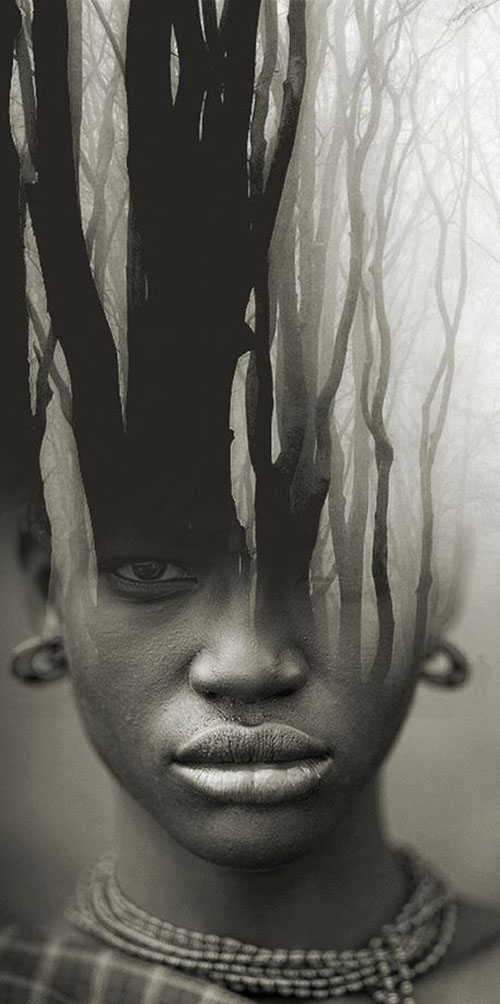
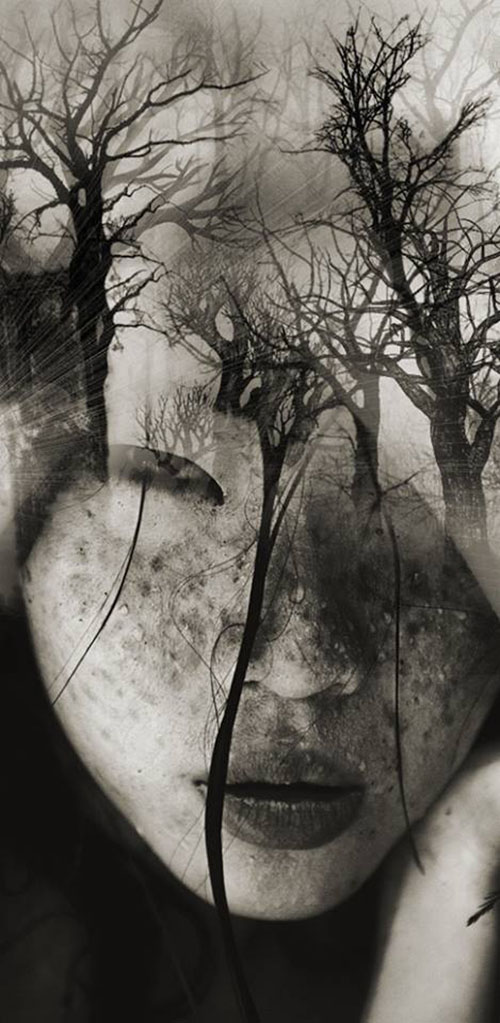
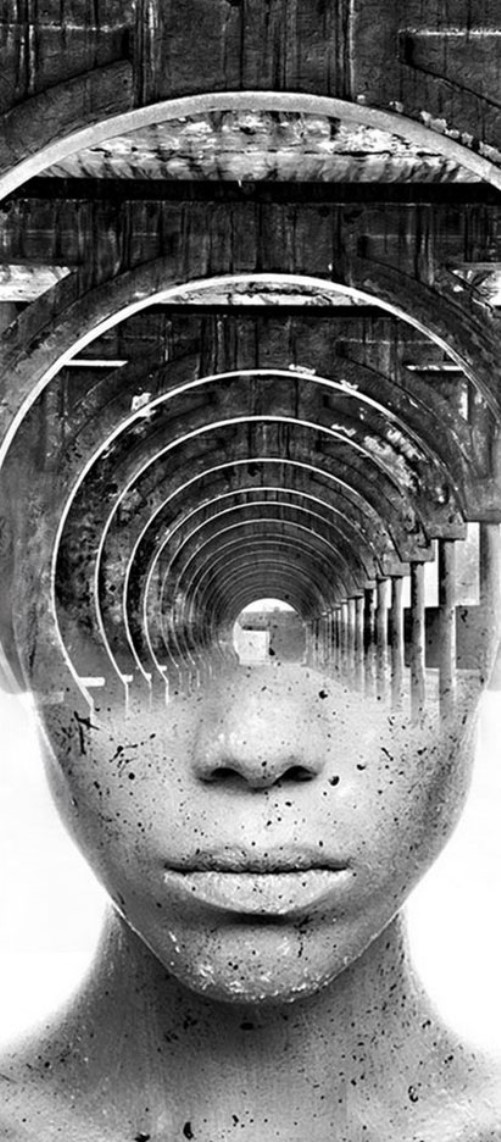
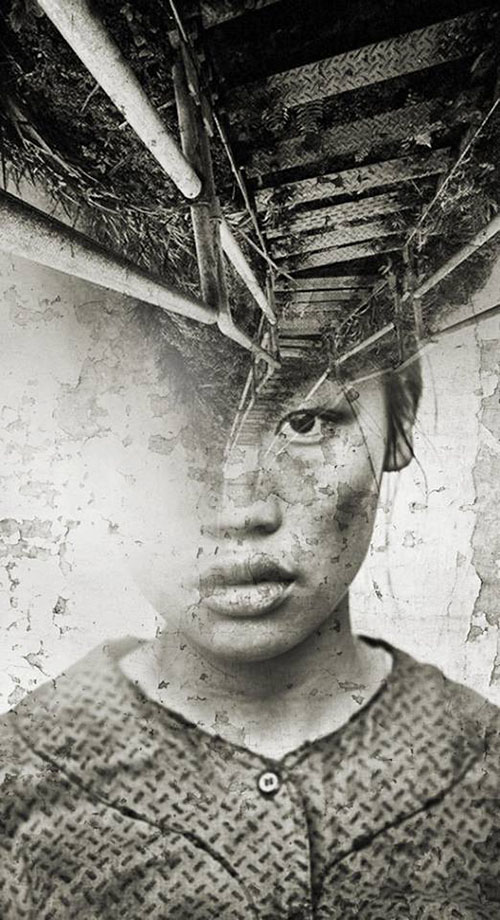
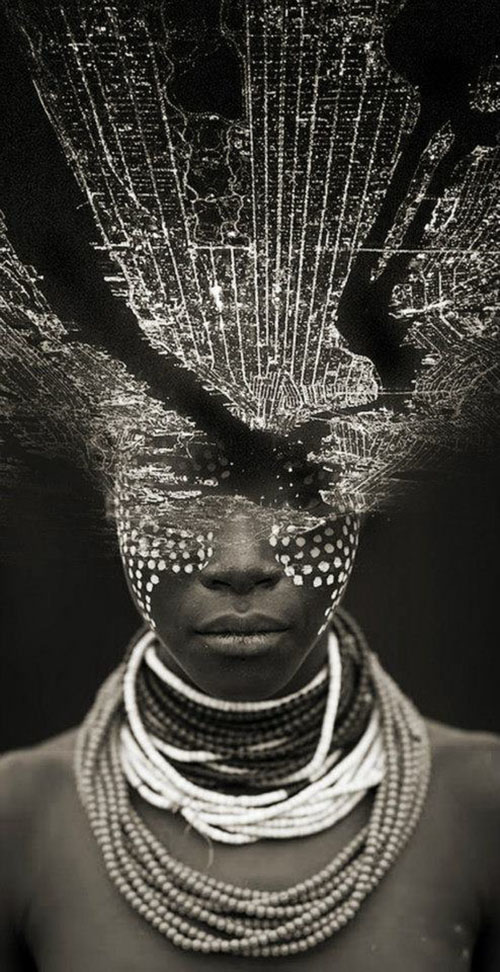
antonio mora 01Spanish artist Antonio Mora is a creative photographer who transforms simple portraits into dreamscapes filled with intriguing emotion. In the series entitled Dream Portraits, the artist blends two elements together to form an elegantly abstract fusion where distinct lines and shapes are no longer evident. The images feature hauntingly beautiful faces that emerge from misty black and white forms like tree branches, rivers, bridges and cloudy skies.

antonio mora 02

antonio mora 04

antonio mora 03

antonio mora 05

roald dahl – the sound machine (1949)

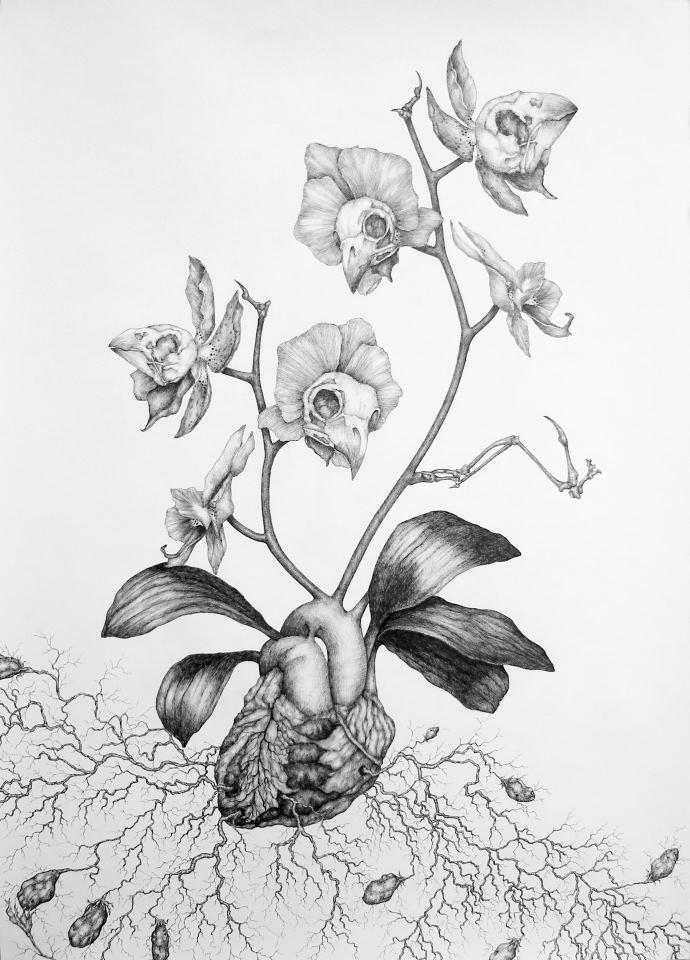
Kate Street - Orchis Nodulosa

Kate Street – Orchis Nodulosa

For a while longer, Klausner fussed about with the wires in the black box; then he straightened up and in a soft excited whisper said, “Now we’ll try again… We’ll take it out into the garden this time… and then perhaps, perhaps… the reception will be better. Lift it up now… carefully… Oh, my God, it’s heavy!”

He carried the box to the door, found that he couldn’t open the door without putting it down, carried it back, put it on the bench, opened the door, and then carried it with some difficulty into the garden. He placed the box carefully on a small wooden table that stood on the lawn. He returned to the shed and fetched a pair of earphones. He plugged the wire connections from the earphones into the machine and put the earphones over his ears. The movements of his hands were quick and precise. He was excited, and breathed loudly and quickly through his mouth. He kept on talking to himself with little words of comfort and encouragement, as though he were afraid–afraid that the machine might not work and afraid also of what might happen if it did. He stood there in the garden beside the wooden table, so pale, small and thin that he looked like an ancient, consumptive, bespectacled child.

The sun had gone down. There was no wind, no sound at all. From where he stood, he could see over a low fence into the next garden, and there was a woman walking down the garden with a flower-basket on her arm. He watched her for a while without thinking about her at all. Then he turned to the box on the table and pressed a switch on its front. He put his left hand on the volume control and his right hand on the knob that moved a needle across a large central dial, like the wavelength dial of a radio. The dial was marked with many numbers, in a series of bands, starting at 15,000 and going on up to 1,000,000. And now he was bending forward over the machine. His head was cocked to one side in a tense, listening attitude. His right hand was beginning to turn the knob.

The needle was travelling slowly across the dial, so slowly he could hardly see it move, and in the earphones he could hear a faint, spasmodic crackling. Behind this crackling sound he could hear a distant humming tone which was the noise of the machine itself, but that was all. As he listened, he became conscious of a curious sensation, a feeling that his ears were stretching out away from his head, that each ear was connected to his head by a thin stiff wire, like a tentacle, and that the wires were lengthening, that the ears were going up and up towards a secret and forbidden territory, a dangerous ultrasonic region where ears had never been before and had no right to be. The little needle crept slowly across the dial, and suddenly he heard a shriek, a frightful piercing shriek, and he jumped and dropped his hands, catching hold of the edge of the table.

He stared around him as if expecting to see the person who had shrieked. There was no one in sight except the woman in the garden next door, and it was certainly not she. She was bending down, cutting yellow roses and putting them in her basket. Again it came–a throatless, inhuman shriek, sharp and short, very clear and cold. The note itself possessed a minor, metallic quality that he had never heard before.

Klausner looked around him, searching instinctively for the source of the noise. The woman next door was the only living thing in sight. He saw her reach down; take a rose stem in the fingers of one hand and snip the stem with a pair of scissors. Again he heard the scream. It came at the exact moment when the rose stem was cut. At this point, the woman straightened up, put the scissors in the basket with the roses and turned to walk away.

“Mrs Saunders!” Klausner shouted, his voice shrill with excitement. “Oh, Mrs Saunders!” And looking round, the woman saw her neighbour standing on his lawn–a fantastic, arm-waving little person with a pair of earphones on his head–calling to her in a voice so high and loud that she became alarmed. “Cut another one! Please cut another one quickly!”

She stood still, staring at him. “Why, Mr Klausner,” she said, “What’s the matter?”

“Please do as I ask,” he said. “Cut just one more rose!”

Mrs Saunders had always believed her neighbour to be a rather peculiar person; now it seemed that he had gone completely crazy. She wondered whether she should run into the house and fetch her husband. No, she thought. No, he’s harmless. I’ll just humour him.

“Certainly, Mr Klausner, if you like,” she said.

She took her scissors from the basket, bent down and snipped another rose. Again Klausner heard that frightful, throatless shriek in the earphones; again it came at the exact moment the rose stem was cut. He took off the earphones and ran to the fence that separated the two gardens. “All right,” he said. “That’s enough. No more. Please, no more.”

The woman stood there, a yellow rose in one hand, clippers in the other, looking at him.”I’m going to tell you something, Mrs Saunders,” he said, “something that you won’t believe.” He put his hands on top of the fence and peered at her intently through his thick spectacles. “You have, this evening, cut a basketful of roses. You have, with a sharp pair of scissors, cut through the stems of living things, and each rose that you cut screamed in the most terrible way. Did you know that, Mrs Saunders?”

“No,” she said. “I certainly didn’t know that.”

“It happens to be true,” he said. He was breathing rather rapidly, but he was trying to control his excitement. “I heard them shrieking. Each time you cut one, I heard the cry of pain. A very high-pitched sound, approximately one hundred and thirty-two thousand vibrations a second. You couldn’t possibly have heard it yourself. But I heard it.”

“Did you really, Mr Klausner?” She decided she would make a dash for the house in about five seconds.

“You might say,” he went on, “that a rose bush has no nervous system to feel with, no throat to cry with. You’d be right. It hasn’t. Not like ours, anyway. But how do you know, Mrs Saunders”–and here he leaned far over the fence and spoke in a fierce whisper, “how do you know that a rose bush doesn’t feel as much pain when someone cuts its stem in two as you would feel if someone cut your wrist off with a garden shears? How do you know that? It’s alive, isn’t it?”

“Yes, Mr Klausner. Oh, yes and good night.”

Quickly she turned and ran up the garden to her house. Klausner went back to the table. He put on the earphones and stood for a while listening. He could still hear the faint crackling sound and the humming noise of the machine, but nothing more. He bent down and took hold of a small white daisy growing on the lawn. He took it between thumb and forefinger and slowly pulled it upward and sideways until the stem broke. From the moment that he started pulling to the moment when the stem broke, he heard–he distinctly heard in the earphones–a faint high-pitched cry, curiously inanimate.

He took another daisy and did it again. Once more he heard the cry, but he wasn’t sure now that it expressed pain. No, it wasn’t pain; it was surprise. Or was it? It didn’t really express any of the feelings or emotions known to a human being. It was just a cry, a neutral, stony cry–a single, emotionless note, expressing nothing. It had been the same with the roses. He had been wrong in calling it a cry of pain. A flower probably didn’t feel pain. It felt something else which we didn’t know about–something called tom or spun or plinuckment, or anything you like.

He stood up and removed the earphones. It was getting dark and he could see pricks of light shining in the windows of the houses all around him. Carefully he picked up the black box from the table, carried it into the shed and put it on the workbench. Then he went out, locked the door behind him and walked up to the house.

The next morning Klausner was up as soon as it was light. He dressed and went straight to the shed. He picked up the machine and carried it outside,clasping it to his chest with both hands, walking unsteadily under its weight. He went past the house, out through the front gate, and across the road to the park.There he paused and looked around him; then he went on until he came to a large tree, a beech tree, and he placed the machine on the ground close to the trunk of the tree.

Quickly he went back to the house and got an axe from the coal cellar and carried it across the road into the park. He put the axe on the ground beside the tree. Then he looked around him again, peering nervously through his thick glasses in every direction. There was no one about. It was six in the morning.He put the earphones on his head and switched on the machine. He listened for a moment to the faint familiar humming sound; then he picked up the axe, took a stance with his legs wide apart and swung the axe as hard as he could at the base of the tree trunk.

The blade cut deep into the wood and stuck there, and at the instant of impact he heard a most extraordinary noise in the earphones. It was a new noise, unlike any he had heard before–a harsh, noteless, enormous noise, a growling, low pitched, screaming sound, not quick and short like the noise of the roses, but drawn out like a sob lasting for fully a minute, loudest at the moment when the axe struck, fading gradually fainter and fainter until it was gone.


Excerpted from Roald Dahl’s short story, “The Sound Machine”, first published in The New Yorker on September 17, 1949.  Read the full story HERE.

happy birthday, simone de beauvoir

When she does not find love, she may find poetry. Because she does not act, she observes, she feels, she records; a colour, a smile awakens profound echoes within her; her destiny is outside her, scattered in cities already built, on the faces of men already marked by life, she makes contact, she relishes with passion and yet in a manner more detached, more free, than that of a young man.

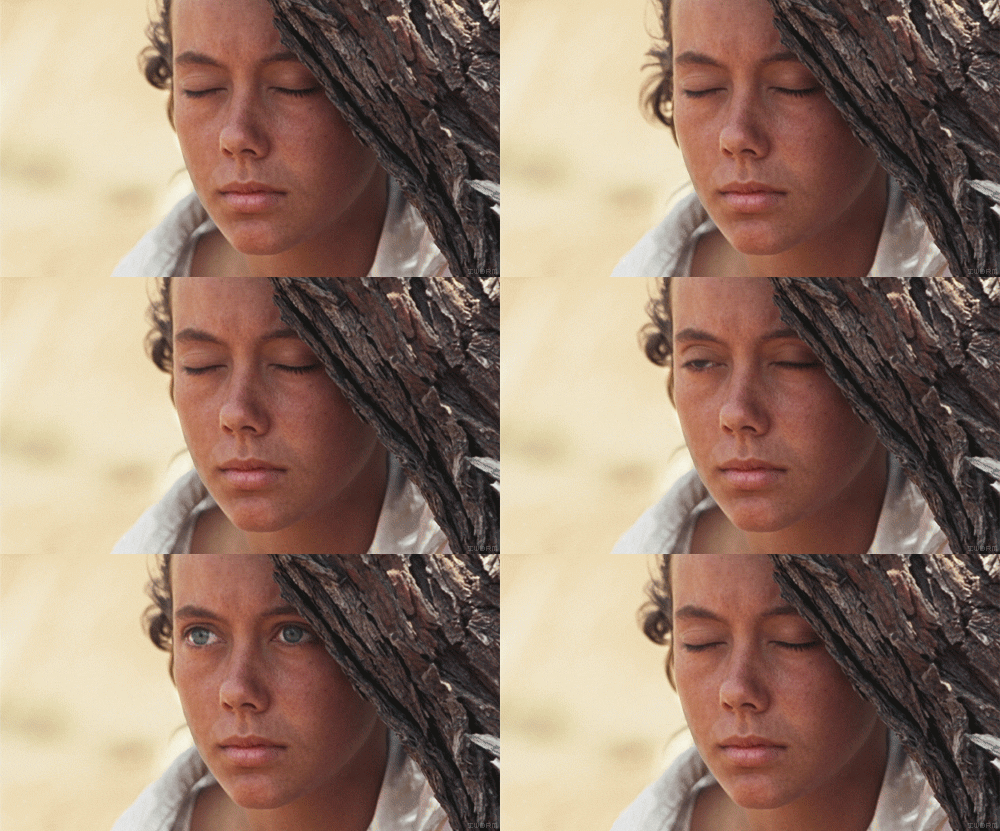
WALKABOUT tumblr_mb7ukzuYA71qe0eclo1_r4_500

Jenny Agutter in “Walkabout” (Nicolas Roeg, 1971)

Being poorly integrated in the universe of humanity and hardly able to adapt herself therein, she, like the child, is able to see it objectively; instead of being interested solely in her grasp on things, she looks for their significance; she catches their special outlines, their unexpected metamorphoses. She rarely feels a bold creativeness, and usually she lacks the technique of self-expression; but in her conversation, her letters, her literary essays, her sketches, she manifests an original sensitivity.

The young girl throws herself into things with ardour, because she is not yet deprived of her transcendence; and the fact that she accomplishes nothing, that she is nothing, will make her impulses only the more passionate. Empty and unlimited, she seeks from within her nothingness to attain All.

― Simone de Beauvoir,  from The Second Sex (first published in French as Le Deuxième Sexe in 1949)
If you’re interested in reading this hugely influential text, you can find it online HERE.

suzanne heintz – life once removed

 “A personal photography experience for public consumption.”

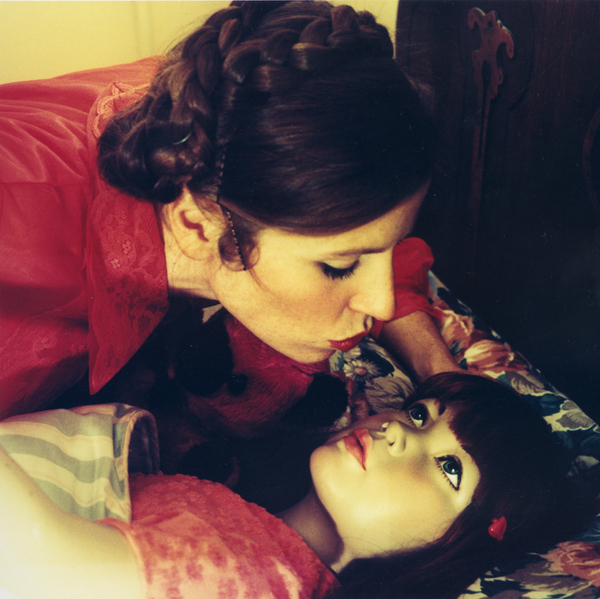
suzanne heintz - 01

Suzanne Heintz calls herself “the modern day patron saint of single women”. She has the following to say about her ongoing photography project, the wondrously uncanny “Life Once Removed”:

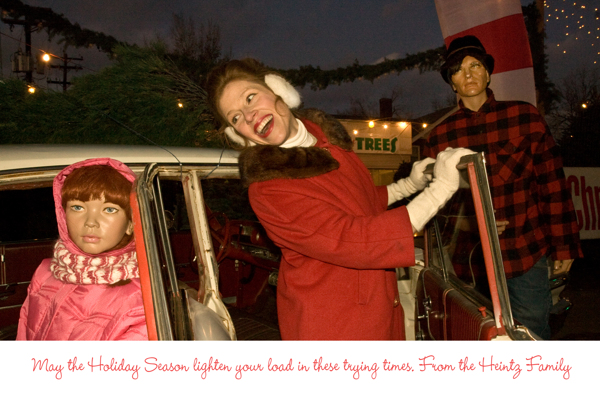
What would drive you to pack a family of mannequins into your station wagon, and take them on a road trip? Enough pressure to conform will send anyone packing.  That’s how I came to this personal project about what is essentially…Spinsterhood, and the American Way.
Well-meaning strangers, along with friends and family, would raise an eyebrow when the topic of my unmarried and childless status arose.  Indicating with a small facial twitch, not only my audacious freakishness, but that I was a little old for such foolish thinking. I mean, come on, eggs don’t last forever!

suzanne heintz - 02But really, what was I supposed to do?  You can’t just go out and buy a family.  Or can you?  I did.  They are mannequins.  The candy coated shell with nothing inside.  We do all those family things, all the while capturing those Kodak Moments.  Because it’s not really about the journey, or a genuine human connection, when your kids are screaming, “are we there yet?”, is it?  It’s about the picture in front of the sign.  “Get back in the car, we got the picture.  Now, let’s go eat.”

We love and obey the formatted image of a well-lived life.  So deeply ingrained is that strange auto-grin we put on when a camera is present.  Do we live our lives with a keen awareness of how it feels, or just how it looks?
suzanne heintz - 03If I pass through life without checking off the boxes for a wedding ring and a baby carriage, I will be missing the photo album, but not not the point.  When I take my photos, others stop and stare, then they ask, “why are you doing this?”  They, at that moment, are starting to get the point too.

heintz family christmas 1

Check out more of Suzanne’s fantastical images HERE.

stir it up, little darling (for thuli madonsela)

“Society is like a stew. If you don’t stir it up every once in a while then a layer of scum floats to the top.”

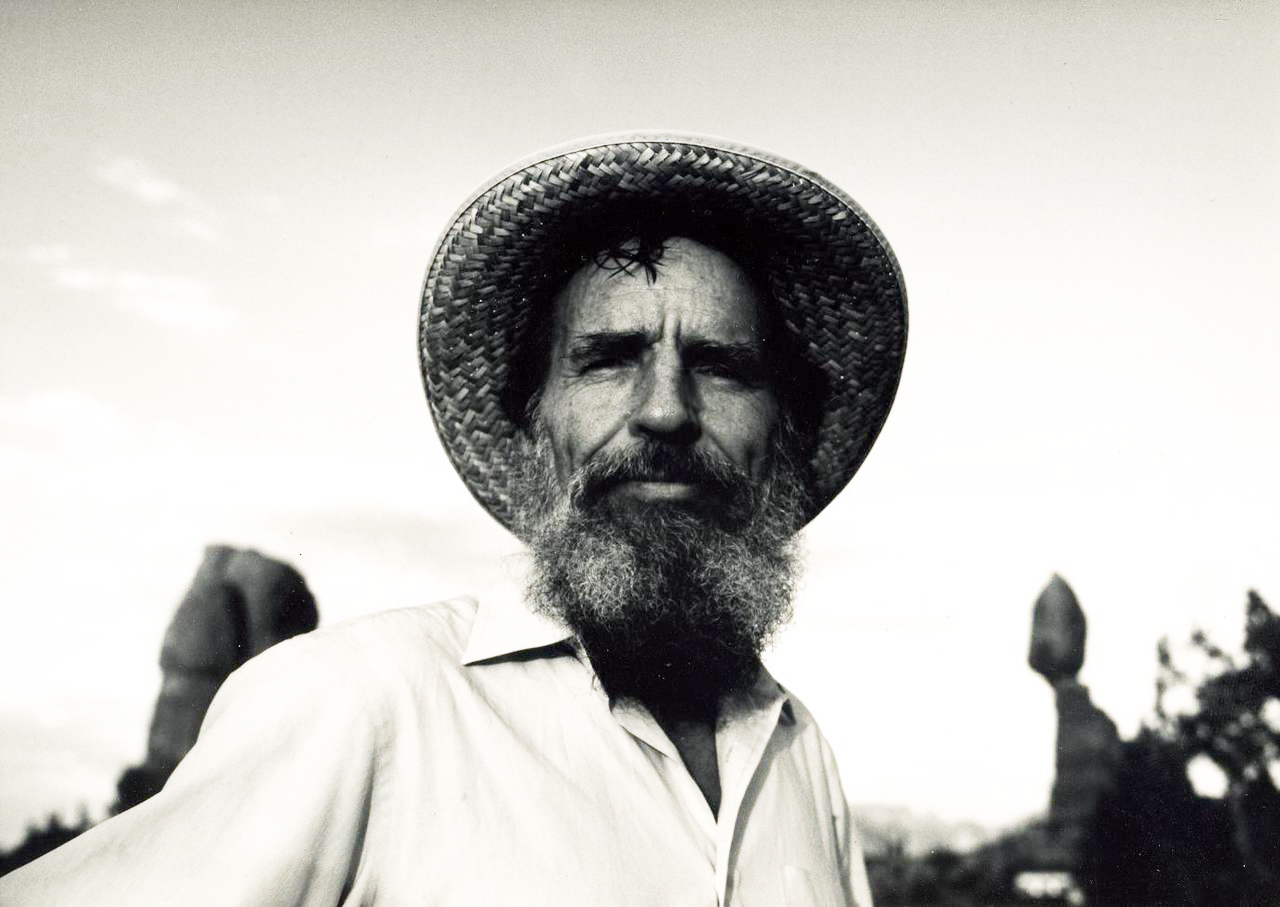
“My loyalties will not be bound by national borders, or confined in time by one nation’s history, or limited in the spiritual dimension by one language and culture. I pledge my allegiance to the damned human race, and my everlasting love to the green hills of Earth, and my intimations of glory to the singing stars, to the very end of space and time.”

— From Confessions of a Barbarian: Selections from the Journals of Edward Abbey, 1951-1989 (Boston: Little, Brown 1994).

edward-abbey