
Category Archives: violence
frank zappa on politics

ravel – shéhérazade, part II – la flûte enchantée
(Bożena Bujnicka – soprano, Paweł Sommer – piano)
A song cycle by Ravel, first performed in 1904. More information about the composition can be found HERE.
The shade is soft and my master sleeps
Wearing a conical hat of silk,
His long yellow nose in his white beard.
But me, I’m yet awake,
Listening to the melody of a flute outside
which pours forth, in turns, sadness and joy,
An air in turns languid or frivolous,
Which my darling love plays.
And when I approach the window,
It seems to me that each note flies
From the flute to my cheek
Like a mysterious kiss.
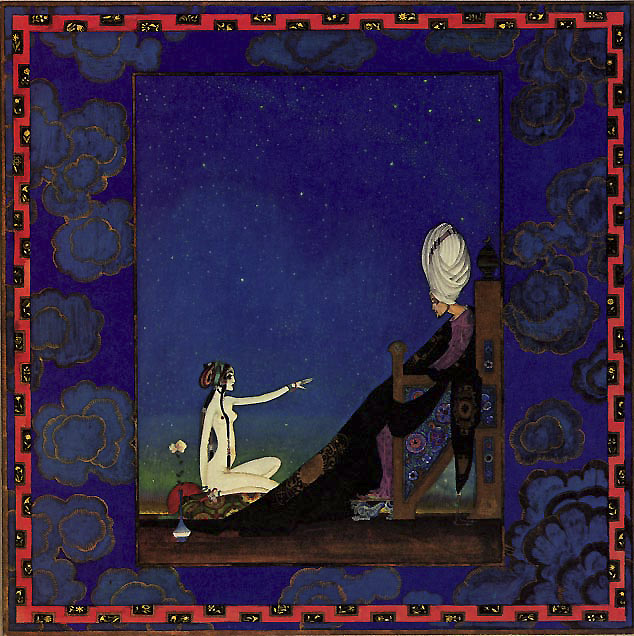
L’ombre est douce et mon maître dort
Coiffé d’un bonnet conique de soie
Et son long nez jaune en sa barbe blanche.
Mais moi, je suis éveillée encor
Et j’écoute au dehors
Une chanson de flûte où s’épanche
Tour à tour la tristesse ou la joie.
Un air tour à tour langoureux ou frivole
Que mon amoureux chéri joue,
Et quand je m’approche de la croisée
Il me semble que chaque note s’envole
De la flûte vers ma joue
Comme un mystérieux baiser.
tricky & pj harvey – broken bones (live)
“And if you’re famous you might get acquitted…”
miners shot down
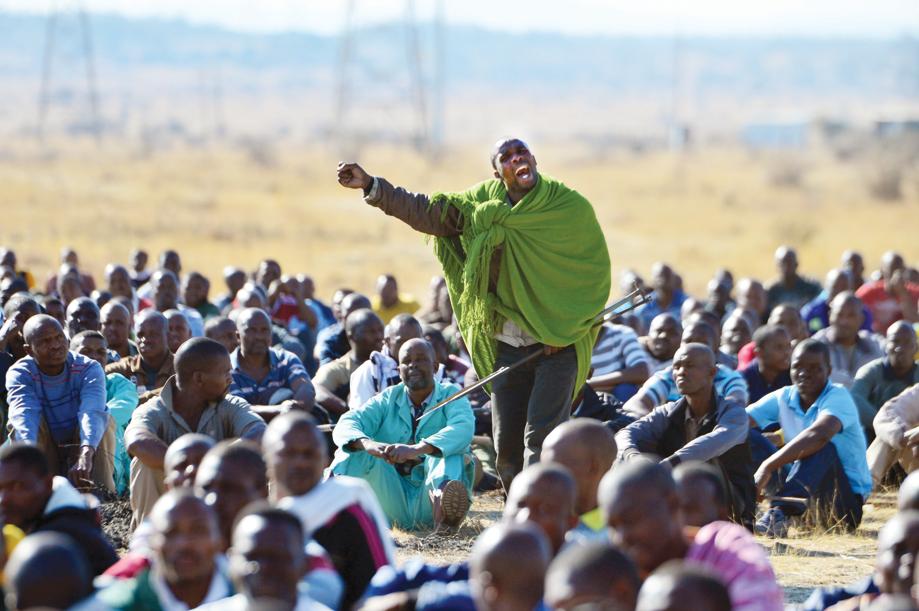
This chillingly insightful documentary on the Marikana massacre should be required viewing for every South African. It’s two years tomorrow since that terrible, indelible day. The film is available to watch in full on Youtube for a few days only. Don’t miss this opportunity. EDIT: 18/8: The film is no longer available on Youtube. Please visit its website to find out about future screenings.
In August 2012, mineworkers at one of South Africa’s biggest platinum mines began a wildcat strike for better wages.
Six days later, on 16 August 2012, the police used live ammunition to suppress the strike, killing 34 and injuring many more.
Using the point of view of the Marikana miners, “Miners Shot Down” follows the strike from day one, showing the courageous but isolated fight waged by a group of low-paid workers against the combined forces of the mining company Lonmin, the ANC government and their allies in the National Union of Mineworkers.
What emerges is collusion at the top, spiralling violence, police brutality and the country’s first post-apartheid massacre. If you still have any doubts that this was a premeditated massacre by Lonmin, the government and the police, this documentary will change your mind with a lot of previously unseen footage. Nobody will have an excuse after watching this to continue to blame the miners.
South Africa will never be the same again.
yapoos – 肉屋のように (like a butcher)
The wonderful Jun Togawa, Japan’s Bjork-before-there-was-Bjork (although comparisons can be reductive, she’s cut from similar revolutionary woman cloth), with her band Yapoos, off their 1987 album, ヤプーズ計画 (Yapoos Plan). And this video is incredible.
happy/it’s a wonderful life mashup
harun farocki – inextinguishable fire (1969)
“(1) A major corporation is like a construction set. It can be used to put together the whole world. (2) Because of the growing division of labour, many people no longer recognize the role they play in producing mass destruction. (3) That which is manufactured in the end is the product of the workers, students, and engineers.”
“When we show you pictures of napalm victims, you’ll shut your eyes. You’ll close your eyes to the pictures. Then you’ll close them to the memory. And then you’ll close your eyes to the facts.” These words are spoken at the beginning of an agitprop film that can be viewed as a unique and remarkable development. Farocki refrains from making any sort of emotional appeal. His point of departure is the following: “When napalm is burning, it is too late to extinguish it. You have to fight napalm where it is produced: in the factories.”
Harun Farocki, rest in peace.
nina paley – this land is mine
Animator Nina Paley, she of the wonderful public domain film Sita Sings the Blues (WATCH IT, please, if you haven’t yet!), also made another short cartoon a while back*, this one caricaturing the ongoing conflict in the Middle East.
So, who’s killing who? Nina has provided a handy guide to the various historical groups HERE.
*Please do note that this was made in 2012, before the most recent turn of events.
an israeli soldier’s story – eran efrati
This deserves to be heard. The cynical manipulation and deception happening will blow your mind. This talk by ex-Israeli Defence Force soldier Eran Efrati was filmed in Denver, Colorado on March 3, 2014 as part of The Soldier and the Refusenik U.S. tour with Maya Wind. Eran talk about his experiences in the Israeli Defence Force (IDF) and then more broadly discusses Israel, its relationship to the U.S. and the global expansion of militarism.
Eran Efrati, 28, was born and raised in Jerusalem. After graduating high school he enlisted in the IDF, where he served as a combat soldier and company sergeant in Battalion 50 of the Nachal Division. He spent most of his service in Hebron and throughout the West Bank. In 2009, he was discharged and joined Breaking the Silence, an organization of veteran Israeli soldiers working to raise awareness about the daily reality in the Occupied Territories.
He worked as the chief investigator of the organization, collecting testimonies from IDF soldiers about their activities. He also guided political tours and to the West Bank and worked to educate Israeli youth about the reality of being a soldier in an occupying army. His collected testimonies appear in the booklet “Operation Cast Lead” and their most recent release “Our Harsh Logic”.
Since leaving Breaking the Silence, his investigative reports appeared in The New York Times, The Washington Post and The Guardian. Today he is active with the Israeli groups Anarchists Against the Wall and Boycott from Within.
people in palestine being human
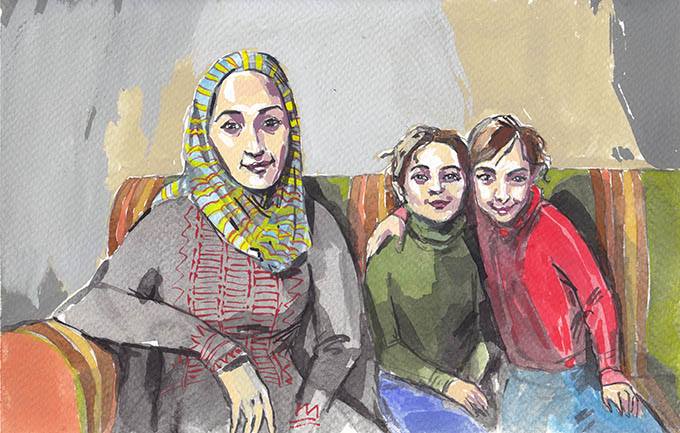
A mother and two little girls, Palestine. Lizza Littlewort, July 2014
Q: Lizza, did you paint this from a photo? I want to post these on Fleurmach and include context if there is some.
A: The likenesses are so bad there’s not much point referring to the originals… which I guess is a good thing, because I don’t feel like I’m violating anyone’s privacy. I’ve been working in a way where I strive for immediacy by going straight into paint with no pencil work underneath, so it’s pot luck how it turns out. The subjects are Palestinian though, I can say that much! I wanted to be sure to get a mood which is realistic. I want to do more of people in Palestine being human.
people in palestine being human
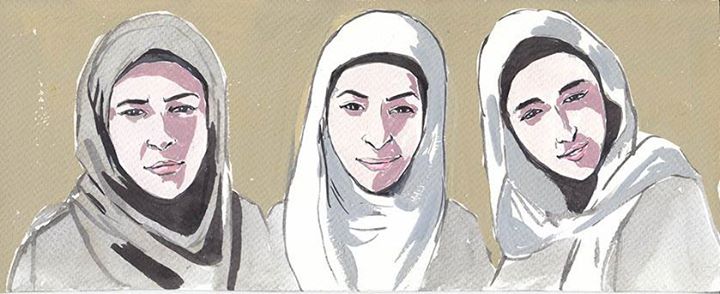
Three national coordinators of Tomorrow Youth Organisation, Palestine. Lizza Littlewort, July 2014.
lena khalaf tuffaha – running orders
They call us now.
Before they drop the bombs.
The phone rings
and someone who knows my first name
calls and says in perfect Arabic
“This is David.”
And in my stupor of sonic booms and glass shattering symphonies
still smashing around in my head
I think “Do I know any Davids in Gaza?”
They call us now to say
Run.
You have 58 seconds from the end of this message.
Your house is next.
They think of it as some kind of war time courtesy.
It doesn’t matter that
there is nowhere to run to.
It means nothing that the borders are closed
and your papers are worthless
and mark you only for a life sentence
in this prison by the sea
and the alleyways are narrow
and there are more human lives
packed one against the other
more than any other place on earth
Just run.
We aren’t trying to kill you.
It doesn’t matter that
you can’t call us back to tell us
the people we claim to want aren’t in your house
that there’s no one here
except you and your children
who were cheering for Argentina
sharing the last loaf of bread for this week
counting candles left in case the power goes out.
It doesn’t matter that you have children.
You live in the wrong place
and now is your chance to run
to nowhere.
It doesn’t matter
that 58 seconds isn’t long enough
to find your wedding album
or your son’s favorite blanket
or your daughter’s almost completed college application
or your shoes
or to gather everyone in the house.
It doesn’t matter what you had planned.
It doesn’t matter who you are
Prove you’re human.
Prove you stand on two legs.
Run.

on religion, compassion and conflict
Comparative religion scholar Karen Armstrong on the roots of religion and the challenge for our time.
la jetée (chris marker, 1962, 26 min)
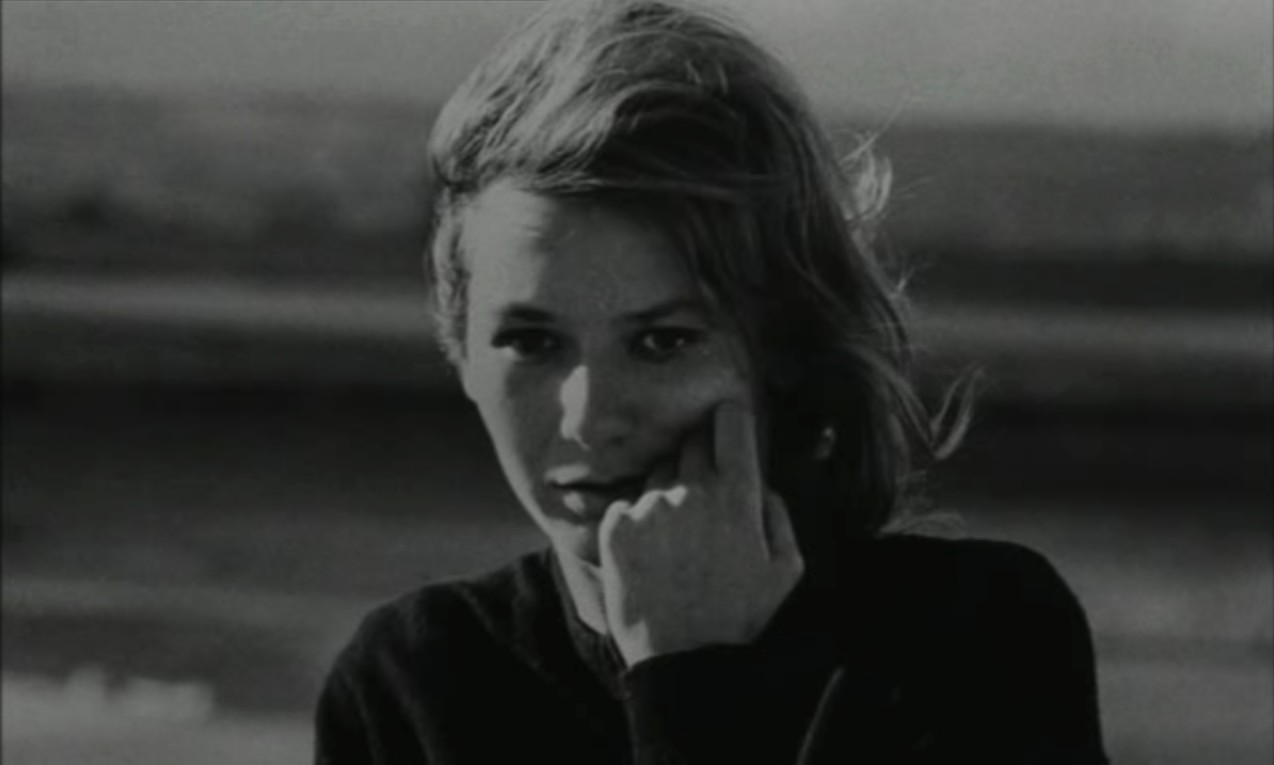 Watch this brilliant film in English HERE.
ayn rand, rand paul and paul ryan walk into a bar
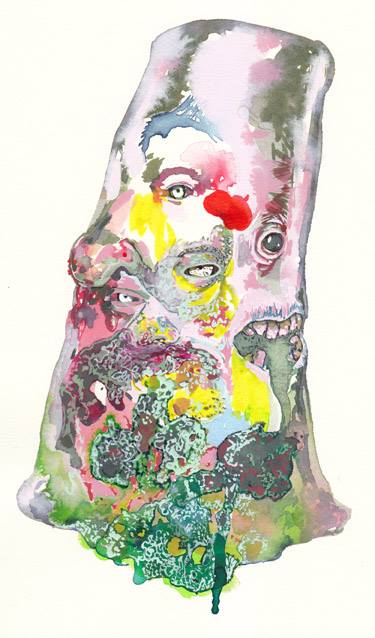
Lizza Littlewort, 2014. Watercolour on 100% cotton paper.
This picture was made in appreciation of that really great joke that went around recently: Ayn Rand, Rand Paul and Paul Ryan walk into a bar. The barman serves them tainted alcohol because there are no regulations. They die.
jane’s addiction – jane says
Off Nothing’s Shocking (1988).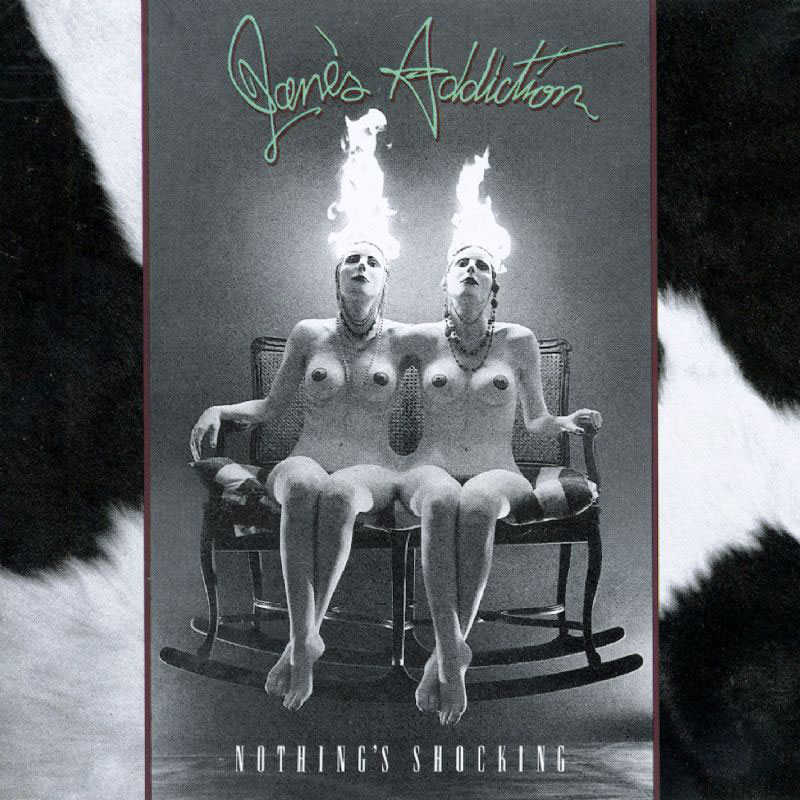
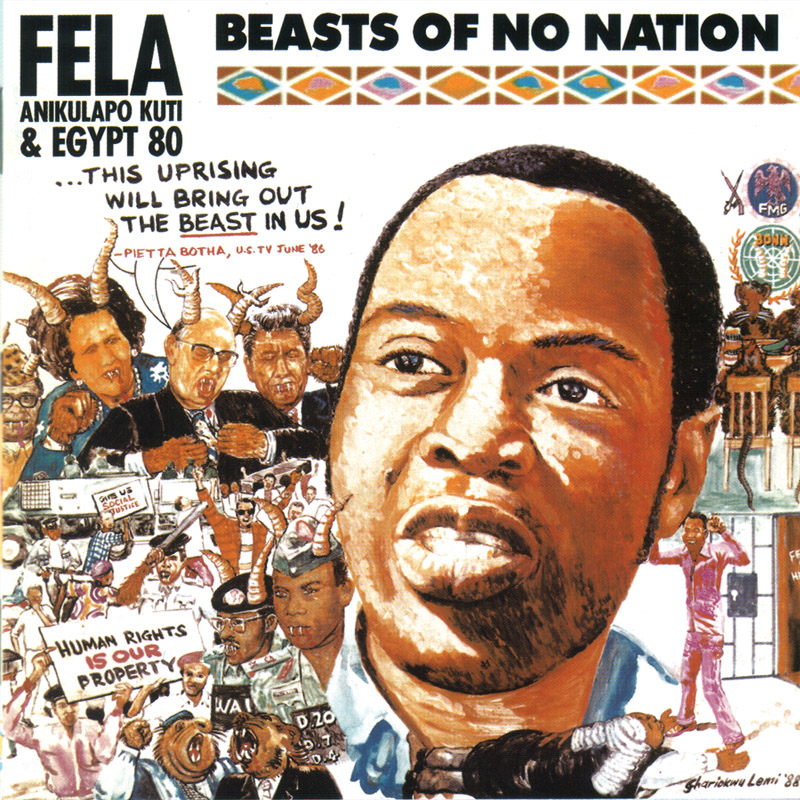
fela kuti & egypt 80 – beasts of no nation
This post goes out to FIFA president Sepp Blatter and all the people aligning themselves with various national football teams in the bizarre competitive spectacle that is the FIFA World Cup.
Happening this time round in Brazil, FIFA bleeds yet another host country’s economy dry, with the willing help of its own government – systematic violence, neo-colonial parasitism. Last time it was South Africa’s turn, and the effects are still being felt here.
fuck fifa
 Yup. I DO care about how voraciously the FIFA parasite infests every successive host country, and it makes me absolutely immune to the hype.
angel olsen – stars
This is one of those songs I have tried to write myself… and then I hear somebody else already has it nailed so articulately. Sucks. In the best way possible.
I think you’d like to see me lose my mind
You treat me like a child; I’m angry, blind
I feel so much at once that I could scream
I wish I had the voice of everything
I wish I had the voice of everything
To scream the animals, to scream the earth
To scream the stars out of our universe
To scream it all back into nothingness
To scream the feeling ’til there’s nothing left
To scream the feeling ’til there’s nothing left
I’ll close my eyes
I’ll close my eyes and try to leave the world
Well you could change my mind with just a smile
And just before I turn to leave I think
I could use the thoughts you’ve given me
Oh I could use the thoughts you’ve given me
To sing the animals, to sing the earth
To sing the stars into a universe
To sing it all back into something new
To sing for life, or myself and maybe you
Wish I had the voice of everything, sometimes
Wish I had the voice of everything
m.i.a. – double bubble trouble
Shampoo, drones and 3D printed guns…
roky erickson – i know the hole in baby’s head
Roky Erickson’s haunting, autobiographical spoken-word piece, filmed at the Austin State Hospital in 1986. Shot by and courtesy of Douglas Mobley.
sudden infant – girl
The brand new video from the brand new album, Wölfli’s Nightmare (2014, Voodoo Rhythm Records). Produced by the über-distinguished Roli Mosimann, this is the first release from Sudden Infant as a trio:
Joke Lanz: vocals, electronics
Christian Weber: bass
Alexandre Babel: drums
vice v – mr president
“Mr President” is the controversial first single released on Long Talk 2 Freedom. It is a work of hip-hop protest literature which deals with the failed presidency of Jacob Zuma. The work remixes, and was inspired by, Tunisian rapper El-general’s classic, “Rayes lebled”, which became the theme song of the Tunisian revolution which brought Tunisian Prime Minister Zine El Abidine Ben Ali down in 2011.
Written, produced, mixed and mastered by Sizwe Mpofu-Walsh aka Vice V
Recorded by Tiger.X
Speeches referenced:
T. Lekota, “Response to the State of the Nation Address”, February, 2013.
J. Malema, “They Shot us Behind the Mountain: Address on the First Anniversary of the Marikana Massacre”, August, 2013.
il faut que j’essaie
writing kills me.
laurie anderson – the dream before (for walter benjamin)
” A Paul Klee painting named Angelus Novus shows an angel looking as though he is about to move away from something he is fixedly contemplating. His eyes are staring, his mouth is open, his wings are spread. This is how one pictures the angel of history. His face is turned toward the past. Where we perceive a chain of events, he sees one single catastrophe which keeps piling wreckage upon wreckage and hurls it in front of his feet. The angel would like to stay, awaken the dead, and make whole what has been smashed. But a storm is blowing from Paradise; his wings are caught in it with such violence that the angel can no longer close them. The storm irresistibly propels him into the future to which his back is turned, while the pile of debris before him grows skyward. This storm is what we call progress.”
— Walter Benjamin, 1940
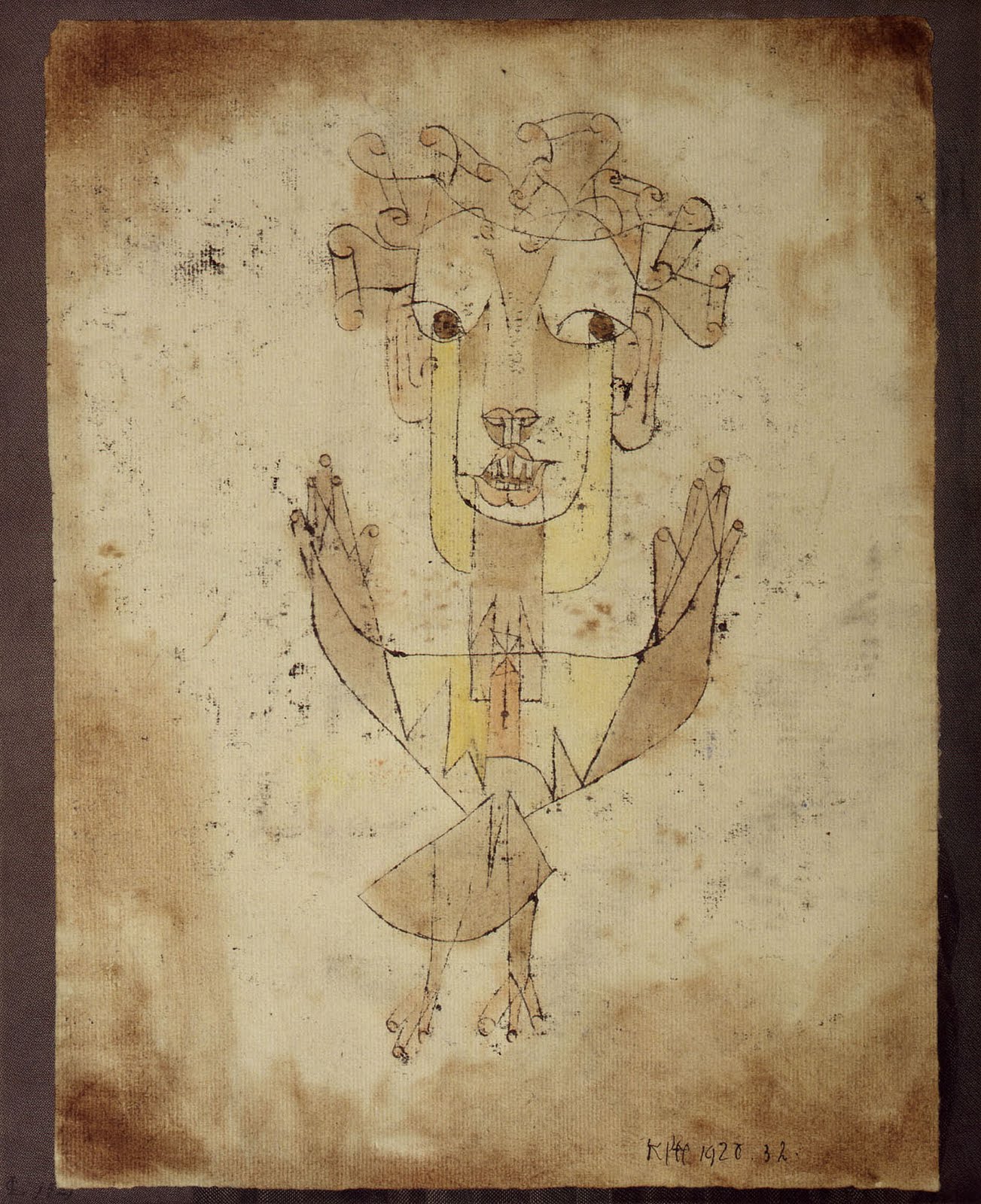
Paul Klee – Angelus Novus (1920)
“if i get killed, please don’t bury my soul”
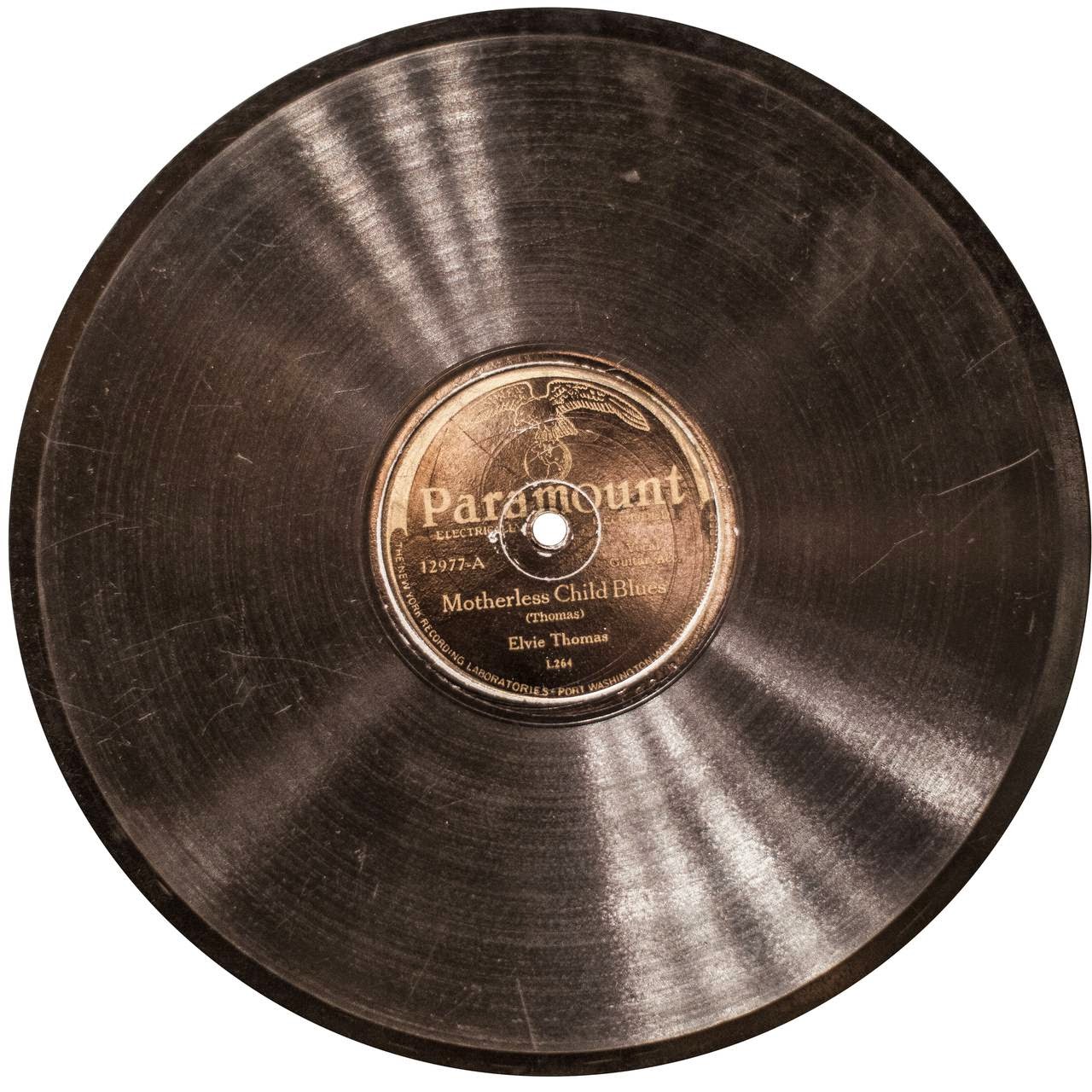
The New York Times recently published an evocative long-form article penned by John Jeremiah Sullivan about the enigmatic Geeshie Wiley and Elvie Thomas, woman blues musicians who haunt the archive with just six songs ever recorded, pressed on cheap, poor quality 78s by Paramount in 1930, as was the custom with “race” records not intended for mainstream markets.
I have been gripped on every listening by “Last Kind Words Blues” since I first heard it on the soundtrack to Crumb in the late ’90s (the same place Sullivan did), so I understood what Caitlyn Love, who did much of the the on-the-ground research for Sullivan, meant about its haunting her. From her blog:
When I first started doing research for John Jeremiah Sullivan for his article about Geeshie Wiley and Elvie Thomas, two women who changed American music and then vanished without a trace, I kept Wiley’s song “Last Kind Words Blues” on repeat for days. I hadn’t listened closely to her songs before this project, but I was aware of the mythology around them. Now, I found myself hearing something new: a haunting, a mystery.
I began my research splitting time between the Clayton Library Center for Genealogical Research, hunting among death, birth and marriage records, and the Houston Metropolitan Research Center, looking through old maps, photographs and city-directory records. All of these materials provided context for the era that Lillie Mae (Geetchie) Wiley and L.V. Thomas lived through.
Eventually we learned a great deal about Thomas’s personal history. But leads to Wiley went nowhere. I made myself dizzy scrolling through rolls of microfilm to find any meaningful clue. She had disappeared. The trail only picked up once, but it picked up sharply.
“We may have found Geeshie’s grave yesterday. Not 100 percent but optimistic,” John wrote in an email to editors at the magazine.
Continue reading about Caitlyn Love’s quest HERE.
Read John Jeremiah Sullivan’s piece HERE – it’s beautifully written, and reflects in deep ways on the romance and violence of the archive.
And this is the short version of the story, from a Youtube comment posted last week:
It is now believed that Elvie (L.V. Thomas nee Grant) and Geechie (Lillie Mae Wiley) recorded all of their songs in Grafton, WI for Paramount in 1930. According to L.V., she would play and Geechie would “bass” behind her or she’d play (guitar) and Geechie would “bass” behind her. Thus, it might very well be Geechie we hear doing this fine guitar work. L.V. turned her back on the blues (life) and dedicated herself to her local church in Texas. Geeshie disappeared into the unknown. Recent records indicate she killed her husband with a knife in 1931. She may have changed her name/I.D. to avoid being found.
“ghosts” – opening at muti gallery in one hour!
Ralph Ziman‘s much-anticipated exhibition, “GHOSTS”, opens in Cape Town at the MUTI GALLERY tonight (24 April 2014). For more information contact Guto Bussab on +27(0)21 465 3351.
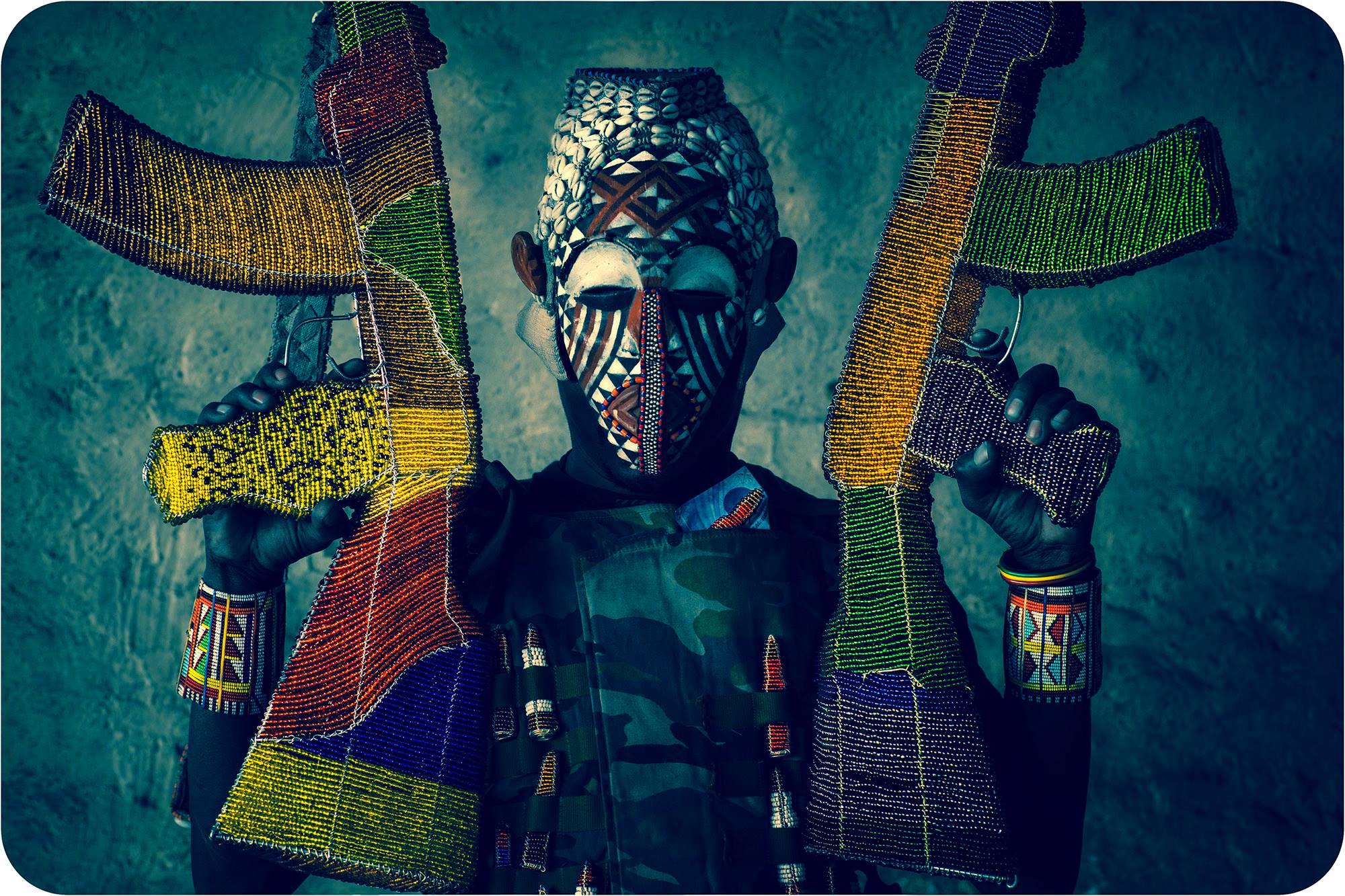
GHOSTS examines the consequences of international gun trade in Africa while questioning our uncomfortable fetishism and worship for deadly weapons.
____________________________________
“Do you love your guns? YEAH! God? YEAH! Government? F*** YEAH!!” So sings Marilyn Manson of America’s rabid obsession with ballistic, religious and political weapons of mass destruction.
While America has its God and its government – and certainly no shortage of guns – it is from a handful of Africa’s most volatile nations whence any form of “god” has fled and whose anarcho-fascist kleptocracies reduce just about any notion of “government” to a brutal, bloody farce.
Ziman may have made America his home but it is the continent of his birth upon which his dark, disturbing vision continues to fall.
“GHOSTS” confronts the complex socioeconomic and political circumstances of the African arms trade – a multinational, multibillion-dollar industry that moves in one direction only – into Africa.
Ziman spent six months collaborating with African artisans to produce wool garments and beaded replicas of the iconic AK-47 used in the series.
“They have lived around crime and violence both in their adoptive South Africa and their native Zimbabwe,” Ziman says. “There is a sadness about the pictures—a loneliness and distance.”
Ziman’s work challenges the tragic cliché of our times: a war torn, violent Africa of militant and corrupt dictators, child soldiers, and unceasing civil wars fed by a growing international arms-trade.
For him, the series is a platform to discuss the corruption, greed and influence of foreign world superpowers who, eager for a stake in Africa’s abundant natural resources, provide weapons to dictatorial governments in trade, and often to opposing factions as well, ensuring a perpetual cycle of war for generations.
Ziman is a South African artist currently living and working in Los Angeles. He is the director of hundreds of music videos for superstars ranging from Ozzy Osbourne to Michael Jackson, and held the reigns as writer/director/producer for Hearts and Minds that premiered at the Berlin and Montreal Film Festivals, as well as Jerusalema, South Africa’s official entry to the 2008 Academy Award Foreign Language section.
Ziman is also well-known in the U.S. for his public art in Venice and is currently working on a private commission in Santa Monica.
____________________________________
القداس الالهي البيزنطي
The Byzantine Greek Orthodox Divine Liturgy, sung in Arabic and Greek by the Mount Lebanon Choir.
joan didion, interviewed by linda kuehl in 1977
Here are some excerpts from an interview with Joan Didion that appeared in The Paris Review No. 74, Fall-Winter 1978. She talks about the performative violence of writing, and of the sometimes paralysing self-consciousness that attends it.
Reading her responses, I identified so personally that at points it felt like she could have been writing my own thoughts, down to the constrictions of that harsh Protestant ethic. But I’m not as strong as Joan. The nausea tends to silence me… except when it’s overwhelming: then, I vomit it out, sometimes all over unsuspecting passersby!
I especially liked what she says about how growing up in a dangerous landscape can affect one’s engagement with the world. I have often wondered whether I would be at all like I am if I hadn’t grown up in the turmoil of ’80s and ’90s South Africa. It wasn’t just about the weather, here.
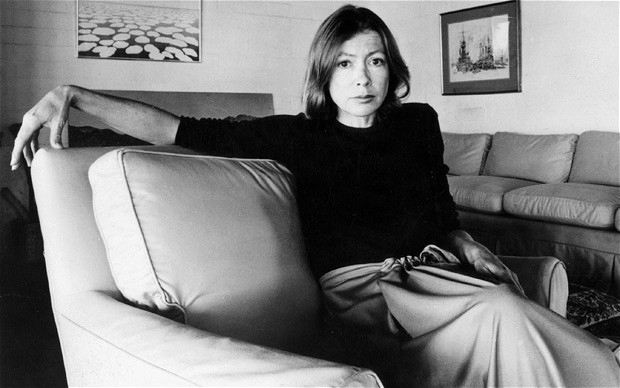
Joan Didion, 1977. Photo: REX FEATURES
INTERVIEWER
You have said that writing is a hostile act; I have always wanted to ask you why.
JOAN DIDION
It’s hostile in that you’re trying to make somebody see something the way you see it, trying to impose your idea, your picture. It’s hostile to try to wrench around someone else’s mind that way. Quite often you want to tell somebody your dream, your nightmare. Well, nobody wants to hear about someone else’s dream, good or bad; nobody wants to walk around with it. The writer is always tricking the reader into listening to the dream.
INTERVIEWER
Are you conscious of the reader as you write? Do you write listening to the reader listening to you?
DIDION
Obviously I listen to a reader, but the only reader I hear is me. I am always writing to myself. So very possibly I’m committing an aggressive and hostile act toward myself.
INTERVIEWER
So when you ask, as you do in many nonfiction pieces, “Do you get the point?” you are really asking if you yourself get the point.
DIDION
Yes. Once in a while, when I first started to write pieces, I would try to write to a reader other than myself. I always failed. I would freeze up.
…
INTERVIEWER
You say you treasure privacy, that “being left alone and leaving others alone is regarded by members of my family as the highest form of human endeavor.” How does this mesh with writing personal essays, particularly the first column you did for Life where you felt it imperative to inform the reader that you were at the Royal Hawaiian Hotel in lieu of getting a divorce?
DIDION
I don’t know. I could say that I was writing to myself, and of course I was, but it’s a little more complicated than that. I mean the fact that eleven million people were going to see that page didn’t exactly escape my attention. There’s a lot of mystery to me about writing and performing and showing off in general. I know a singer who throws up every time she has to go onstage. But she still goes on.
INTERVIEWER
Did any writer influence you more than others?
DIDION
I always say Hemingway, because he taught me how sentences worked. When I was fifteen or sixteen I would type out his stories to learn how the sentences worked. I taught myself to type at the same time. A few years ago when I was teaching a course at Berkeley I reread A Farewell to Arms and fell right back into those sentences. I mean they’re perfect sentences. Very direct sentences, smooth rivers, clear water over granite, no sinkholes.
INTERVIEWER
You’ve called Henry James an influence.
DIDION
He wrote perfect sentences, too, but very indirect, very complicated. Sentences with sinkholes. You could drown in them. I wouldn’t dare to write one. I’m not even sure I’d dare to read James again. I loved those novels so much that I was paralyzed by them for a long time. All those possibilities. All that perfectly reconciled style. It made me afraid to put words down.
INTERVIEWER
I wonder if some of your nonfiction pieces aren’t shaped as a single Jamesian sentence.
DIDION
That would be the ideal, wouldn’t it. An entire piece—eight, ten, twenty pages—strung on a single sentence. Actually, the sentences in my nonfiction are far more complicated than the sentences in my fiction. More clauses. More semicolons. I don’t seem to hear that many clauses when I’m writing a novel.
INTERVIEWER
You have said that once you have your first sentence you’ve got your piece. That’s what Hemingway said. All he needed was his first sentence and he had his short story.
DIDION
What’s so hard about that first sentence is that you’re stuck with it. Everything else is going to flow out of that sentence. And by the time you’ve laid down the first two sentences, your options are all gone.
INTERVIEWER
The first is the gesture, the second is the commitment.
DIDION
Yes, and the last sentence in a piece is another adventure. It should open the piece up. It should make you go back and start reading from page one. That’s how it should be, but it doesn’t always work. I think of writing anything at all as a kind of high-wire act. The minute you start putting words on paper you’re eliminating possibilities. Unless you’re Henry James.
INTERVIEWER
I wonder if your ethic—what you call your “harsh Protestant ethic”—doesn’t close things up for you, doesn’t hinder your struggle to keep all the possibilities open.
DIDION
I suppose that’s part of the dynamic. I start a book and I want to make it perfect, want it to turn every color, want it to be the world. Ten pages in, I’ve already blown it, limited it, made it less, marred it. That’s very discouraging. I hate the book at that point. After a while I arrive at an accommodation: Well, it’s not the ideal, it’s not the perfect object I wanted to make, but maybe—if I go ahead and finish it anyway—I can get it right next time. Maybe I can have another chance.
INTERVIEWER
Have any women writers been strong influences?
DIDION
I think only in the sense of being models for a life, not for a style. I think that the Brontës probably encouraged my own delusions of theatricality. Something about George Eliot attracted me a great deal. I think I was not temperamentally attuned to either Jane Austen or Virginia Woolf.
INTERVIEWER
What are the disadvantages, if any, of being a woman writer?
DIDION
When I was starting to write—in the late fifties, early sixties—there was a kind of social tradition in which male novelists could operate. Hard drinkers, bad livers. Wives, wars, big fish, Africa, Paris, no second acts. A man who wrote novels had a role in the world, and he could play that role and do whatever he wanted behind it. A woman who wrote novels had no particular role. Women who wrote novels were quite often perceived as invalids. Carson McCullers, Jane Bowles. Flannery O’Connor, of course. Novels by women tended to be described, even by their publishers, as sensitive. I’m not sure this is so true anymore, but it certainly was at the time, and I didn’t much like it. I dealt with it the same way I deal with everything. I just tended my own garden, didn’t pay much attention, behaved—I suppose—deviously. I mean I didn’t actually let too many people know what I was doing.
INTERVIEWER
Advantages?
DIDION
The advantages would probably be precisely the same as the disadvantages. A certain amount of resistance is good for anybody. It keeps you awake.
…
INTERVIEWER
What misapprehensions, illusions and so forth have you had to struggle against in your life? In a commencement address you once said there were many.
DIDION
All kinds. I was one of those children who tended to perceive the world in terms of things read about it. I began with a literary idea of experience, and I still don’t know where all the lies are. For example, it may not be true that people who try to fly always burst into flames and fall. That may not be true at all. In fact people do fly, and land safely. But I don’t really believe that. I still see Icarus. I don’t seem to have a set of physical facts at my disposal, don’t seem to understand how things really work. I just have an idea of how they work, which is always trouble. As Henry James told us.
INTERVIEWER
You seem to live your life on the edge, or, at least, on the literary idea of the edge.
DIDION
Again, it’s a literary idea, and it derives from what engaged me imaginatively as a child. I can recall disapproving of the golden mean, always thinking there was more to be learned from the dark journey. The dark journey engaged me more. I once had in mind a very light novel, all surface, all conversations and memories and recollections of some people in Honolulu who were getting along fine, one or two misapprehensions about the past notwithstanding. Well, I’m working on that book now, but it’s not running that way at all. Not at all.
INTERVIEWER
It always turns into danger and apocalypse.
DIDION
Well, I grew up in a dangerous landscape. I think people are more affected than they know by landscapes and weather. Sacramento was a very extreme place. It was very flat, flatter than most people can imagine, and I still favor flat horizons. The weather in Sacramento was as extreme as the landscape. There were two rivers, and these rivers would flood in the winter and run dry in the summer. Winter was cold rain and tulle fog. Summer was 100 degrees, 105 degrees, 110 degrees. Those extremes affect the way you deal with the world. It so happens that if you’re a writer the extremes show up. They don’t if you sell insurance.
Reading the complete interview here: Joan Didion, The Art of Fiction No. 71.
 fleurmach