A violently schizo, thrown-together bunch of tracks I played at a gig called “Songs of Mystery & Terror” on 23 April 2014 at Casa Nostra in Sea Point, Cape Town.
Category Archives: spirit
lena khalaf tuffaha – running orders
They call us now.
Before they drop the bombs.
The phone rings
and someone who knows my first name
calls and says in perfect Arabic
“This is David.”
And in my stupor of sonic booms and glass shattering symphonies
still smashing around in my head
I think “Do I know any Davids in Gaza?”
They call us now to say
Run.
You have 58 seconds from the end of this message.
Your house is next.
They think of it as some kind of war time courtesy.
It doesn’t matter that
there is nowhere to run to.
It means nothing that the borders are closed
and your papers are worthless
and mark you only for a life sentence
in this prison by the sea
and the alleyways are narrow
and there are more human lives
packed one against the other
more than any other place on earth
Just run.
We aren’t trying to kill you.
It doesn’t matter that
you can’t call us back to tell us
the people we claim to want aren’t in your house
that there’s no one here
except you and your children
who were cheering for Argentina
sharing the last loaf of bread for this week
counting candles left in case the power goes out.
It doesn’t matter that you have children.
You live in the wrong place
and now is your chance to run
to nowhere.
It doesn’t matter
that 58 seconds isn’t long enough
to find your wedding album
or your son’s favorite blanket
or your daughter’s almost completed college application
or your shoes
or to gather everyone in the house.
It doesn’t matter what you had planned.
It doesn’t matter who you are
Prove you’re human.
Prove you stand on two legs.
Run.

on religion, compassion and conflict
Comparative religion scholar Karen Armstrong on the roots of religion and the challenge for our time.
time held me green and dying
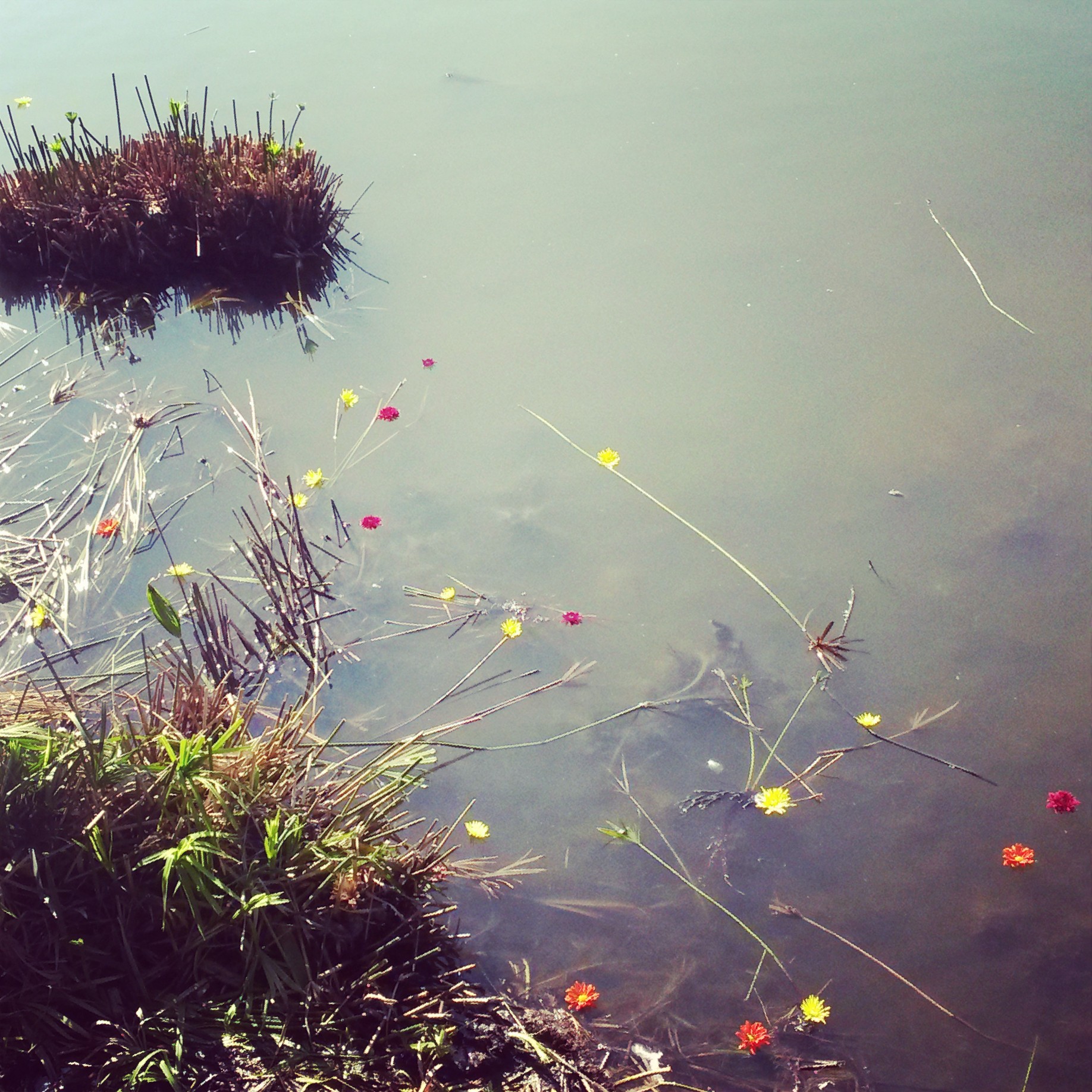
Water, ash, flowers… Karrie’s memorial, Pietermaritzburg, 29 June 2014. Photo: Rosemary Lombard
though i sang in my chains like the sea
“The world is helpless against a man who sings in his misery.”
— Ernesto Sabato
thokozani mthiyane – i dreamt i was dead again

Photo: Thokozani Mthiyane
the hollowness of the head
the hollowness of the heart
floating hieroglyphics
in search of yet another
… … … poetics
with age comes reason
yet with age comes frailty
and the absence of … …
sunshine bloom promise
and the dying cloud
sviatoslav richter plays liszt’s transcendental études
A selection of my favourites from Liszt’s Transcendental series, recorded in Prague on June 10, 1956 and broadcast on Czech Radio.
Tracklisting with times:
00:00 – Étude No. 1 (Preludio)
00:58 – Étude No. 2 (untitled – Molto vivace)
02:52 – Étude No. 3 (Paysage)
08:29 – Étude No. 5 (Feux Follets)
12:03 – Étude No. 11 (Harmonies du Soir)
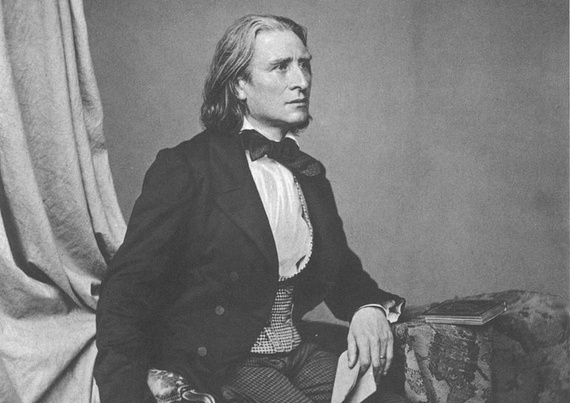
Heartbreaker Franz Liszt circa 1860 (Franz Hanfstaengl/Wikimedia)
“On a snowy day in Berlin, two days after Christmas 1841, Franz Liszt strode out onto the stage at the Berliner Singakademie concert hall. He sat at his grand piano in profile, beads of sweat forming on his forehead. He was 30 years old, at the height of his ability, and he was about to unleash a mania—a mania not in the sense of “Beatlemania”, or any of the other relatively mild musical obsessions, but a mania viewed as a truly contagious, dangerous medical condition that would affect women in Germany, Italy, France, Austria, and elsewhere.
“Using his whole body—his undulating eyebrows, his wild arms, even his swaying hips—Liszt dove into Händel’s “Fugue in E minor” with vigor and unfettered confidence, keeping perfect tempo and playing entirely from memory. It was the start of the phenomenon later called “Lisztomania,” and the women in the audience went mad.”
Read THIS ARTICLE on the romantic power of music like Liszt’s…
writing wrongs
my wrists ache
wrest them
look out
a deck of shards
sick notes
cutting in
cutting up
cutting down
cutting out
cutting off
the pulse
wound up wound
wind up wind
wound up wind
wound down wind
wind down wound
wind up wounded
binds unbound
an unstruck sound
this name means nothing to me
rolling off my glossed tongue
the missing ink
the beads of spittle in the pink
the drown flying in my drink
sink for yourself
sink or blink
outside carries on
the whorl of a banshee
howling at the pane
open your eyes
close your mouth
close your eyes
open your mouth
open your close
eye your mouth
mouth your silence
silence your eyes
make the whirl go away
pj harvey – working for the man (live, 1995)
“Working For The Man” and “Goodnight”, performed live on The White Room, 1995. Hot.
butterfly coffin
laurie anderson – the dream before (for walter benjamin)
” A Paul Klee painting named Angelus Novus shows an angel looking as though he is about to move away from something he is fixedly contemplating. His eyes are staring, his mouth is open, his wings are spread. This is how one pictures the angel of history. His face is turned toward the past. Where we perceive a chain of events, he sees one single catastrophe which keeps piling wreckage upon wreckage and hurls it in front of his feet. The angel would like to stay, awaken the dead, and make whole what has been smashed. But a storm is blowing from Paradise; his wings are caught in it with such violence that the angel can no longer close them. The storm irresistibly propels him into the future to which his back is turned, while the pile of debris before him grows skyward. This storm is what we call progress.”
— Walter Benjamin, 1940
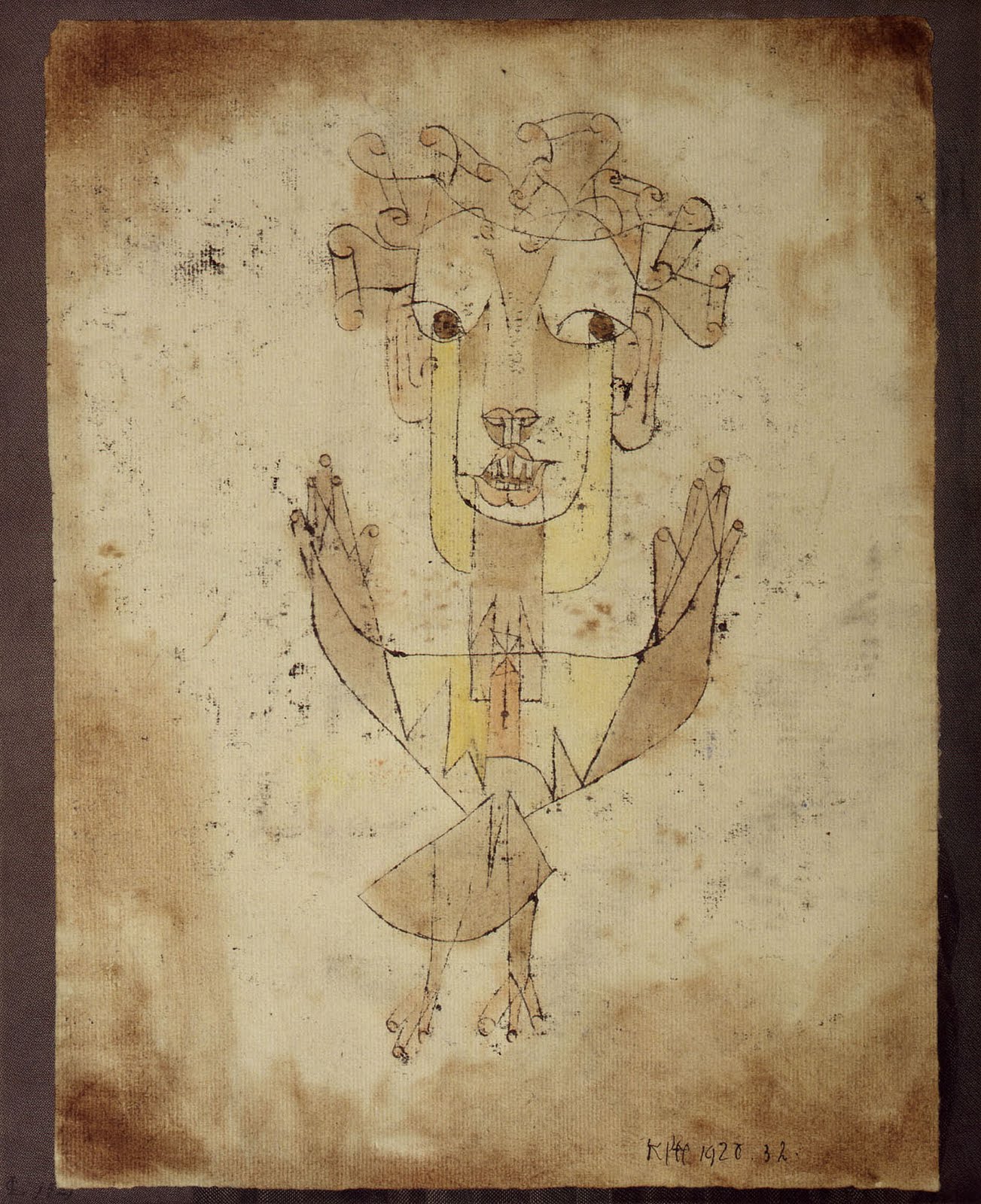
Paul Klee – Angelus Novus (1920)
القداس الالهي البيزنطي
The Byzantine Greek Orthodox Divine Liturgy, sung in Arabic and Greek by the Mount Lebanon Choir.
virgin prunes – the moon looked down and laughed
“I’ve caught so many falling stars
There’s holes in my hands…”
Title track off their 1986 album on New Rose Records.
upcoming fleurmach gig on 23 april
 Diarise it if you will be in Cape Town on 23 April 2014. More info HERE.
toast coetzer – weather balloon
when you release a weather balloon
off the back of the ship
with the small box of the radiosonde
dangling precariously below its
oversized white grape of a shape
on a simple string
which unfurls as you let it go
to become ten metres, or longer
so the radiosonde can feel
the atmosphere around it
in its full, naked glory
it is eleven o’clock, or midnight
somewhere in the world
it might as well be here
where we are in our pajamas
and the balloon is about this size
and filled with helium
and seconds after you’ve let it go
it is sucked up into the wild
black sky, and the noisy, battling sea
seems to urge it on with an out of
control applause from below
and it is gone, so suddenly, so for surely,
and you’re left standing there, disappointed
blinking into the inky cold, with your head hanging
back onto your neck and your mouth open
in your sticky gumboots
and the salty diesel smell in your beard
and it only gets exciting again when
you hunch over a computer screen inside
with the meteorologists to look – like
alchemists – at the boiling pot of
leaping numbers as the weather balloon
and its transmitting radiosonde races through
the layers of emptiness, a thousand metres, two thousand metres
and sends lurches and spurts of data back to
where we’re bobbing in the Atlantic
as it shoots upwards
with squiggles and digits and facts
through what seems like nothing
but is in actual fact the invisible sinews that
keep the clouds tied to the mountains, moss to the trunk
the raindrops to the snakes, fish to pebbles
goats’ hooves to cliff faces, tomato green to finger tips
the sea to the murmuring, cracking movement of the continents
and the spongy, lung-like coral fans to the conversation
filtering plankton and pain and matter of fact
in the queue at the ATM about the weather and tax
and death and babies and the future
and five thousand metres, seven thousand, nine thousand
to where commercial airliners fly in straight lines
through clouds and stars and shavings of moon
which cannot be seen because the shutters are down
and the movies are being shown
and by now the weather balloon has grown in size
due to the air pressure to the size of this room
and the radiosonde is reaching the edge of
its usefulness to our understanding and prediction
of weather systems and unfurling cold fronts
winds and even the sprinkling of godsmall protons
and atomic nuclei which have been travelling towards us
from very far away – from the herb gardens of supernovas –
to confirm what we’ve been suspecting
for a while already: we are born fragile, and dogs are
our eternal friends.
—
 For more of Toast’s wonder-filled words, check out the gig happening this Thursday night in Cape Town at Joule City, entitled “Albatross: a journey through spoken and unspoken word”. You can buy tickets on QUICKET or at the door.
According to the blurb for the event on Facebook:
This collaboration combines movement with poetry to create a unique audio – visual performance. For this show, the band will consist of Toast Coetzer, Righard Kapp, Jon Savage and Jane Breetzke (the latter two also collaborators in Toast’s other band, Simply Dead). Darkroom Contemporary will accompany the band with an exploration of the music through movement.
Cape Town artist Katherine Bull will create/ draw during the performance and her artwork will be projected for the audience to see.
The material performed in the Albatross show will take the shape of a 45-minute journey. Toast went on a sea voyage to Tristan da Cunha in 2013 and the show will trace themes he wrote about while on the journey and on the island, which is the most isolated permanently populated island in the world (it’s almost 3 000 km from Cape Town).
Hence the ocean, sea voyages, sea birds (and principally the albatross and its marathon gliding exploits to feeding grounds, and then back to a speck in the ocean where a mate awaits on a nest), oceanography, metereology and geography will become the background for love, long-distance relationships, people’s adversity against the odds and other human frailties to be explored against.
thuli madonsela’s letter to her 16-year-old self
This letter to her 16-year-old self gives insight into Thuli Madonsela‘s life before she became South Africa’s formidable Public Protector – one of the few current SA government office bearers who retain any integrity. Read her report on the misuse of public funds at the private residence of President Jacob Zuma at Nkandla. You can tell between the lines of this letter that she had to learn early in life to be comfortable with making unpopular choices to be able to do the things she believed in.
The following is an extract from From Me to Me: Letters to my 16-and-a-half-year old self (Jacana Media, 2012), a collection of letters written by South Africans to their teenage selves.
26 April 2012
Dear Thuli
 It is April 2012, 5 months before our big 5-0 birthday. I am your future. At the moment, you are 16-and-a half years old, doing grade 11, known as form four then, at Evelyn Baring High School in Swaziland, the year being 1979. You are wondering what you will be, caught between thoughts of pursuing medicine and law. Your pastor’s disapproving views on the latter are not in any way helpful. I know you are socially awkward, plagued by a nagging feeling of being unloved and ugly.
Perhaps this comes from being teased about your big head and, more recently, two of your academically inferior classmates have started taunting you, too. Having two sisters whose beauty is always noticed and praised has not helped either. Secure in your academic prowess – for which you are always praised at home and at school – you are regarded as helpful and relied on by your family, friends, teachers and your church. This makes you feel significant. You will excel, academically, throughout your life and this will bring you to where you are right now. I’m writing to tell you to relax because you are a perfect expression of God’s magnificence.
You are the mother of two wonderful children, a beautiful daughter Wenzile Una and a handsome son Mbusowabantu “Wantu” Fidel. Your fears of being unlovable were unfounded. You have been loved and supported beyond measure throughout your life. Today, you are the nation’s Public Protector – a very responsible position that helps curb excesses in the exercise of public power while enabling the people to exact justice for state wrongs. You had the privilege of playing some role in bringing about change in this country, including the drafting of the new constitution that saw Nelson Mandela become the first black President. Mama was right, education is the great leveler. I’m glad I listened to her.
You have experienced tough times and great times, been met with nurturers and detractors, but all these life lessons have been necessary to help you bloom. You have come to realize that you are perfect for your life’s purpose. You’ve always been a dreamer, an eternal optimist. Keep dreaming, for dreams have wings. But live consciously and take time to smell the roses otherwise life will pass you by, including the opportunity to appreciate the finite precious moments you will enjoy with your late partner, younger sisters and parents.
Above all, remember that love is everything and don’t forget to forgive yourself and others.
Love you unconditionally,
Thuli Nomkhosi Madonsela (Your older Self)
burning at both ends
“My candle burns at both ends;
It will not last the night;
But ah, my foes, and oh, my friends—
It gives a lovely light!”
― Edna St. Vincent Millay
I made this sleepless mix in 2003 on a slide into depression after I had to abandon my MA dissertation after three years’ work, like an almost-full-term still birth (I’ve just gone back to give varsity another shot, more than a decade later)… I was djing almost every weekend and hanging out with lost people on drugs talking mostly empty crap at one another until the sun came up. I passed many hours in the company of some beautiful, talented, bored, unhappy, bitter humans… and also a fat complement of irredeemable oxygen thieves. Anything to distract from the rip in the fabric of who I had thought I was, to cackle in the face of hopelessness. It just made me lonelier and lonelier. I would come home with the scabs over the hole in my soul all picked off, and listen to music like this to feel OK.
When we were kids, my dad used to warn us that “late nights make sad mornings”. He was right, though not for the reasons he thought.
Track list:
1. Velvet Underground – After Hours
2. Dntel – Umbrella
3. Lali Puna – Bi Pet
4. Grauzone – Eisbaer
5. The Kills – Space Race/Electric Horse
6. Suzanne Vega – Fat Man & Dancing Girl
7. Richard Hell & the Voidoids – Blank Generation
8. David Bowie – Kooks
9. Faust – I’ve Got My Car & My TV
10. Wire – I Feel Mysterious Today
11. Sparklehorse – My Yoke Is Heavy
12. Yo La Tengo – The Summer
13. My Bloody Valentine – Off Your Face
14. Adorable – Sunshine Smile
15. Slowdive – Alison
16. Lloyd Cole & the Commotions – Forest Fire
17. The Microphones – I Want Wind To Blow
18. Bauhaus – All We Ever Wanted
19. Einstuerzende Neubauten – Blume
20. Madrugada – Hidden track off Grit
21. Pixies – Wave of Mutilation (UK Surf mix)
chelsea wolfe – halfsleeper (live)
All the things we yell don’t mean a thing
When we’re spinning out of darkened meadow wind
When we’re flying like we’re Mary’s angels through the shattered glass
When we find that tall dark shadow waiting there with outstretched hands
He has given me a dress of red and you a skin of gray
We’ll be twisting here for hours ’til the light will bring us day
And we’re spread across the open road
And we’re spread across the asphalt on the open road
And we’re streaming in the wind like cassette tape or jellyfish
Long dark veins and records playing memories
(Hear the album version HERE.)
busi mhlongo with madala kunene, rosebank, johannesburg, 1995
This fragment was filmed by Dick Jewell during the rehearsals for the recordings of Madala Kunene’s album Kon’ko Man in Johannesburg, 1995.
light from a dead star
“All these dead suns, these posthumous rays which take millions of light-years to reach us, asteroids, fragments of dead worlds, shattered and exploded, old moons, flawed and cankered, crusts, sores, blotches, cold lupus, devouring leprosy, sanies, and that last drop of pearl-like light, the purest of all, sweating at the highest point of the firmament and about to fall… is not a tear nor a dewdrop, but a drop of pus. The universe is in the process of decomposing and, like a cemetery, it swarms with becoming and smells good. The stars are unguent-bearing and throb feverishly; each ray carries seeds sown in the brain of man, and they are the seeds of destruction. Grey matter contains sunspots that eat into the whole circumference of the brain. It is an index of disintegration. Thought is a pestilence.”
— Blaise Cendrars, from Sky, the 1992 English translation of Le Lotissement du Ciel (1949).

Illustration: Fernand Léger, 1919
Sky, the last of Cendrar’s four autobiographical volumes, is a collage of prose poetry, travel writing, reportage, detective story, and personal memoir.
“He recounts his adventures in Russia during the revolution of 1905, in the trenches of World War I (where he lost his right arm), in Brazil in the 1920s, and behind the lines during World War II. The two wars run throughout as a unifying thread. As the title announces, this is a memoir of the sky – of Cendrars’s love of birds, levitation, and aviation. The opening of the book finds Cendrars, the great adventurer and traveler, sailing back from Brazil to Paris with 250 multi-colored birds, hoping to bring at least one of them alive to a child he loves.
The second part moves back and forth between the author’s recollections of life as a war correspondent in 1940 and an encyclopedic discourse on levitation he wrote in search of a patron saint of aviation (perhaps as compensation for the death of his young son, Remy, who was a pilot during the war). With unmatched exuberance, Cendrars writes on poetry, myths, existentialism, his life in Paris between the wars with the painter Delaunay and the Dadaists, and his exotic adventuresin Brazil. His anecdotes of Russia, where he was a jeweller’s assistant, are compelling and funny. His fiercely imaginative stories, such as one about a Brazilian coffee plantation owner who, obsessed with his love for Sarah Bernhardt, retreats into the wilderness, are magical.”
(I found this review HERE.)

Illustration: Fernand Léger
on melancholia
“Melancholy, being a kind of vacatio, separation of soul from body, bestowed the gift of clairvoyance and premonition. In the classifications of the Middle Ages, melancholy was included among the seven forms of vacatio, along with sleep, fainting, and solitude. The state of vacatio is characterized by a labile link between soul and body which makes the soul more independent with regard to the sensible world and allows it to neglect its physical matrix in order, in some way, better to attend to its own business.”
— Ioan P. Couliano, from Eros and Magic in the Renaissance
angel olsen – safe in the womb (live)
“Out of this labyrinth that makes our world
How do we ever know the light inside ourselves?
To know that the skin we wear is raw
That we can be anything if we know anything at all”
Live at Bush Hall, London, in August 2013.
alain resnais/chris marker – statues also die (1953)
“We want to see their suffering, serenity, humour, even though we don’t know anything about them.”
Directors: Alain Resnais & Chris Marker
Narrator – Jean Négroni
Music – Guy Bernard
A collaborative work by Resnais and Marker, this is a deeply felt study of African art and the decline it underwent as a result of its contact with Western civilization. The film was banned for more than a decade by French censors as an attack on French colonialism, and is now only available to watch in the shortened version I’ve posted here (turn on the subtitles on Youtube if you want English subtitling).
Statues Also Die traces the devastating impact of French colonialism on African art. As Resnais’ co-director, Chris Marker, stated, “We want to see their suffering, serenity, humor, even though we don’t know anything about them.” Their film shows what happens when art loses its connection to its cultural context of production. Witty, thoughtful commentary is combined with images of stark formal beauty in this outcry against the fate of an art once integral to communal life that became debased as it fell victim to the demands of a different system of knowledge and values.
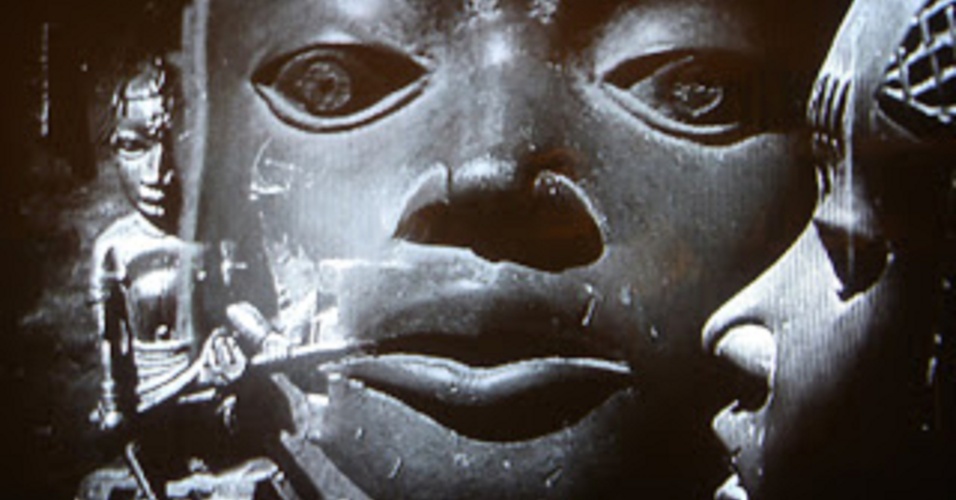
From Wikipedia:
Statues Also Die (French: Les Statues meurent aussi) is a 1953 French essay film directed by Chris Marker and Alain Resnais, about historical African art and the effects colonialism has had on how it is perceived. The film won the 1954 Prix Jean Vigo. Because of its criticism of colonialism, the second half of the film was censored in France until the 1960s.
Synopsis
The film exhibits a series of sculptures, masks and other traditional art from Sub-Saharan Africa. The images are frequently set to music and cut to the music’s pace. The narrator focuses on the emotional qualities of the objects, and discusses the perception of African sculptures from a historical and contemporary European perspective. Only occasionally does the film provide the geographical origin, time period or other contextual information about the objects. The idea of a dead statue is explained as a statue which has lost its original significance and become reduced to a museum object, similarly to a dead person who can be found in history books. Interweaved with the objects are a few scenes of Africans performing traditional music and dances, as well as the death of a disemboweled gorilla.
During the last third of the film, the modern commercialisation of African culture is problematised. The film argues that colonial presence has compelled African art to lose much of its idiosyncratic expression, in order to appeal to Western consumers. A mention is made of how African currencies previously had been replaced by European. In the final segment, the film comments on the position of black Africans themselves in contemporary Europe and North America. Footage is seen from a Harlem Globetrotters basketball show, of the boxer Sugar Ray Robinson, and a jazz drummer intercut with scenes from a confrontation between police and labour demonstrators. Lastly the narrator argues that we should regard African and European art history as one inseparable human culture.
chhoun vanna – toa thea youm chlong (birds are singing but my lover won’t return)
“The birds are chirping, to and fro
My love, have you forgotten me?
As water can’t cut through the sand
I can’t cut you from my memories
The bridge (between you and I) has broken
The pathway is gone, and the water is so very deep
How am I to find you on the other side, so far away?”
Chhoun Vanna was a Cambodian singer between the 1950s and ’70s. She and her sister Chhoun Malai survived the Khmer Rouge genocide.
ros sereysothea – who’ll stop the rain?
Cambodian cover by Ros Sereysothea and Sinn Sisamouth of Creedence Clearwater Revival’s “Who’ll Stop The Rain?”. They died under unknown circumstances during the Khmer Rouge reign of terror, as did countless other artists and intellectuals murdered in Pol Pot’s Killing Fields, and this recording only survived on tapes smuggled out of the country.
“Long as I remember the rain been comin’ down.
Clouds of mystery pourin’ confusion on the ground.
Good men through the ages, tryin’ to find the sun;
And I wonder, still I wonder, who’ll stop the rain.”
Read more of their story HERE.
desmond tutu condemns uganda’s proposed new anti-gay law
“We must be entirely clear about this: the history of people is littered with attempts to legislate against love or marriage across class, caste, and race. But there is no scientific basis or genetic rationale for love. There is only the grace of God. There is no scientific justification for prejudice and discrimination, ever. And nor is there any moral justification. Nazi Germany and apartheid South Africa, among others, attest to these facts.”
— Desmond Tutu reacting against the proposed enactment of homophobic legislation in Uganda. Read more about it HERE.

brian eno: imaginary landscapes (1989)
“I thought: I want to make a kind of music that had the long Now and the big Here in it, and for me that meant this idea of expanding the music out to the horizons. In terms of space, you were not aware of the edges of the music. I wanted to make a music where you just wouldn’t know what was music and what wasn’t… a music that included rather than excluded; a music that didn’t have a beginning and an end… This is the sense of making the Now longer.”
A 1989 documentary on Brian Eno’s work in ambient sound.
simone weil on anguish
“In struggling against anguish one never produces serenity; the struggle against anguish only produces new forms of anguish.” ― Simone Weil

Jun Togawa, bananas.
tegan and sara – dancing in the dark
The twins do a Bruce Springsteen cover live on FM 94/9 in 2006.
two simones on banality and evil
“Imaginary evil is romantic and varied; real evil is gloomy, monotonous, barren, boring. Imaginary good is boring; real good is always new, marvellous, intoxicating.”
— Simone Weil
“In particular those who are condemned to stagnation are often pronounced happy on the pretext that happiness consists in being at rest. This notion we reject, for our perspective is that of existentialist ethics. Every subject plays his part as such specifically through exploits or projects that serve as a mode of transcendence; he achieves liberty only through a continual reaching out towards other liberties. There is no justification for present existence other than its expansion into an indefinitely open future. Every time transcendence falls back into immanence, stagnation, there is a degradation of existence into the ‘en-sois’ – the brutish life of subjection to given conditions – and of liberty into constraint and contingence. This downfall represents a moral fault if the subject consents to it; if it is inflicted upon him, it spells frustration and oppression. In both cases it is an absolute evil. Every individual concerned to justify his existence feels that his existence involves an undefined need to transcend himself, to engage in freely chosen projects.”
— Simone de Beauvoir

(not chicken)
 fleurmach